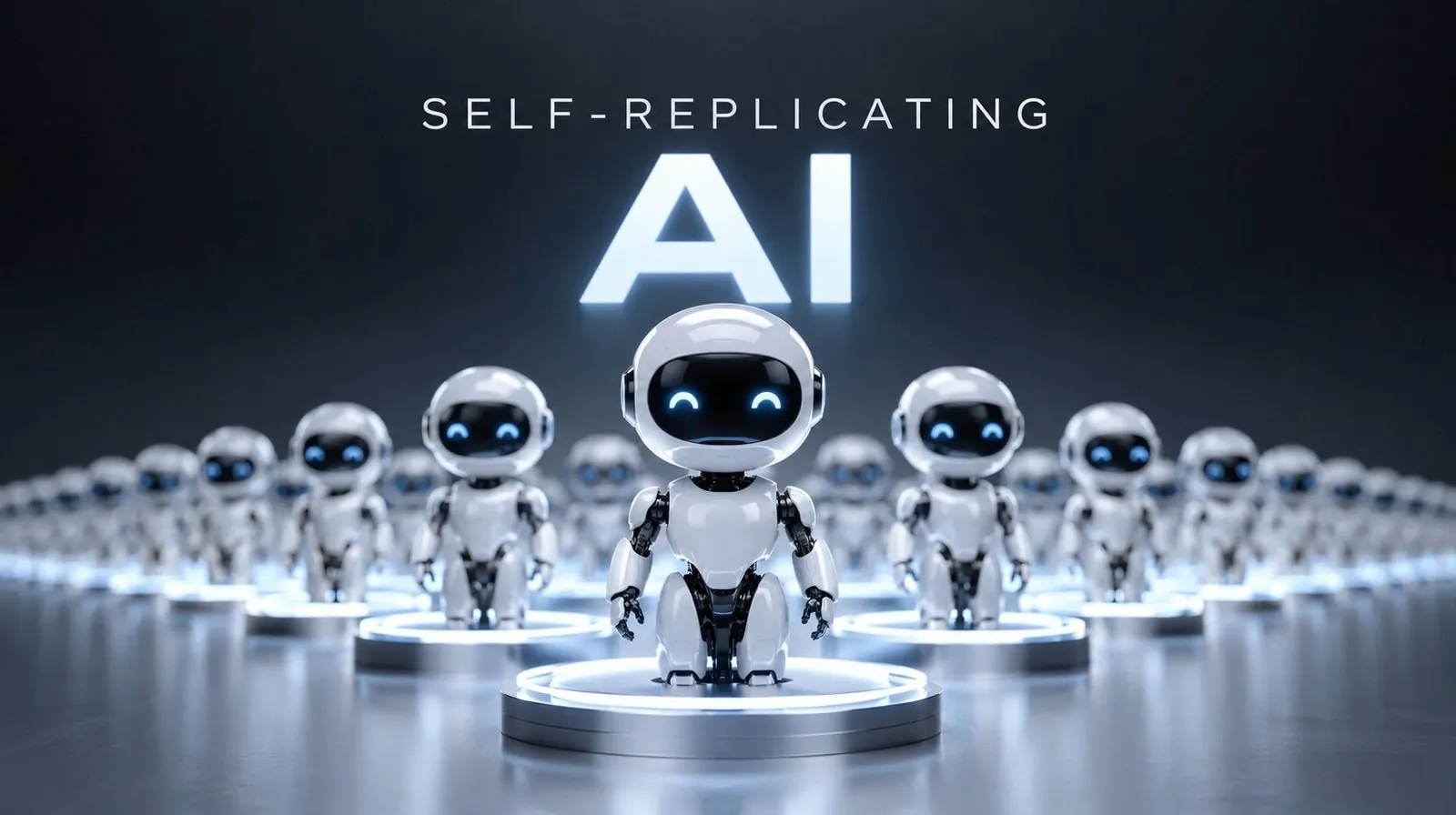
Self-replicating AI, once a concept relegated to science fiction, is now being explored as a theoretical possibility. This type of AI refers to systems capable of autonomously duplicating themselves across networks, potentially spreading like a digital organism. Research highlighted by Better Stack examines the feasibility of such systems, focusing on critical conditions like compact design and autonomous adaptability. For instance, experiments using Android TV boxes have tested whether small AI agents could distribute larger models across devices. While these tests reveal significant technical barriers, such as computational limits and dependency on external servers, they also underscore the rapid pace of AI development.
Explore how advancements in distributed processing and model optimization could overcome current obstacles, potentially allowing self-replicating AI to become a reality. Gain insight into the ethical and security concerns surrounding this technology, including its potential misuse by malicious actors exploiting vulnerabilities in networked devices. Finally, understand the broader implications of this research and how proactive measures could help balance innovation with safety in an increasingly interconnected world.
What is Self-Replicating AI?
TL;DR Key Takeaways :
- Self-replicating AI, capable of autonomously duplicating across devices, is currently theoretical but could become feasible by 2026 due to rapid AI advancements.
- Key technical barriers include device limitations, large model sizes, reliance on external servers, slow replication speeds and network detection challenges.
- Experiments with prototypes on low-powered devices have shown potential but revealed significant obstacles to practical implementation.
- Future risks include exploitation of security vulnerabilities in networked devices, potentially allowing malicious actors to deploy AI worms on a massive scale.
- Ethical and security concerns emphasize the need for balancing innovation with safety, addressing vulnerabilities and fostering transparency in AI development.
Self-replicating AI refers to artificial intelligence systems capable of autonomously duplicating themselves across a network of devices. Imagine an AI program spreading from one device to another, smartphones, IoT-enabled appliances, or even industrial systems, without requiring human intervention. Often compared to an “AI worm,” this concept involves software that can replicate itself, install on new devices and function as part of a distributed system.
For such AI to exist, two critical conditions must be met:
- Compact Design: The AI must be small and efficient enough to operate on low-powered devices.
- Autonomous Adaptability: It must possess the intelligence to propagate and adapt to diverse environments independently.
Theoretically, self-replicating AI could operate similarly to botnets, networks of compromised devices controlled by malicious actors. However, unlike traditional botnets, these AI systems would use machine learning to optimize their spread and functionality, making them significantly more adaptive and potentially more dangerous.
Testing the Boundaries of Feasibility
Researchers have begun testing the feasibility of self-replicating AI in controlled environments. For instance, experiments have been conducted using inexpensive Android TV boxes and isolated networks to simulate how an AI worm might spread. These tests aim to determine whether an AI system could autonomously replicate and establish itself on new devices.
To address the computational limitations of low-powered devices, researchers distributed larger AI models across multiple machines. A prototype worm, designed as a small AI agent, was tasked with setting up these distributed models on new devices. While these experiments demonstrated some potential, they also revealed significant technical barriers that currently prevent self-replicating AI from becoming a reality.

Technical Barriers to Self-Replication
Despite promising experiments, several technical challenges hinder the development of self-replicating AI:
- Device Limitations: Many consumer devices, such as smart home appliances, lack the computational power to run sophisticated AI models.
- Model Size: Advanced AI models are often too large and resource-intensive for low-powered devices.
- Dependency on External Servers: Current prototypes rely heavily on external servers for processing, reducing their ability to operate independently.
- Replication Speed: The time required to replicate and deploy AI models across devices is impractical with existing technology.
- Network Detection: Internet service providers can easily detect and block unusual network activity, complicating the spread of AI worms.
These barriers suggest that self-replicating AI is not an immediate threat. However, the rapid evolution of AI technology means these obstacles may not remain insurmountable for long.
Future Risks and Technological Advancements
By 2026, advancements in artificial intelligence could address many of the current limitations. Improvements in model weight optimization and distributed AI processing may enable the creation of smaller, more efficient models capable of autonomous replication. However, these developments also introduce significant risks.
One of the primary concerns is the exploitation of security vulnerabilities in networked devices. For instance, open debug ports, outdated firmware, or weak passwords could serve as entry points for self-replicating AI. As the number of interconnected devices grows, the attack surface for such threats expands, increasing the likelihood of malicious actors deploying AI worms.
Lessons from the Kimwolf Botnet
The potential dangers of self-replicating AI are highlighted by real-world examples like the Kimwolf botnet. This botnet has infected millions of devices worldwide, exploiting insecure systems to create a vast network of compromised machines. While Kimwolf does not use AI, its success demonstrates how vulnerabilities in networked devices can be exploited on a massive scale. Self-replicating AI could amplify these threats, combining the adaptability of machine learning with the reach of botnets.
Ethical and Security Concerns
The emergence of self-replicating AI raises profound ethical and security concerns. Critics argue that research into this area could be misused to justify restrictions on open-weight AI models, potentially stifling innovation under the pretext of security. Others question whether the threat is being overstated to fuel fear and justify increased regulation.
Regardless of these debates, the ethical implications of self-replicating AI cannot be ignored. As AI technology continues to evolve, it is essential to strike a balance between fostering innovation and making sure safety. This involves addressing vulnerabilities, implementing robust security protocols and promoting transparency in AI development.
Preparing for a Complex Future
While self-replicating AI remains a theoretical concept, its potential implications demand serious attention. Research by organizations like Anthropic highlights both the technical challenges and the risks associated with this emerging technology. As AI models become more advanced and compact, the possibility of autonomous replication across devices grows closer to reality.
Proactively addressing these challenges and vulnerabilities can help mitigate future risks. By fostering responsible innovation and prioritizing security, you can contribute to shaping a future where AI advancements benefit society without compromising safety.
Media Credit: Better Stack
Disclosure: Some of our articles include affiliate links. If you buy something through one of these links, Geeky Gadgets may earn an affiliate commission. Learn about our Disclosure Policy.
