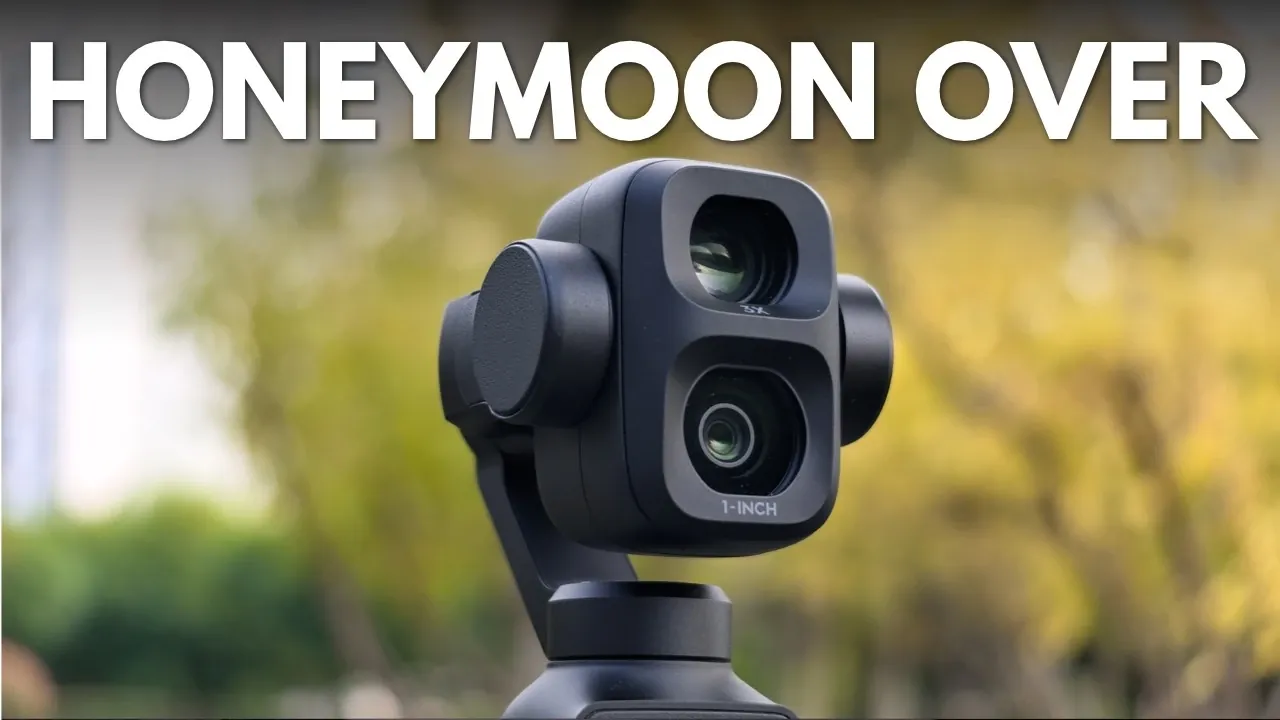
After 90 days of using the DJI Pocket 4P in a variety of scenarios, Tech Court offers an in-depth evaluation of this compact camera’s strengths and shortcomings. Released in June, the Pocket 4P includes a 1-inch sensor, over 100 GB of internal storage, and a second telephoto lens with an F/1.8 aperture. While its portability and image quality are notable, challenges such as inconsistent manual exposure adjustments and the absence of waterproofing reveal its limitations. Firmware updates have addressed some issues, including smoother lens transitions, but certain obstacles remain for those aiming for reliable professional output.
Explore how the Pocket 4P’s DLOG 2 mode performs in high-contrast environments, the practical implications of its battery life for longer shoots, and the creative potential of its telephoto lens. Gain insight into the trade-offs of its compact design, such as handling durability and transport logistics. This analysis provides a clear view of the camera’s functionality and its suitability for different shooting needs.
Portability and Everyday Usability
TL;DR Key Takeaways :
- The DJI Pocket 4P is praised for its portability, cinematic quality, and ease of use, but reportedly falls short in battery life, waterproofing, and professional-grade manual exposure matching.
- Firmware updates have improved features like 4K sharpness, expanded zoom capabilities, and added 10-bit DLOG in slow motion, but issues such as brightness jumps during lens switching and the lack of a zoom limiter persist.
- The camera’s 1-inch sensor with 17 stops of dynamic range and a second 60mm telephoto lens are highlighted as strengths, though digital zoom beyond 6x reportedly reduces image quality and limits creative uses in certain modes.
- Battery life is reportedly inconsistent with real-world usage, and the lack of waterproofing makes it unsuitable for wet or rugged environments, limiting its versatility for outdoor filming.
- The DJI Pocket 4P is not officially sold in the US, requiring import and offering no US warranty, which could be a significant drawback for American buyers.
The DJI Pocket 4P lives up to its name as a genuinely pocketable camera. Its compact size and discreet design make it ideal for travel and casual use. It fits easily into a jacket pocket and powers on instantly when the screen is flipped open, making it convenient for capturing spontaneous moments. This unobtrusiveness is particularly helpful in public settings, where larger rigs might disrupt the natural flow of scenes like markets or crowded streets.
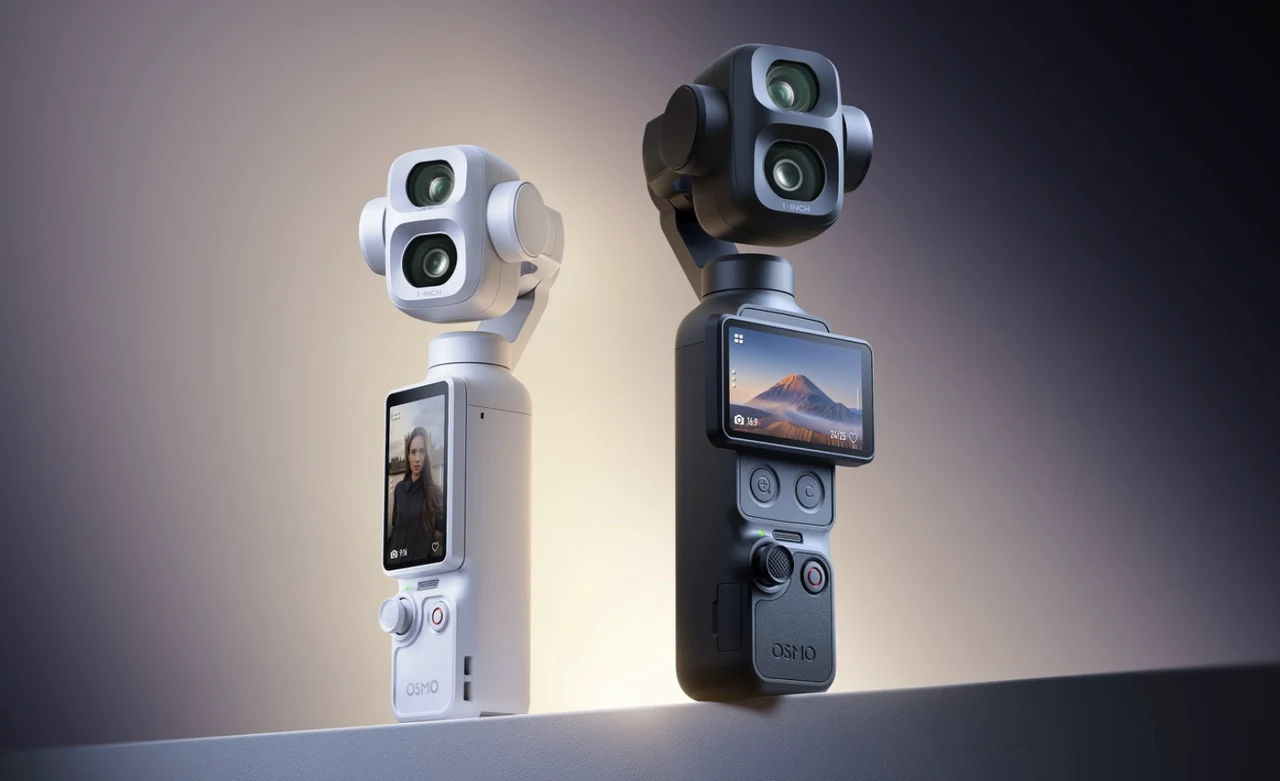
Its built-in storage of over 100 GB is a standout feature, allowing users to record even without a memory card. However, the included soft pouch offers minimal protection, leaving the gimbal and screen vulnerable during transport. A hard case is recommended for better durability, especially for those frequently carrying the camera in backpacks.
Camera Performance and Firmware Updates
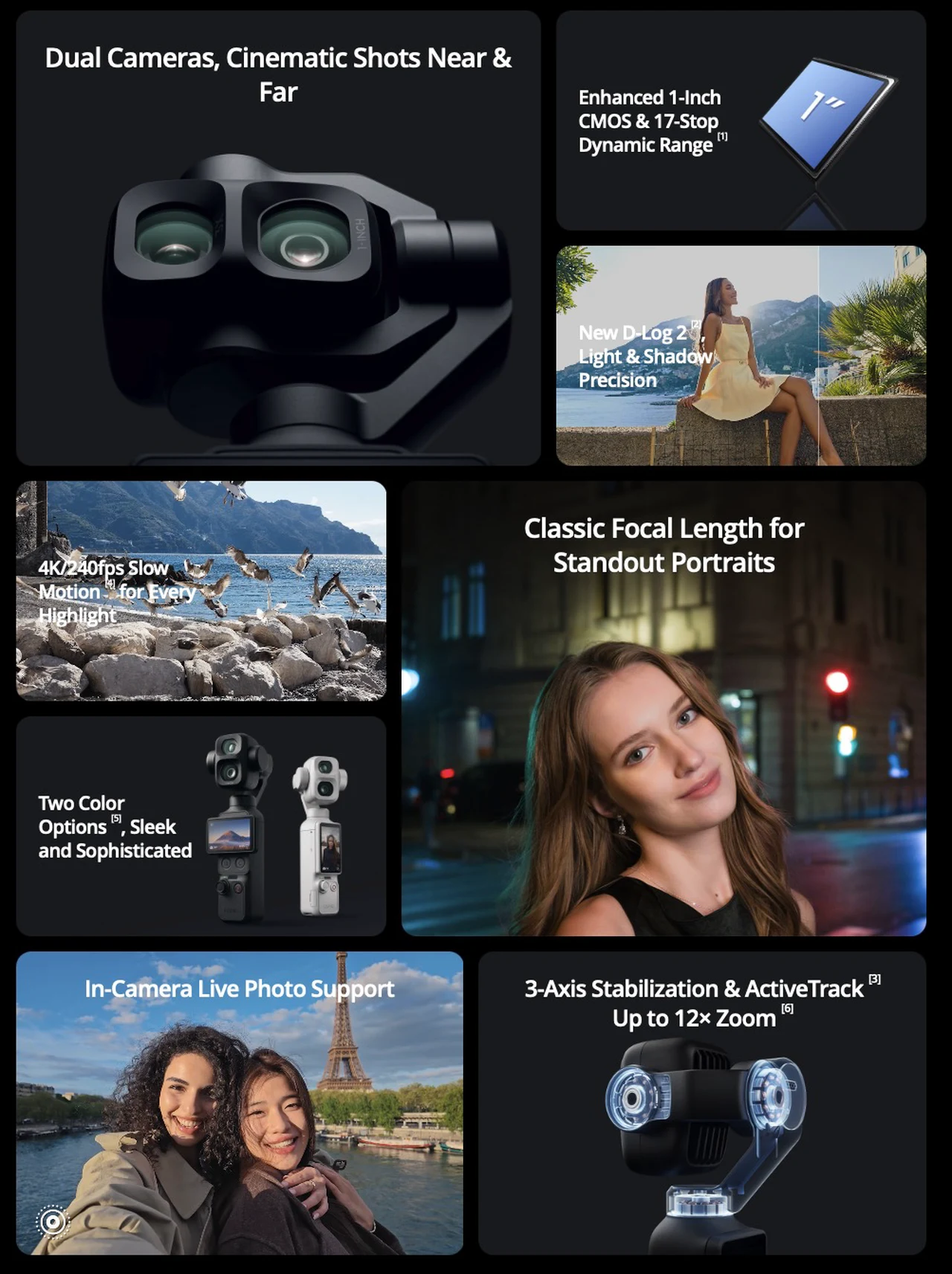
With a 1-inch sensor, the DJI Pocket 4P delivers up to 17 stops of dynamic range in its DLOG 2 profile, making it capable of handling high-contrast scenes. The three-axis gimbal ensures smooth footage during movement, and the camera performs well in low-light conditions, retaining color and detail in nighttime shoots.
The second lens, a 60mm telephoto with an F/1.8 aperture, offers storytelling potential, capturing cinematic details like faces, steam, and architectural elements. Firmware updates have improved this lens, enhancing sharpness in 4K at 30fps and expanding the maximum zoom from 12x to 18x (approximately 360mm in full-frame terms). However, only the transition from the wide camera to the 60mm lens is optical (3x magnification). Beyond 6x zoom, the camera relies on digital zoom, which reduces image quality.
Other firmware improvements include 10-bit DLOG in slow motion up to 4K at 240fps, updated LUTs, cloud uploads, and presets for scenarios like concerts and sunsets. Despite these updates, some issues persist. Switching between lenses can cause a brightness jump of up to two stops and a slight color shift, though transitions are now smoother. Additionally, the zoom lacks a limiter, making it easy to accidentally enter digital zoom. The 18x zoom is unavailable in slow motion, time-lapse, or panorama modes, limiting its creative uses.

Become an expert in DJI Pocket 4P with the help of our in-depth articles and helpful guides.
- DJI Pocket 4P Main Camera Adds a 1-Inch Sensor with 17 Stops
- Sony ZV-E10 Mark II Beats DJI Osmo Pocket 4P in Low Light
- DJI Pocket 4P Update 01.01.71.20 Enables D-Log Slow Motion
- $600 Osmo Pocket 4P Challenges the $2,200 Sony ZV-E1
- DJI Pocket 4P vs DJI Pocket 4: $620 Dual-Lens vs $450 Base
- Osmo Pocket 4P 1-Inch Sensor Beats iPhone 17 Pro for Video
- Why the DJI Osmo Pocket 4P Might Disappoint Social Media Creators
- Everything We Know About the DJI Pocket 4 Pro Sensor Upgrade
- $600 Osmo Pocket 4P Challenges the $2,200 Sony ZV-E1 Camera
- What the DJI Pocket 4P’s Dual-Camera System Means for Creators
Color Profiles and Grading
The camera offers multiple color profiles, with DLOG 2 being the most advanced. While it performs well in high-contrast lighting, it is limited to the main camera at 1x zoom and unavailable for slow motion or the second lens. Regular DLOG works across both lenses and provides consistent footage for editing. For minimal post-processing, the normal color profile delivers polished footage straight out of the camera.
Regular DLOG is recommended as the default setting, with DLOG 2 reserved for challenging lighting conditions like sunsets. DJI’s official V2.0 LUT simplifies grading for DLOG footage, making it accessible even to beginners.
Battery Life and Environmental Limitations
Battery life is one of the DJI Pocket 4P’s weaker aspects. While rated for up to 210 minutes of continuous recording at 1080p and 24fps, real-world usage differs. Recording in 4K with the gimbal active and screen brightness high can drain about a third of the battery in just 20 minutes. A small power bank or the battery handle is advisable for longer shoots.
The lack of waterproofing further limits its versatility. It is unsuitable for rain, sea spray, or pool environments, making it less practical for outdoor or adventure filming. Users frequently shooting in such conditions may need to pair it with an action camera for greater durability.
Pricing and Alternatives
The DJI Pocket 4P is available in two bundles: the standard combo and the vlog combo. The vlog combo includes a DJI Mic Mini 2 transmitter, a mini tripod, and the Osmo Frame Tap remote for controlling the camera and gimbal remotely. The vlog combo offers better value for users filming themselves or requiring remote functionality, though the included Mic Mini 2 does not record internally, unlike its newer counterpart.
For alternatives, the Insta360 Luna Ultra offers features like 8K resolution and a removable screen that doubles as a wireless monitor and remote. However, the DJI Pocket 4P is not officially sold in the US, requiring import and offering no US warranty, which could be a significant drawback for American buyers.
Who Should Buy the DJI Pocket 4P?
The DJI Pocket 4P is a strong option for travelers, solo content creators, and casual users seeking cinematic quality without the bulk of larger rigs. It is a worthwhile upgrade for DJI Pocket 3 owners, offering features like a real optical telephoto lens, built-in storage, DLOG 2, and 4K slow motion at 240fps. However, owners of the Pocket 4 may find the upgrade less compelling unless they specifically need the second lens.
Professionals requiring precise manual exposure matching across lenses may find the DJI Pocket 4P lacking. Despite firmware improvements, manual DLOG behavior remains inconsistent, making a mirrorless camera with a zoom lens a more reliable choice for critical work.
After 90 days of testing, Tech Court concludes that the DJI Pocket 4P is the first in the series to feel like two cameras in one. While firmware updates have significantly improved its functionality, limitations in battery life, waterproofing, and manual exposure matching mean it is not the ideal choice for every user. For those prioritizing portability and cinematic capabilities, the DJI Pocket 4P remains a compelling option, but its suitability ultimately depends on individual needs and shooting conditions.
Media Credit: Tech Court
Disclosure: Some of our articles include affiliate links. If you buy something through one of these links, Geeky Gadgets may earn an affiliate commission. Learn about our Disclosure Policy.
