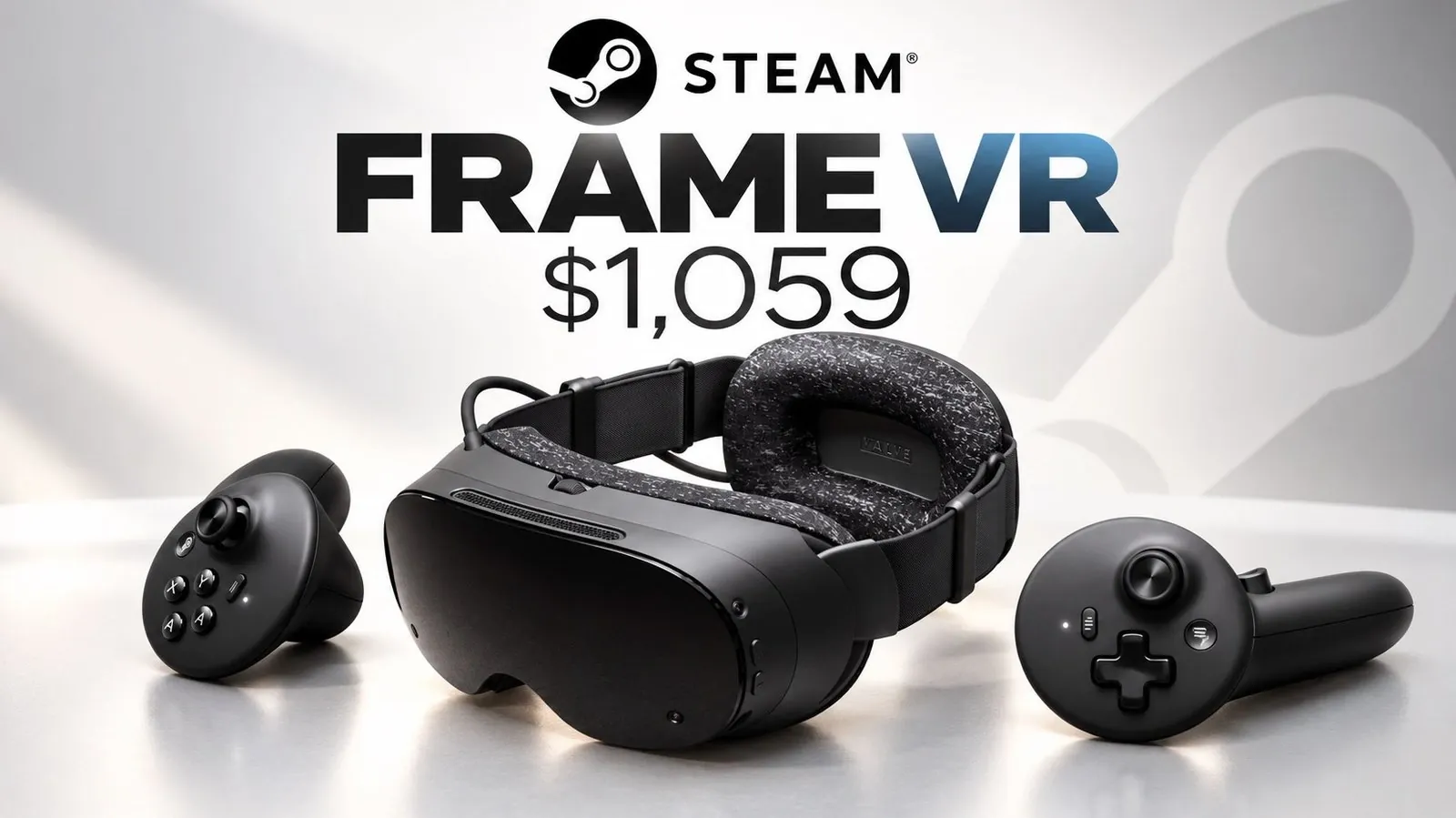
The Steam Frame VR headset has entered the spotlight with its premium pricing and a feature set aimed at both PCVR enthusiasts and standalone gamers. Priced at $1,059 for the 256GB model and $1,299 for the 1TB version, it positions itself as a high-end option in the virtual reality market. MRTV explores whether its standout features, such as the dedicated 6GHz wireless dongle for smooth PCVR streaming and eye-tracking-enabled foveated rendering, justify the cost. The assessment also considers its lightweight design and sharp pancake lenses, which promise comfort and immersion for extended sessions.
Dive into this breakdown to understand how the Steam Frame stacks up against competitors. You’ll gain insight into its strengths, like its integration with Steam OS for standalone gaming, as well as its limitations, including the reliance on an LCD display and underwhelming battery life. Additionally, the guide evaluates its black-and-white passthrough functionality and controller quality, which may fall short of expectations at this price point. By the end, you’ll have a clear picture of whether the Steam Frame aligns with your VR needs or if alternatives like the Meta Quest 3 offer better value.
What Makes the Steam Frame Stand Out?
TL;DR Key Takeaways :
- The Steam Frame VR headset is a premium device priced at $1,059 (256GB) and $1,299 (1TB), offering advanced PCVR streaming and standalone gaming capabilities.
- Key features include a 6GHz wireless dongle for stable PCVR streaming, eye-tracking for foveated rendering and a lightweight design with high-quality pancake lenses for immersive gaming.
- Notable drawbacks include the use of an LCD display instead of OLED, outdated black-and-white passthrough, limited standalone performance and short battery life (1-3 hours).
- Its high price and mixed reviews make it less competitive compared to more affordable alternatives like the Meta Quest 3, which offers better features at nearly half the cost.
- The Steam Frame is best suited for users prioritizing PCVR streaming and integration with the Steam ecosystem, but it may not appeal to those seeking innovative visuals or longer gaming sessions.
The Steam Frame VR headset offers several features designed to appeal to users who value high-quality PCVR streaming and a seamless gaming experience. These standout elements include:
- PCVR Streaming Excellence: The Steam Frame is equipped with a dedicated 6GHz wireless dongle, making sure a stable and smooth connection for streaming VR content from your PC. Eye-tracking technology enhances this capability by allowing foveated rendering, which focuses processing power on the areas you’re looking at. This not only improves performance but also reduces bandwidth usage, making it ideal for demanding VR titles.
- Standalone Gaming Capability: The headset supports standalone gaming, allowing users to enjoy titles like Half-Life: Alyx without requiring a PC. Its integration with Steam OS provides a user-friendly interface and access to an extensive library of games, making it a versatile choice for gamers.
- Comfortable and Immersive Design: Weighing just 440 grams, the Steam Frame is designed for extended use without causing discomfort. Its high-quality pancake lenses deliver sharp visuals and a wide field of view (118° horizontal, 110° vertical), enhancing the immersive experience for users.
Where Does the Steam Frame Fall Short?
While the Steam Frame offers impressive features, it also has several shortcomings that may deter potential buyers. These limitations include:
- Display Technology: The headset uses an LCD display, which, while functional, lacks the deep blacks and vibrant contrast provided by OLED screens. This puts it at a disadvantage compared to other high-end VR headsets that feature OLED technology.
- Passthrough Functionality: The black-and-white passthrough feature feels outdated, especially when compared to the full-color passthrough offered by the Meta Quest 3. This limits its appeal for users interested in mixed-reality experiences.
- Standalone Performance: The standalone capabilities of the Steam Frame are underwhelming, with lower resolution and processing power compared to the Steam Deck, which is a more affordable gaming device.
- Battery Life: The headset offers only about one hour of battery life during demanding standalone use and two to three hours when streaming. This limited battery performance may not meet the needs of users seeking longer gaming sessions.
- Wireless Connectivity Limitations: While the 6GHz wireless connection is effective for PCVR streaming, its range is limited and it struggles to penetrate walls. This could restrict its usability in larger or multi-room spaces.
- Controller Quality: The included controllers, though functional, lack the premium feel expected at this price point. This could detract from the overall user experience, especially for those accustomed to higher-quality peripherals.

Check out more relevant guides from our extensive collection on Steam Frame that you might find useful.
- 10 Reasons You Should Buy the Valve Steam Frame VR Headset at Launch
- Leaked Geekbench Scores Reveal the True Power of the $750 Steam Machine
- Valve’s Potential Half-Life 3 Pairing Could Skyrocket Steam Machine Demand
- Steam Frame VR Unboxing Reveals PC Wireless Streaming Adapter
- What Valve’s Steam Frame Features Reveal About the Future of Portable VR
- Valve Steam Frame $1,060 VR Headset Hampered by 72 Games
- Valve Hits 760,000 Yearly Steam Machine Sales Amid RAM Shortage
- Valve Revamps the Steam Machine UI with New Verification Metrics
- Steam Machine Performance Tested: FSR 3 Upscaling Smooths Demanding Gameplay
- SteamOS Beta Update Fixes CPU Degradation and Wi-Fi Bugs
How Does the Pricing Compare?
The Steam Frame’s pricing positions it as a high-end VR headset, but its value proposition is a topic of debate. At $1,059 for the 256GB model, it is significantly more expensive than the Meta Quest 3, which offers comparable or superior features at nearly half the price. However, the inclusion of a microSD expansion slot provides some flexibility for users who may want to expand storage without upgrading to the 1TB version. For those looking to save on upfront costs, the 256GB model may be the more practical choice.
Who Should Buy the Steam Frame?
The Steam Frame VR headset is tailored to a specific audience and may appeal to users with particular preferences or needs. Consider purchasing the Steam Frame if you:
- Prioritize PCVR streaming and want a seamless connection to your Steam library.
- Prefer a standalone VR headset that operates outside the Meta ecosystem, offering an alternative to Meta’s products.
- Value comfort and a lightweight design for casual or moderate gaming sessions.
However, the Steam Frame may not be the ideal choice for everyone. High-fidelity VR enthusiasts, simulation gamers, or users seeking innovative visuals and performance may find more value in other headsets. Devices like the Meta Quest 3, which offer a better balance of features, performance and price, could be more suitable for these users.
Is the Steam Frame Worth the Investment?
The Steam Frame VR headset delivers a solid experience with standout features such as PCVR streaming, eye-tracking and a lightweight, comfortable design. However, its high price, limited battery life and reliance on older technologies, such as black-and-white passthrough, make it a challenging option to recommend in today’s competitive VR market. When compared to more affordable alternatives like the Meta Quest 3, the Steam Frame struggles to justify its premium cost.
Ultimately, the Steam Frame is a niche product that caters to a specific audience. If you are deeply invested in the Steam ecosystem and prioritize PCVR streaming, the Steam Frame may be worth considering. For most users, however, other headsets offer a more compelling combination of performance, features and affordability.
Media Credit: MRTV – MIXED REALITY TV
Disclosure: Some of our articles include affiliate links. If you buy something through one of these links, Geeky Gadgets may earn an affiliate commission. Learn about our Disclosure Policy.
