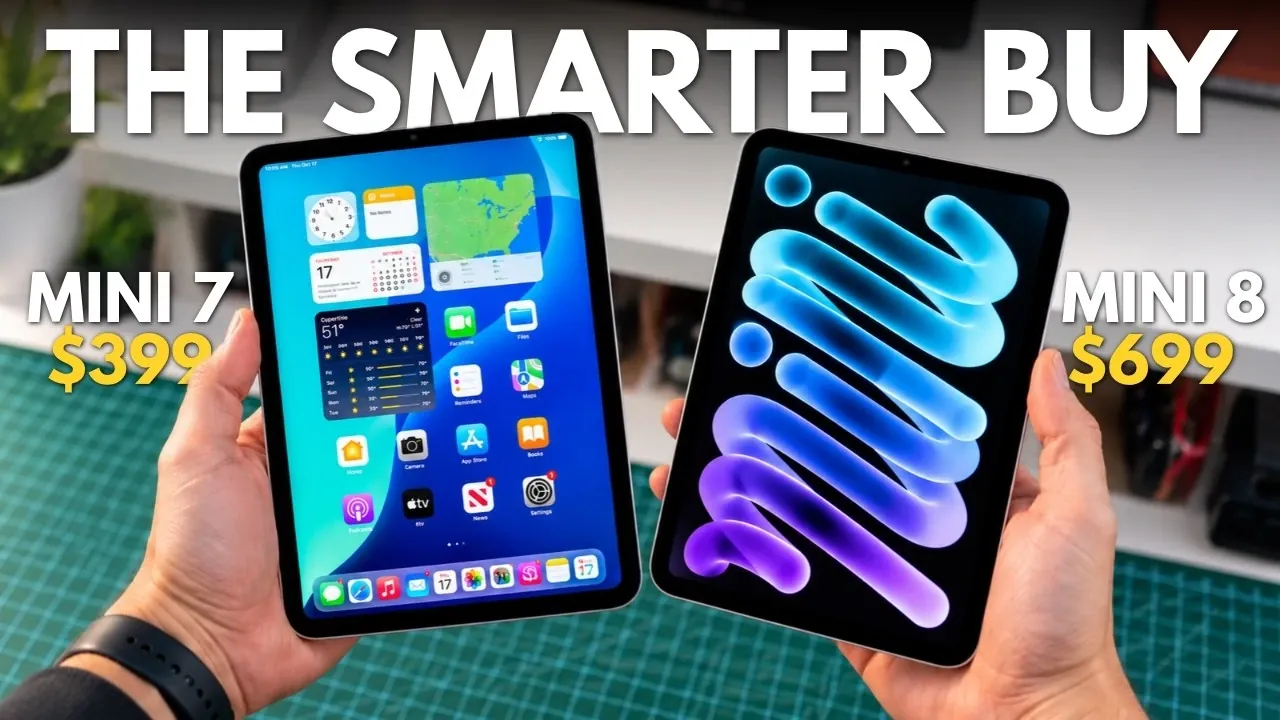
The iPad Mini 8 introduces a mix of upgrades and compromises, sparking debate about its value compared to its predecessor. As highlighted by Tech Court, the device features an OLED display, IP67 water resistance and the A20 Pro chip, all of which represent meaningful advancements. However, the starting price of $699—a significant jump from the Mini 7, raises questions about whether these enhancements justify the cost. For many users, the Mini 7’s lower price and balanced feature set may offer a more practical choice, particularly given the Mini 8’s retention of a 60 Hz refresh rate and its downgraded base CPU configuration.
Dive into this guide to explore how the Mini 8’s new features, such as extended display functionality and Wi-Fi 7 support, stack up against its limitations, including its limited base storage and higher price tag. You’ll gain insight into which model better suits specific needs, whether you’re prioritizing affordability, display quality, or long-term usability. By the end, you’ll have a clearer understanding of why the Mini 7 might remain the smarter buy for many users.
Sleek but Familiar
TL;DR Key Takeaways :
- The iPad Mini 8 introduces significant upgrades, including an OLED display, A20 Pro chip and IP67 water resistance, but its starting price of $699 is $200 higher than the Mini 7.
- Design improvements include a thinner 5.4 mm profile, 255-gram weight and optional nano-texture glass for reduced glare, but the 60 Hz refresh rate remains unchanged.
- Performance is powered by the A20 Pro chip, but the base model features a downgraded 5-core CPU, which may impact multitasking and heavy workloads.
- Enhanced usability features include a repositioned front camera, Wi-Fi 7, Bluetooth 6, Thread support and extended display functionality, though fast charging requires a separately sold 35W adapter.
- Limitations such as the 128 GB base storage, potential OLED flickering and high price make the Mini 7 a more cost-effective alternative for many users.
Design and Display
The iPad Mini 8 features a refined design, measuring just 5.4 mm thick and weighing 255 grams, making it one of the most portable tablets available today. Its OLED display is a standout addition, offering richer contrast, deeper blacks and more vibrant colors compared to the Mini 7’s Liquid Retina display. However, the 60 Hz refresh rate remains unchanged, which may disappoint users who prioritize smoother scrolling and animations.
Durability has been significantly improved with the introduction of IP67 water and dust resistance, a first for the iPad Mini lineup. This feature enhances the device’s usability in various environments, from kitchens to outdoor settings. Additionally, the acoustic display technology eliminates traditional speaker grilles, channeling sound directly through the screen while maintaining the sleek profile. For those who frequently use their devices outdoors, the optional nano-texture glass reduces glare, making the Mini 8 more versatile in bright conditions.
Performance: Power with a Catch
At the heart of the Mini 8 is the A20 Pro chip, which delivers substantial improvements in CPU, GPU and AI performance. This makes the device well-suited for demanding tasks such as video editing, gaming and multitasking. However, the base model includes a downgraded 5-core CPU, a step back from the Mini 7’s 6-core configuration. This change could impact performance for users who rely on intensive multitasking or heavy workloads.
Despite the hardware advancements, the retention of the 60 Hz refresh rate limits the overall fluidity of the user experience. Many competing devices in this price range now offer higher refresh rates, making this omission more noticeable. While the Mini 8 excels in raw power, its display performance may feel dated to some users.

Here are more guides from our previous articles and guides related to iPad Mini 8 that you may find helpful.
- Apple iPad Mini 8 Just Fully Leaked: Here is Everything Changing
- iPad Mini 8: Major Changes Coming to Apple’s Next Compact Tablet
- Apple’s OLED iPad Mini Is Finally Happening: Here Is Everything We Know
- Apple Appears to Have Accidentally Leaked the iPad Mini 8
- iPad Mini 8 Leaks: Massive Upgrades, But Will You Pay $799 for It?
- Leaked OLED iPad Mini Details Surface, but Does It Finally Deserve the ‘Pro’ Name?
- iPad mini 8 Leaks Hint at the Biggest Upgrade in the Tablet’s History
- Oops: Apple Accidentally Leaks a Whole Wave of Unreleased Products
- The iPad Mini 8 Rumors Suggest a Massive Upgrade is Coming
- Apple iPad Mini 8 Hardware Leak: Expect a Smooth OLED Panel and A20 Pro Silicon
Features and Connectivity: Enhanced Usability
The Mini 8 introduces several new features aimed at improving usability and connectivity. The front camera has been repositioned to the landscape edge, making it more convenient for video calls and virtual meetings. Connectivity upgrades include support for Wi-Fi 7, Bluetooth 6, and Thread, making sure faster and more reliable connections across a variety of devices.
One of the most practical additions is the extended display functionality, which allows the Mini 8 to act as a second screen for compatible devices. This feature is particularly appealing to professionals and multitaskers who need additional screen real estate. The device also supports fast charging, but the required 35W adapter is sold separately, adding to the overall cost of ownership.
Limitations: What Holds It Back
While the Mini 8 offers several improvements, it retains some limitations that may deter potential buyers. The base model still comes with 128 GB of storage, which is increasingly seen as insufficient for a device in this price range. Upgrading to a higher storage option significantly increases the cost, further narrowing its appeal to budget-conscious users.
The OLED display, while visually stunning, may cause eye strain for some users due to flickering, a common issue with this technology. Additionally, the $699 starting price positions the Mini 8 as one of the most expensive compact tablets on the market, potentially alienating buyers who prioritize affordability. These factors make it difficult for the Mini 8 to fully justify its premium price tag.
Who Should Consider the Mini 8?
The iPad Mini 8 is best suited for users who own an iPad Mini 6 or older models. The combination of the OLED display, enhanced connectivity and improved durability makes it a worthwhile upgrade for those looking to modernize their tablet experience. Opting for the 256 GB version can also address storage concerns, making sure the device remains functional for years to come.
For users who already own the Mini 7, the new features may not be compelling enough to warrant the additional cost unless specific upgrades, such as the OLED display or extended display functionality, are essential to their workflow. In many cases, the Mini 7 continues to offer a well-rounded combination of performance and features at a more accessible price point.
First-time buyers may also find the Mini 7 to be a more attractive option. Its lower price and balanced feature set make it a strong contender, especially for those who can find it on sale. The Mini 8’s premium price and incremental improvements may not provide enough value to justify the investment for all users.
Value Assessment: is the Mini 8 Worth It?
The iPad Mini 8 is undeniably a technologically advanced device, offering meaningful upgrades in display quality, performance and connectivity. However, its higher price point and retained limitations, such as the 60 Hz refresh rate and limited base storage, make it less appealing for many users. While it caters to specific needs, the Mini 7 remains a better value proposition for those who prioritize cost-effectiveness over innovative features.
Before making a decision, it’s essential to carefully assess your needs and determine whether the Mini 8’s enhancements align with your usage habits. For many, the Mini 7 continues to strike the right balance between performance, features and affordability, making it a strong alternative to the latest model.
Media Credit: Tech Court
Disclosure: Some of our articles include affiliate links. If you buy something through one of these links, Geeky Gadgets may earn an affiliate commission. Learn about our Disclosure Policy.
