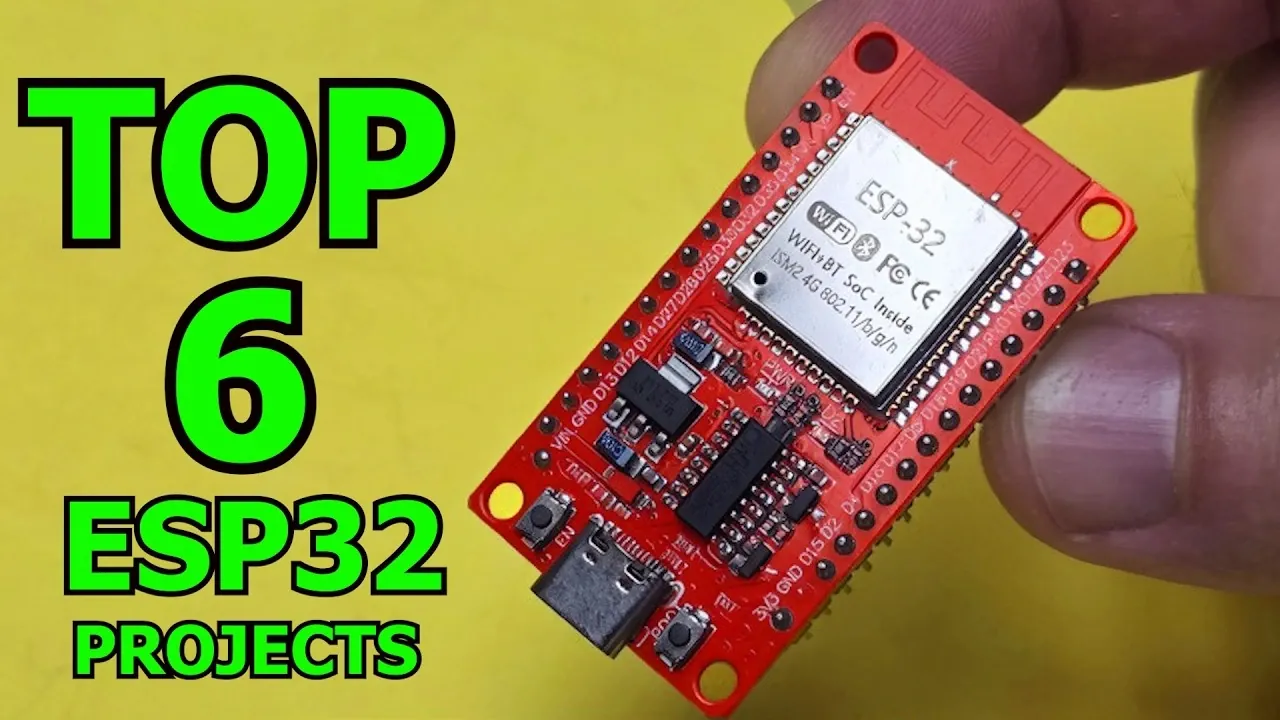
The ESP32 microcontroller has become a favorite among hobbyists and developers for its ability to handle diverse tasks, from wireless communication to advanced graphical displays. Hacktuber explores six standout projects that demonstrate the ESP32’s capabilities, including a pulse oximeter for health monitoring. This project integrates a pulse oximeter sensor with the ESP32 to measure heart rate and blood oxygen levels, displaying the results on an OLED screen. It’s a practical example of how microcontrollers can contribute to personal health tracking and beyond.
Dive into this breakdown to discover how to build a joystick-controlled keypad for interactive input, design a digital eye that combines aesthetics with functionality and create a gas detection system for safety applications. You’ll also explore the ESP-NOW protocol for efficient wireless communication and learn how to bring retro gaming to life with a Space Invaders project. Each example offers clear insights into the ESP32’s potential, providing inspiration for your next DIY endeavor.
DIY ESP32 Projects for 2026
TL;DR Key Takeaways :
- The ESP32 microcontroller is highly versatile, offering robust wireless connectivity, advanced sensor integration and impressive graphical capabilities, making it ideal for diverse applications like health monitoring and gaming.
- Creative projects include building a pulse oximeter for health tracking, showcasing the ESP32’s precision and usability in medical technology.
- Interactive applications such as joystick-controlled keypads and digital eye displays highlight the ESP32’s potential for user interface design and graphical programming.
- Safety-focused projects, like integrating a gas sensor, demonstrate the ESP32’s ability to provide real-time monitoring and alerts for critical environments.
- The ESP32 supports efficient wireless communication with ESP-NOW and enables retro gaming experiences, showcasing its capabilities in IoT systems and entertainment.
1. Build a Pulse Oximeter for Health Monitoring
The ESP32 is an excellent platform for developing health-monitoring devices. By integrating a pulse oximeter sensor, you can create a device capable of measuring heart rate and blood oxygen saturation (SpO2) with precision. Here’s how this project works:
- A pulse oximeter sensor uses red and infrared LEDs to gather data from your fingertip.
- The ESP32 processes the collected data and displays it on an OLED screen.
- A graphical interface provides real-time visualization of your health metrics.
This project is ideal for personal health tracking or as a foundation for more advanced medical devices. Its combination of accuracy and usability makes it a practical and engaging application of the ESP32. Additionally, it offers an opportunity to explore how microcontrollers can contribute to health technology.
2. Create a Joystick-Controlled Keypad
For interactive and control-based projects, a joystick-controlled keypad powered by the ESP32 provides a fun and functional solution. This setup combines a joystick and buttons to enable directional input and control. Here are some potential applications:
- Navigating menus or graphical interfaces with ease.
- Controlling robotic systems, drones, or other mechanical devices.
- Designing a digital drawing panel for creative projects.
The ESP32 ensures smooth operation and can connect wirelessly to other devices, enhancing its versatility. Whether you’re a gamer looking to create custom controls or a robotics enthusiast seeking precise input mechanisms, this project adds an interactive dimension to your creations.
3. Design a Digital Eye with Multifunctional Features
The digital eye project is a testament to the ESP32’s graphical capabilities and creative potential. By pairing the microcontroller with a round or rectangular display, you can simulate a realistic blinking eye effect. However, this project is more than just visually appealing:
- It can serve as a Wi-Fi-enabled clock, displaying the time with style.
- It includes a network scanner for basic diagnostics and troubleshooting.
- It features a simple Dino game, adding an element of entertainment.
This project combines aesthetic design with practical functionality, making it a standout example of how the ESP32 can be used for both artistic and technical purposes. It also provides an opportunity to experiment with graphical programming and user interface design.

Become an expert in ESP32 with the help of our in-depth articles and helpful guides.
- $5 ESP32-S3 Super Mini Packs Wi-Fi and Bluetooth
- The $4 ESP32 S3 Super Mini Packs a 240 MHz Dual-Core Chip
- How an $8 ESP32 S3 Microcontroller Runs a 28.9M Parameter Local LLM
- 5 ESP32 Projects Worth Building in 2026: Such as an Apple HomeKit Controller
- $4 ESP32 Module Brings Wi-Fi and Bluetooth to IoT Projects
- Replacing Security Cameras with Three $10 ESP32S3 Wi-Fi Boards
- ESP32-S3 Super Mini Costs $5 and Packs Wi-Fi and Bluetooth
- Gemini 4 Argon Writes ESP Mosaico Firmware to Control RGB LEDs
- ESP32-S3 Super Mini Brings 240 MHz Dual-Core Power For $4
- ESP32 S31 Devkit Hands-on: 320 MHz RISC-V Chip Adds Wi-Fi 6
4. Integrate a Gas Sensor for Safety
The ESP32 is well-suited for safety applications, such as building a gas detection system. By integrating an MQ2 gas sensor, you can create a device capable of detecting combustible gases and smoke. Key features of this project include:
- Real-time detection of gas and smoke levels, with readings displayed on an OLED screen.
- Wi-Fi capabilities for remote monitoring and instant alerts.
- Applications ranging from home safety systems to industrial environments.
This project provides a reliable and user-friendly solution for environments where gas detection is critical. It enhances safety by offering real-time monitoring and the ability to send alerts, making it a valuable tool for both personal and professional use.
5. Enable Wireless Communication with ESP-NOW
The ESP32’s support for the ESP-NOW protocol enables efficient wireless communication without requiring a Wi-Fi router. This project demonstrates how to connect multiple ESP32 boards for tasks such as environmental monitoring. Key features include:
- Integration of sensors to measure temperature, humidity and pressure.
- Seamless data sharing between devices, allowing decentralized networks.
- Remote control of LEDs or relays for smart home or IoT applications.
This project highlights the ESP32’s ability to create low-power, decentralized networks, making it ideal for IoT systems and smart environments. It also showcases how the ESP32 can assist communication between devices in a cost-effective and energy-efficient manner.
6. Bring Retro Gaming to Life with Space Invaders
For gaming enthusiasts, the ESP32 offers the ability to recreate classic games like Space Invaders. This project combines nostalgia with modern technology, featuring:
- A basic version of the game with auto-shooting and movement controls.
- A custom module with buttons for responsive and intuitive gameplay.
- A vibrant display on a TFT screen, powered by the ESP32’s graphical capabilities.
This project not only demonstrates the ESP32’s potential for entertainment but also showcases its ability to handle graphics and logic efficiently. It serves as an excellent introduction to game development on microcontrollers, offering both fun and learning opportunities.
Unlock the Potential of the ESP32
These six projects illustrate the incredible versatility of the ESP32 microcontroller. From health monitoring and safety systems to gaming and interactive controls, the ESP32 proves to be a powerful platform for a wide range of applications. By using its wireless connectivity, sensor integration and graphical capabilities, you can bring innovative ideas to life. Whether you’re just starting out or looking to expand your expertise, the ESP32 offers endless opportunities for creativity and problem-solving. Explore these projects and discover how this microcontroller can transform your ideas into reality.
Media Credit: Hacktuber
Disclosure: Some of our articles include affiliate links. If you buy something through one of these links, Geeky Gadgets may earn an affiliate commission. Learn about our Disclosure Policy.
