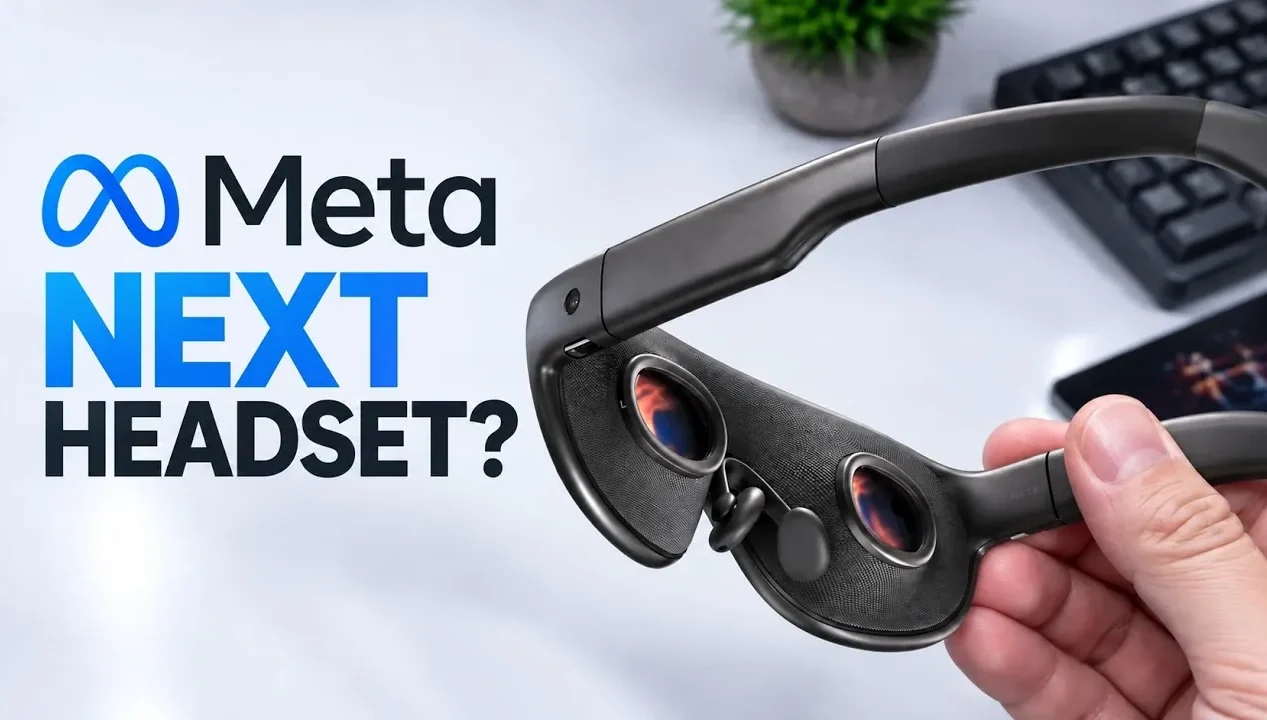
Meta’s highly anticipated mixed reality headset, codenamed Project Phoenix, is shaping up to be a pivotal entry in the evolution of spatial computing. As TechAvid explains, this premium successor to the Meta Quest Pro is designed with a clear focus on comfort and productivity, setting it apart from traditional VR gaming headsets. A standout feature is its lightweight, glasses-style design, which incorporates an external puck for offloading computing and battery functions, reducing the weight on the user’s head to under 110 grams. This thoughtful approach ensures the device is well-suited for extended use in professional settings, such as virtual workspaces and collaborative environments.
Explore how advanced optics, including state-of-the-art pancake lenses, enhance visual clarity while maintaining a compact form factor. Gain insight into the next-generation interaction methods, such as eye tracking and hand gesture controls, which eliminate the need for physical controllers and create a more natural user experience. Additionally, discover how Horizon OS integrates seamlessly with the Meta Quest ecosystem, supporting both existing applications and new mixed reality features tailored for productivity. These elements collectively position Project Phoenix as a forward-thinking device for professionals and tech enthusiasts alike.
Lightweight Design for Enhanced Comfort
TL;DR Key Takeaways :
- Meta’s Project Phoenix is a lightweight, glasses-style mixed reality headset designed for productivity and spatial computing, set to launch in early 2027.
- The device features advanced optics, including pancake lenses and high-resolution pass-through cameras, for immersive mixed reality experiences.
- It introduces intuitive interaction methods like eye tracking and hand gesture controls, eliminating the need for traditional controllers.
- Running on Horizon OS, it integrates seamlessly with the Meta Quest ecosystem, focusing on professional and productivity applications over gaming.
- Project Phoenix supports prescription lenses for accessibility and aims to redefine mixed reality with its comfort, advanced technology and innovative design.
Project Phoenix introduces a lightweight, glasses-style design that prioritizes user comfort and usability. Moving away from the bulky, cumbersome headsets of the past, it features nose pads and an open periphery, making sure a less intrusive and more natural fit. Weighing under 110 grams, the device achieves its minimal weight by offloading most of its computing and battery functions to an external puck. This external unit not only reduces the weight on the user’s head but also extends the device’s usability without compromising performance. Designed for extended sessions, this approach makes the headset particularly suitable for productivity-focused tasks, such as virtual workspaces and collaborative environments.
Advanced Optics and Immersive Mixed Reality Technology
The headset incorporates state-of-the-art pancake lenses, building on the optical advancements introduced in the Quest Pro and Quest 3. These lenses deliver sharper visuals and a more compact form factor, significantly enhancing the overall viewing experience. To support mixed reality applications, Project Phoenix is equipped with high-resolution pass-through cameras, allowing users to seamlessly interact with their physical surroundings while engaging with virtual elements. This combination of advanced optics and camera technology creates an immersive experience that bridges the gap between the real and virtual worlds, making it ideal for spatial computing and augmented productivity.
Intuitive Interaction and Next-Generation Controls
Meta is redefining user interaction in mixed reality by moving beyond traditional controllers. Project Phoenix uses advanced input methods such as eye tracking and hand gesture controls. Eye tracking enables precise navigation and interaction, while hand gestures provide an intuitive way to manipulate virtual objects. Together, these technologies create a natural and immersive user experience, eliminating the need for physical controllers. This innovative approach aligns with the headset’s focus on productivity and spatial computing, offering users a seamless way to engage with digital content in both professional and personal contexts.
Discover other guides from our vast content that could be of interest on Meta.
- Quest 3 Graphics Just Received a Generational Leap Update
- Leaked Meta Quest 4 Specs Point to Double GPU and CPU Power
- Why Meta’s $299 Adventurer Smart Glasses Might Beat the $379 Ray-Bans
- Meta Adventurer Smart Glasses Unboxing and Hands-on First Look
- What Meta Ray-Ban Update 126 Reveals About the Future of Smart Glasses
- Why Meta Left Ray-Ban Behind for Its New $299 Meta Smart Glasses
- Budget-Friendly $299 Meta Glasses vs Meta Ray-Ban: Which Frames Should You Buy?
- How to Connect Your DJI Neo 2 to the Meta Quest 3
- How to Stream YouTube on Your Meta Ray-Ban Display Glasses
- 4 Meta Ray-Ban Accessories to Improve Battery and Privacy
Horizon OS and Ecosystem Integration
Running on Horizon OS, Project Phoenix integrates deeply with the Meta Quest ecosystem. The software supports a wide range of applications, from virtual productivity displays to entertainment and spatial computing tools. Unlike traditional VR headsets that primarily target gaming, Project Phoenix emphasizes functionality and efficiency, catering to professionals, tech enthusiasts and early adopters of mixed reality technology. Horizon OS ensures compatibility with existing Quest applications while introducing new features specifically tailored for mixed reality, making it a versatile tool for a variety of use cases.
Accessibility and Prescription Lens Support
To ensure accessibility for a broader audience, Project Phoenix offers compatibility with prescription lenses. This feature allows users with vision impairments to fully enjoy the device’s capabilities without requiring additional accessories. Meta has incorporated user-friendly software that provides straightforward setup instructions for prescription lenses, making sure a smooth and hassle-free integration process. By addressing the needs of users with varying vision requirements, Meta is making mixed reality technology more inclusive and practical for everyday use.
Anticipated Launch Timeline and Market Position
Meta plans to unveil Project Phoenix at Metacon Connect 2026, with a full release expected in the first half of 2027. This timeline positions the headset as a major player in the rapidly evolving mixed reality market. By focusing on comfort, advanced technology, and productivity, Project Phoenix aims to attract a diverse audience, ranging from professionals seeking innovative tools for work to tech enthusiasts eager to explore the future of spatial computing. Its early launch in 2027 will likely give it a competitive edge in shaping the next generation of mixed reality devices.
Comparison with the Quest 4
While Project Phoenix is designed as a premium productivity tool, the upcoming Quest 4 is expected to cater to traditional VR gaming enthusiasts. Scheduled for release in late 2027, the Quest 4 will likely focus on delivering an immersive gaming experience, emphasizing performance and entertainment. In contrast, Project Phoenix prioritizes spatial computing, offering features such as virtual displays, advanced interaction methods, and seamless integration into professional workflows. This distinction highlights Meta’s strategy to diversify its product lineup, targeting both gaming and productivity markets with tailored solutions.
Shaping the Future of Mixed Reality
Meta’s Project Phoenix represents a significant step forward in the evolution of mixed reality technology. By combining a lightweight design, innovative optics, and intuitive controls, it redefines the potential of mixed reality headsets. With its focus on productivity, comfort, and seamless integration into the Meta Quest ecosystem, Project Phoenix is set to become a cornerstone of Meta’s vision for the future of spatial computing. As its anticipated launch in early 2027 approaches, this device is expected to attract a wide range of users, from professionals to early adopters, solidifying Meta’s leadership in the mixed reality space.
Media Credit: TechAvid
Disclosure: Some of our articles include affiliate links. If you buy something through one of these links, Geeky Gadgets may earn an affiliate commission. Learn about our Disclosure Policy.
