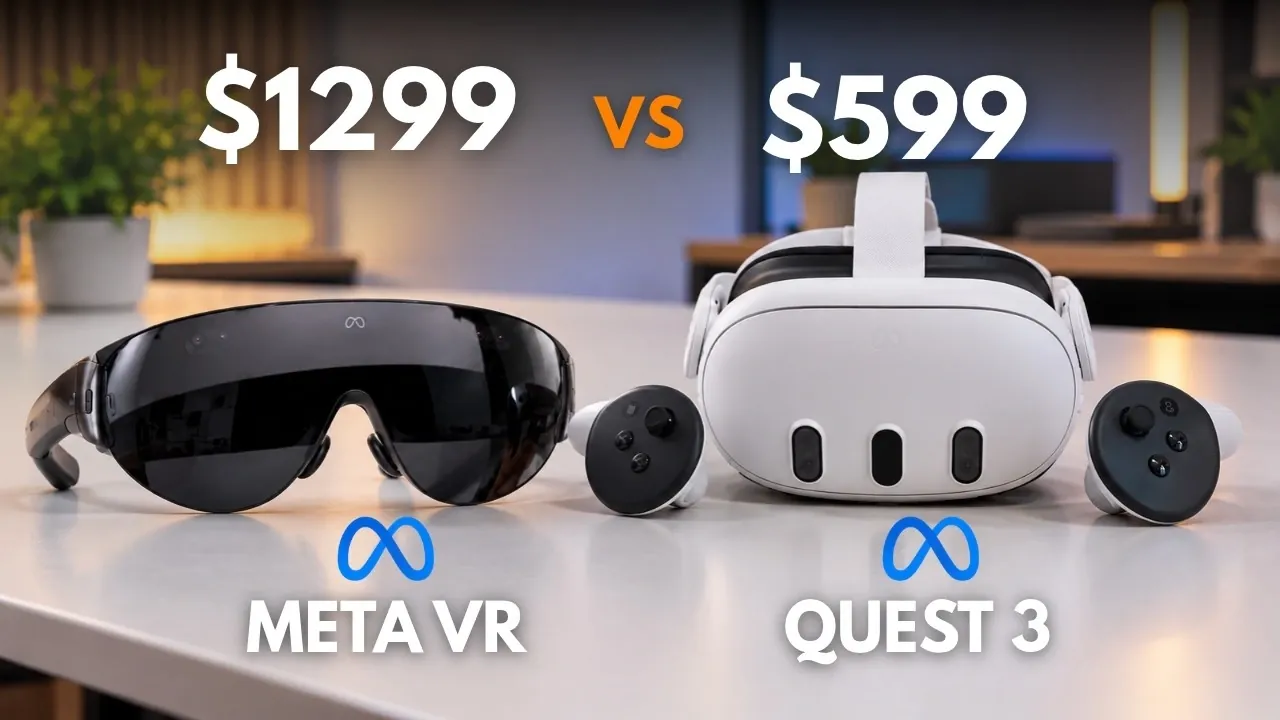
The VR landscape is evolving rapidly and choosing the right headset depends on how you plan to use it. Tech Court explores the differences between the Quest 3, priced at $599 and the upcoming Meta VR headset, set to launch in Spring 2027 for $1,299. While the Quest 3 emphasizes versatility and active use with features like a wider 110° field of view and untethered design, the new Meta VR headset targets stationary activities with its sharper 37 pixels per degree display and lightweight build. These contrasting design philosophies highlight how each device caters to distinct user needs, from immersive gaming to productivity-focused tasks.
Dive into this guide to understand how factors like battery life, controller options and storage capacities influence the overall experience. You’ll gain insight into why the Quest 3 excels for gaming and fitness, while the Meta VR headset positions itself as a premium choice for stationary use, such as watching movies or working. By the end, you’ll have a clearer understanding of which headset aligns best with your preferences and priorities.
TL;DR Key Takeaways :
- The new Meta VR headset, launching in Spring 2027 at $1,299, targets premium stationary use with sharper visuals and enhanced comfort, while the Quest 3, priced at $599, focuses on active gaming and fitness.
- The Quest 3 offers a wider 110° field of view (FOV) and longer battery life, making it ideal for immersive gaming and extended sessions, whereas the new Meta headset’s narrower 70° FOV is better suited for productivity and stationary tasks.
- The new Meta VR headset delivers superior display quality with 37 pixels per degree (PPD) for sharper text and visuals, compared to the Quest 3’s 25 PPD, but may rely on external power sources due to its lightweight puck-and-cable design.
- The Quest 3 includes controllers and up to 512GB of internal storage, while the new Meta headset starts at 128GB with expandable storage but may require separate controller purchases, increasing its overall cost.
- The Quest 3 is recommended for gaming and fitness enthusiasts due to its affordability, versatility and untethered design, while the new Meta VR headset is better suited for stationary users prioritizing visual clarity and comfort.
Price and Availability
- Quest 3: Currently available for $599.
- New Meta VR Headset: Launching in Spring 2027 for $1,299.
The significant price gap reflects the differing design philosophies of these devices. The Quest 3 offers a cost-effective, versatile VR experience suitable for a wide range of users. On the other hand, the new Meta VR headset targets those seeking a premium experience, particularly for stationary tasks, with features tailored to enhance comfort and visual clarity.
Performance Comparison
When evaluating these headsets, it’s essential to consider their technical specifications and how they align with your intended use:
- Field of View (FOV): The Quest 3 features a wider 110° FOV, making it ideal for immersive gaming and fitness activities. In contrast, the new Meta VR headset offers a narrower 70° FOV, which is better suited for focused, stationary tasks like reading or working.
- Display Quality: The new Meta VR headset delivers 37 pixels per degree (PPD), providing sharper visuals and improved text clarity compared to the Quest 3’s 25 PPD. This makes it particularly appealing for users who prioritize visual detail.
- Battery Life: The Quest 3 supports longer sessions, making it more practical for extended gaming or fitness use. While the battery life of the new headset remains unconfirmed, its lightweight puck-and-cable design suggests it may rely on external power sources, potentially limiting portability.
- Storage Options: The Quest 3 offers up to 512GB of internal storage, accommodating a wide range of apps and games. The new Meta VR headset starts at 128GB but includes expandable storage, providing flexibility for users with larger content libraries.
- Design and Comfort: The new headset’s lightweight design (100g on the face) minimizes strain during prolonged use, making it comfortable for stationary activities. However, its puck-and-cable system may restrict movement, reducing its appeal for active users.
- Controllers: The Quest 3 includes controllers as part of the package, making sure a ready-to-use experience. In contrast, the new Meta VR headset may require separate controller purchases, potentially increasing its overall cost.

Discover other guides from our vast content that could be of interest on Meta Quest.
- Meta Project Phoenix is Expected to Launch in Early 2027
- MetaQuest Emulator Brings Batman VR to Non-Meta Headsets
- Meta Phoenix Quest Air VR Headset First Official Image Leaked?
- How to Connect Your DJI Neo 2 to the Meta Quest 3
- Leaked Meta Quest 4 Specs Point to Double GPU and CPU Power
- Steam Frame vs Quest 3 : Why Valve Completely Outperforms Meta
- Meta Quest 3 is Changing Movies Into Immersive Storytelling Experiences
- Valve Steam Frame VR Headset Costs $1,059 for PC Players
- Meta Quest 3S: Top 5 Accessories for Enhanced VR
- Complete Guide to Setting Up Your Meta Adventures Glasses
Use Case Scenarios
Your primary use case will significantly influence which headset is the better fit for your needs. Here’s how each device aligns with different activities:
- Gaming and Fitness: The Quest 3’s wider FOV, untethered design and included controllers make it the superior choice for users who enjoy active gaming or fitness applications. Its longer battery life further enhances its suitability for extended sessions.
- Movies and Stationary Use: The new Meta VR headset excels in visual sharpness and comfort, making it an excellent option for watching movies or engaging in stationary tasks. However, its narrower FOV and potential light leakage could slightly detract from the overall experience.
- Work and Productivity: With its enhanced text clarity and potential for virtual monitor applications, the new headset shows promise as a productivity tool. However, its full capabilities in this area remain to be thoroughly tested after launch.
Key Considerations Before Purchase
Before deciding, it’s important to weigh the following factors to ensure the headset aligns with your expectations:
- The new Meta VR headset’s narrower FOV may reduce immersion for gaming and fitness activities, making it less appealing for active users.
- The puck-and-cable system, while lightweight, could limit mobility and convenience, particularly for users who prefer untethered experiences.
- Battery life on the new headset may not support extended sessions without frequent recharging or reliance on external power sources.
- Both headsets are compatible with glasses, but individual comfort may vary depending on the design and fit of each device.
Buying Recommendations
- For Gaming and Fitness: The Quest 3 is the clear winner, offering a wider FOV, longer battery life and included controllers at a more affordable price point. Its untethered design also enhances mobility and ease of use.
- For Stationary Use: If you prioritize sharper visuals and comfort for activities like watching movies or working, the new Meta VR headset may be worth considering. However, waiting for independent reviews post-launch is advisable to confirm its performance and value.
- For General Use: The Quest 3 is a versatile option that is available now, allowing you to enjoy a well-rounded VR experience while keeping the option open to evaluate the new headset once it becomes available.
Market Context
The new Meta VR headset enters a competitive landscape dominated by high-end devices like the Valve Steam Deck, priced at $1,600 and the Apple Vision Pro, which retails for $3,699. Despite its premium price, the new Meta headset benefits from seamless integration with Meta’s existing VR ecosystem, making sure compatibility with a wide range of apps and games. This continuity makes it an attractive choice for users already invested in Meta’s platform, offering a balance between cost and functionality compared to its more expensive competitors.
Ultimately, the Quest 3 remains the go-to option for active users seeking affordability and versatility, while the new Meta VR headset caters to those who prioritize stationary use, sharper visuals and comfort. Carefully assessing your needs and preferences will help you make the right choice.
Media Credit: Tech Court
Disclosure: Some of our articles include affiliate links. If you buy something through one of these links, Geeky Gadgets may earn an affiliate commission. Learn about our Disclosure Policy.
