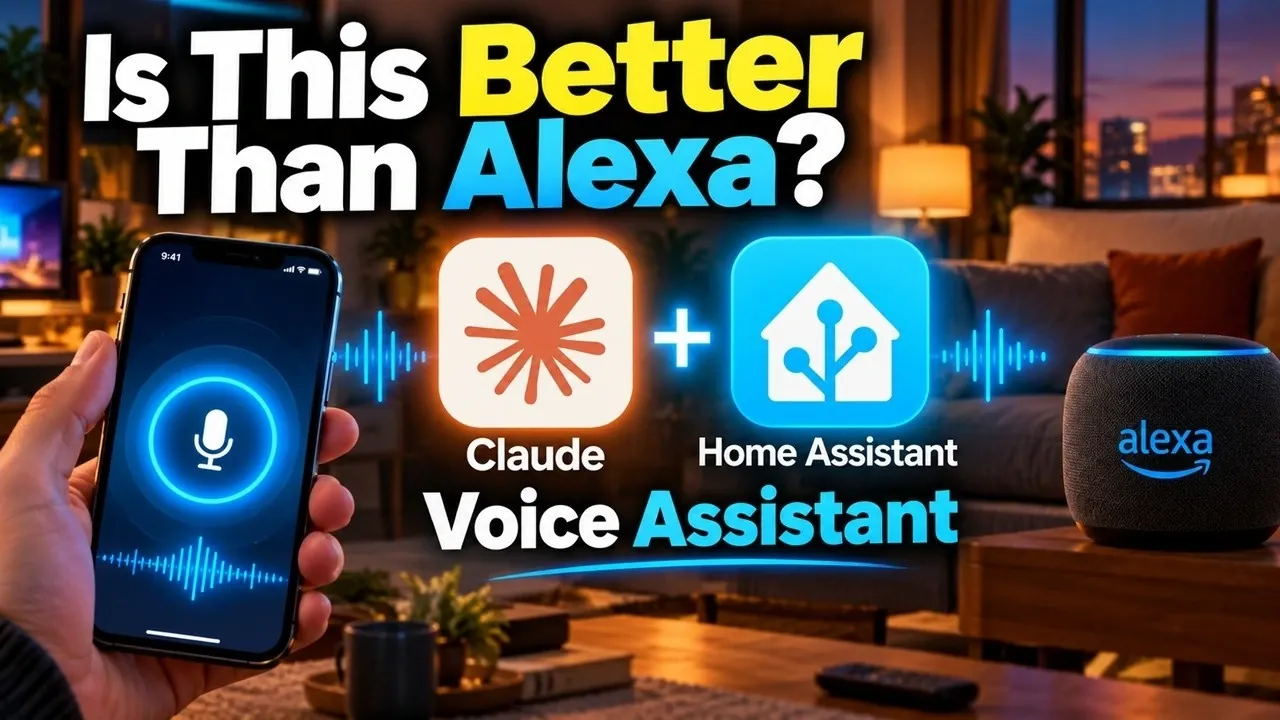
Turning Claude AI into a smart home voice assistant provides an opportunity to rethink how we interact with connected devices. According to Smart Life, integrating Claude AI with Home Assistant uses its natural language processing (NLP) to enable conversational commands that feel more intuitive. For example, instead of saying “Turn off the kitchen lights,” users can phrase requests like “Dim the lights in the kitchen,” achieving the same result with greater flexibility. This approach also supports contextual follow-ups, allowing for smoother interactions compared to systems like Alexa or Google Assistant.
Dive into setting up automations that align with energy usage patterns, managing entertainment systems through integrations and balancing local versus cloud processing for better performance. Gain insight into the technical steps required for integration, the types of devices that work well with this setup and how to create routines tailored to specific household needs. This analysis provides a clear roadmap for making Claude AI a functional part of your smart home.
The Advantages of Choosing Claude AI
TL;DR Key Takeaways :
- Claude AI enhances smart home management with advanced natural language processing (NLP), allowing conversational commands and contextual understanding for more intuitive interactions.
- The system supports effortless automation and energy optimization, offering actionable recommendations based on real-time data to reduce costs and improve sustainability.
- Claude AI integrates with entertainment platforms like Netflix and Spotify, providing personalized recommendations and seamless playback, while making sure accessibility across various devices.
- Setup requires components like Claude AI, Home Assistant and Sonos speakers, with a hybrid approach to processing tasks locally or via the cloud for efficiency and cost-effectiveness.
- While offering significant benefits, limitations include API usage costs, reliance on stable internet and limited conversation memory, with safety measures in place to prevent unauthorized changes.
Claude AI introduces a new level of intelligence and adaptability to smart home control. Unlike conventional voice assistants, it uses advanced natural language processing (NLP) to interpret conversational commands. This eliminates the need to memorize rigid phrases. For example, instead of saying, “Turn on the living room lights,” you can simply ask, “Can you brighten the living room for me?” and achieve the same result. This conversational approach simplifies home management, making it more intuitive and user-friendly.
Additionally, Claude AI’s ability to understand context enhances its functionality. It can process follow-up commands without requiring you to repeat previous details. For instance, after asking it to dim the lights, you can say, “And set the thermostat to 72 degrees,” and it will seamlessly execute both tasks. This contextual understanding makes it a standout choice for smart home enthusiasts.
Effortless Automation and Energy Optimization
One of the most compelling features of this integration is its ability to create and manage complex automations through simple, conversational commands. For example, you can instruct Claude to establish an energy-saving routine, such as lowering the thermostat when solar panels generate excess power. Before implementing changes, Claude reviews existing automations to avoid conflicts and seeks your approval, making sure your smart home operates efficiently and without unintended disruptions.
Energy management is another key strength of Claude AI. By analyzing real-time data from energy systems, such as battery levels or solar production forecasts, it provides actionable recommendations to optimize energy usage. For instance, it might suggest running high-energy appliances like dishwashers or washing machines during peak solar output to maximize savings. These insights not only reduce costs but also contribute to a more sustainable and environmentally friendly home.

Take a look at other insightful guides from our broad collection that might capture your interest in Home Assistant projects and hardware.
- Create Smarter Home Automations by Combining Obsidian with Home Assistant
- IKEA Liljebagge Costs Just €15 to Undercut Eve Thermo By €65
- IKEA Smart Home Without Dirigera : Homey Pro, Home Assistant & HomeKit
- IKEA Matter Devices Now Connect to Apple Home Without Dirigera Hub
- How Meta Ray-Ban Glasses Became the Ultimate Smart Home Remote
- IKEA Fixes BILRESA Battery Life with Quiet Hardware Revisions
- Why IKEA’s Hub-Free Dubbelkisel is Changing the Rules of Smart Lighting
- Smart Home Assistants Compared Homey Pro vs Home Assistant : Find the Perfect Fit for Your Home
- Build a 10.1-Inch Home Assistant Panel with the ESP32
- Why the Home Assistant Green Price Hike Points to a Bigger Problem
Enhanced Entertainment and Accessibility
Claude AI also enhances your entertainment experience by integrating with popular streaming platforms like Netflix or Spotify. It can recommend movies, shows, or playlists based on your preferences, ratings, or availability. Once you’ve made a selection, Claude can automate playback on your preferred device, making sure a seamless experience. A built-in watchlist prevents repeated recommendations, making your entertainment choices more personalized and enjoyable.
Accessibility is another significant benefit. Claude AI is designed to work with a wide range of devices, including older iPhones and Android phones. You can interact with it using shortcuts, widgets, or voice commands, making sure that even users without the latest technology can enjoy its features. This flexibility makes it an inclusive option for households with diverse needs.
Setting Up Claude AI in Your Smart Home
To integrate Claude AI into your smart home, you’ll need the following components:
- Claude AI
- Model Context Protocol (MCP) tools
- Home Assistant
- Sonos speakers
- A smartphone shortcut
Once these components are in place, the system processes commands locally whenever possible to reduce reliance on cloud APIs and minimize costs. For example, simple tasks like adjusting lighting or volume are handled locally, while more complex operations, such as analyzing energy data, may require cloud processing. This hybrid approach ensures a balance between efficiency and functionality.
Costs, Limitations and Safety Considerations
While Claude AI offers numerous advantages, it’s important to be aware of its limitations. The system incurs API usage costs based on task complexity and data volume. Additionally, most operations require a stable internet connection and conversation memory is limited to a few minutes. These factors may influence how you use the assistant for extended or data-intensive tasks.
Safety is a critical aspect of any smart home system and Claude AI prioritizes user control. It is programmed to seek confirmation before making significant changes, such as adjusting security settings or altering heating schedules. Automation rules are designed to prevent unauthorized modifications to essential systems. To maintain safety and reliability, it’s advisable to periodically review automations involving critical systems, making sure they align with your preferences and requirements.
Unlocking the Potential of Smart Home AI
Integrating Claude AI with Home Assistant demonstrates the potential of artificial intelligence to enhance smart home functionality. By allowing natural language interactions, real-time data analysis and advanced automation capabilities, this system delivers a more personalized and efficient experience. While there are costs and limitations to consider, the benefits of improved control, energy management and accessibility make it a compelling choice for anyone seeking to upgrade their smart home. With Claude AI, managing your home becomes not only smarter but also more intuitive and sustainable.
Media Credit: Smart Life
Disclosure: Some of our articles include affiliate links. If you buy something through one of these links, Geeky Gadgets may earn an affiliate commission. Learn about our Disclosure Policy.
