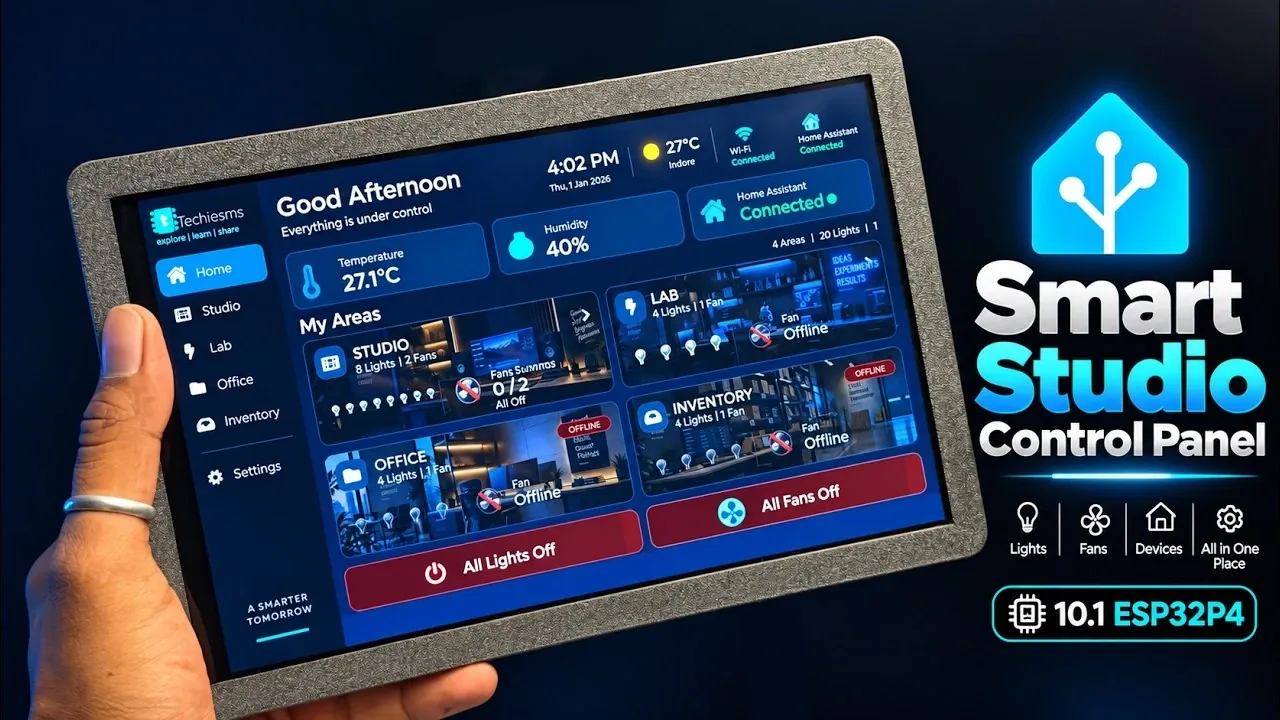
Building a custom smart home control panel can feel like a daunting task, but Techiesms demonstrates how the ESP32-P4 module simplifies the process. Central to this project is a 10.1-inch TFT capacitive touchscreen display with a resolution of 1200×800 pixels, offering a responsive interface for managing devices and monitoring data. Paired with the ESP32-P4 chipset, which features a dual-core 400 MHz processor and extensive connectivity options like Wi-Fi, Bluetooth and Ethernet, this setup provides a robust foundation for integrating with platforms like Home Assistant. The guide also highlights practical considerations, such as mounting the display with a 3D-printed frame for a polished, wall-mounted finish.
Explore how to use the LVGL library to design custom user interfaces tailored to your smart home needs. You’ll gain insight into configuring room-based controls for appliances, using real-time temperature and humidity monitoring and optimizing fan speed adjustments. The guide also provide more insights into hardware customization options, such as GPIO expansion and SD card storage, making sure flexibility for advanced projects. By the end, you’ll have a clear understanding of how to create a functional, visually appealing control panel that seamlessly integrates into your home automation system.
Key Features and Display Capabilities
- The ESP32-P4-based 10.1-inch TFT touchscreen display features a high-resolution 1200×800 capacitive touch panel with support for up to five touch points, ideal for smart home and IoT applications.
- Powered by the ESP32-P4 chipset with a dual-core 400 MHz processor, 16 MB flash memory and 32 MB PS RAM, it supports resource-intensive tasks like multimedia processing and AI applications.
- Comprehensive connectivity options include dual-band Wi-Fi, Bluetooth 5, Ethernet, LTE, USB Type-C ports, GPIO expansion, an SD card slot and RTC battery support for versatile use cases.
- Preloaded firmware offers user-friendly features such as a calculator, music player, camera apps and Android-like gestures, with seamless integration into systems like Home Assistant for smart home control.
- Highly customizable and developer-friendly, the platform supports advanced applications like camera streaming, custom UI development and AI-driven solutions, with extensive resources available on GitHub.
At the heart of this module is a 10.1-inch TFT LCD touchscreen display with a resolution of 1200×800 pixels. The capacitive touch panel supports up to five simultaneous touch points, making sure smooth, precise and responsive interactions. This makes it particularly well-suited for intuitive interfaces in smart home control systems or other IoT applications.
The display’s size and resolution provide ample space for designing visually appealing and functional user interfaces. Whether you’re managing multiple devices or monitoring real-time data, the screen’s clarity and responsiveness enhance the overall user experience. Its robust design ensures durability, making it ideal for long-term use in various environments.
Advanced Hardware Specifications
The module is powered by the ESP32-P4 chipset, which includes a dual-core 400 MHz processor, 16 MB of flash memory and 32 MB of PS RAM. This configuration delivers reliable performance, even for resource-intensive tasks such as multimedia processing or AI-driven applications. Additional hardware features include:
- An ESP32-C6 mini chip for dual-band Wi-Fi (2.4 GHz) and Bluetooth 5 connectivity, making sure fast and stable wireless communication.
- A built-in microphone, speaker and 2 MP camera, allowing multimedia applications such as video calls, voice commands and camera streaming.
These specifications make the module versatile enough to handle a wide range of use cases, from smart home automation to IoT device management and beyond.

Deep dive into the latest in ESP32 by exploring our other resources and articles.
- $5 ESP32-S3 Super Mini Packs Wi-Fi and Bluetooth
- How an $8 ESP32 S3 Microcontroller Runs a 28.9M Parameter Local LLM
- 5 ESP32 Projects Worth Building in 2026: Such as an Apple HomeKit Controller
- $4 ESP32 Module Brings Wi-Fi and Bluetooth to IoT Projects
- Replacing Security Cameras with Three $10 ESP32S3 Wi-Fi Boards
- ESP32-S3 Super Mini Costs $5 and Packs Wi-Fi and Bluetooth
- ESP32-S3 Super Mini Brings 240 MHz Dual-Core Power For $4
- ESP32 S31 Devkit Hands-on: 320 MHz RISC-V Chip Adds Wi-Fi 6
- $4 ESP32-S3 Super Mini Packs a 0.96-Inch IPS TFT Screen
- Build a DIY Open-Source Flipper Zero Using a ESP32-DIV
Comprehensive Connectivity Options
The ESP32-P4 module offers an extensive array of connectivity options, making it adaptable to diverse project requirements. These include:
- An Ethernet port for stable and reliable wired connections, ideal for environments with high network traffic.
- LTE connectivity via the SIM 7670G module, allowing integration with mobile networks for remote access and control.
- Multiple USB Type-C ports supporting USB device, OTG and JTAG functionalities for enhanced versatility.
- GPIO expansion ports for hardware customization, allowing developers to connect additional sensors or peripherals.
- An SD card slot for expanded storage, useful for storing data logs, multimedia files, or firmware updates.
- RTC battery support to maintain real-time clock functionality during power outages, making sure uninterrupted operation.
These features make the module a reliable choice for applications ranging from IoT hubs to standalone smart home control panels, offering both flexibility and scalability.
Preloaded Firmware and User-Friendly Features
The device comes with preloaded firmware that includes a variety of applications designed to enhance its functionality. These include:
- A calculator, music player and settings menu for basic utility and customization.
- Camera and gallery apps for multimedia use, such as capturing and viewing images or videos.
- A recorder and games, adding entertainment and additional functionality to the device.
The interface is optimized for touch interaction, featuring Android-like gestures for a seamless and intuitive user experience. With Wi-Fi and Bluetooth connectivity fully operational out of the box, the initial setup process is straightforward, allowing users to quickly integrate the device into their existing systems.
Customization and Developer-Friendly Platform
The ESP32-P4 platform is highly customizable, making it an excellent choice for developers looking to tailor the device to specific needs. Comprehensive resources, including example code and setup instructions, are available on GitHub. These resources cover a range of applications, such as camera streaming over a local network and custom UI development.
The flexibility of the platform enables developers to explore a wide variety of use cases, from smart home control panels to advanced IoT solutions and even AI-driven applications. With its robust hardware and extensive developer support, the ESP32-P4 module enables users to bring their ideas to life with minimal barriers.
Seamless Home Assistant Integration
One of the most compelling applications of this module is its integration with Home Assistant, a popular open source home automation platform. Using the LVGL library, developers can create custom user interfaces to control various appliances and monitor real-time data. Key features of this integration include:
- Room-based controls for managing lights, fans and other connected devices.
- Fan speed adjustment through an intuitive and user-friendly interface.
- Real-time temperature and humidity monitoring, providing valuable insights for maintaining a comfortable living environment.
The custom UI synchronizes seamlessly with the Home Assistant dashboard, offering centralized control of all connected devices. This integration not only enhances functionality but also simplifies the management of smart home systems, making it a practical solution for both beginners and advanced users.
Practical Implementation and Final Setup
To maximize the potential of the ESP32-P4 module, many users opt to mount the display on a wall using a 3D-printed frame. This setup has been extensively tested for controlling appliances such as lights, fans and other smart devices. The result is a sleek, functional and visually appealing control panel that blends seamlessly into any modern home environment.
The combination of high-performance hardware, extensive connectivity options and developer-friendly features makes this module an ideal choice for creating advanced IoT and smart home solutions. Whether you’re a professional developer or a hobbyist, the ESP32-P4-based touchscreen display offers a reliable and versatile platform to bring your projects to life.
Media Credit: techiesms
Disclosure: Some of our articles include affiliate links. If you buy something through one of these links, Geeky Gadgets may earn an affiliate commission. Learn about our Disclosure Policy.
