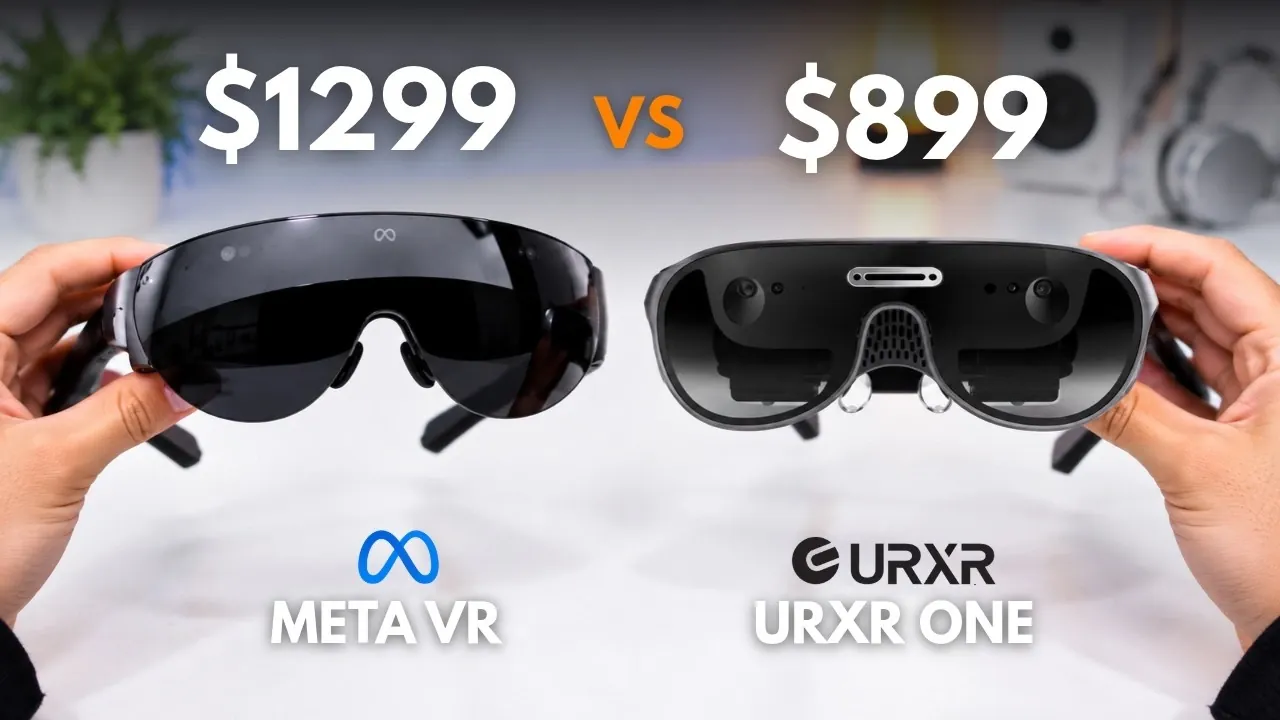
Virtual reality is evolving rapidly and the Meta VR Glasses and URXR One glasses represent two compelling yet fundamentally different approaches to this technology. As highlighted by Tech Court, both devices aim to push the boundaries of spatial computing with features like high-resolution micro OLED displays, six degrees of freedom (6DoF) tracking, and color pass-through capabilities. However, their design philosophies set them apart: the Meta VR glasses offer a standalone experience with a dedicated compute puck, while the URXR One glasses prioritize modularity, relying on external devices like smartphones or laptops for processing power. This distinction reflects a broader trade-off between self-sufficiency and portability, shaping how each device fits into users’ workflows.
Explore how these differences translate into real-world applications, from the Meta VR glasses’ immersive gaming capabilities to the URXR One’s lightweight productivity focus. You’ll gain insight into how factors like field of view, refresh rate, and audio integration impact user experience, as well as the trade-offs between ecosystem maturity and cost. Whether you’re drawn to standalone VR or modular flexibility, this breakdown will help clarify which device aligns better with your needs.
Design Philosophy: Standalone vs Modular
TL;DR Key Takeaways :
- The Meta VR glasses are a standalone spatial computing platform with an integrated compute puck, while the URXR One glasses adopt a modular design, relying on external devices for computing power.
- Portability differs: URXR One glasses weigh 93 grams and prioritize mobility, while Meta VR glasses weigh 100 grams plus a 300-gram compute puck for standalone functionality.
- Display specifications vary, with Meta VR glasses offering a higher refresh rate (120Hz) but a narrower field of view, while URXR One glasses emphasize clarity and a wider field of view.
- Audio and ecosystem contrast: Meta VR glasses include built-in speakers and use the mature Quest ecosystem, while URXR One glasses require external audio devices and have a less developed software ecosystem.
- Pricing reflects features: Meta VR glasses are priced at $1,299.99 for a comprehensive standalone experience, while URXR One glasses cost $899, targeting budget-conscious users with a modular approach.
The core difference between these two devices lies in their design approach, which shapes their functionality and user experience.
– Meta VR Glasses: These glasses are designed as a self-contained spatial computing platform, featuring a separate compute puck that houses the processor, battery and storage. This design enables standalone operation, eliminating the need for external devices. Users can enjoy a seamless VR experience without relying on additional hardware.
– URXR One Glasses: In contrast, these glasses adopt a modular design, functioning as a lightweight display accessory. They rely on external devices, such as laptops or smartphones, for computing power. This approach prioritizes portability and integration with existing hardware, making them a practical choice for users who already own compatible devices.
This distinction highlights the trade-off between independence and modularity, catering to different user preferences and workflows.
Weight and Portability: Balancing Features and Mobility
Portability is a shared goal for both devices, but their execution reflects different priorities.
– URXR One Glasses: Weighing just 93 grams, these glasses achieve exceptional lightness by omitting built-in components such as batteries or speakers. Instead, they draw power from connected devices or an optional power hub. This design ensures maximum mobility, making them ideal for users on the go.
– Meta VR Glasses: While slightly heavier at 100 grams, they include a 300-gram compute puck. This additional weight supports a fully standalone experience, allowing users to enjoy VR without tethering to external devices. The trade-off is a slightly reduced level of portability compared to the URXR One.
These differences underscore the balance between lightweight design and self-sufficiency, offering users flexibility based on their specific needs.

Here are more guides from our previous articles and guides related to Meta VR glasses that you may find helpful.
- Immersive Meta VR Glasses Challenge XREAL Aura AR Vision
- New Meta VR Glasses Pack an IMAX-certified Cinema and Weigh Just 100g
- Spring 2027 Launch Set for the $1,300 Meta VR Glasses
- Meta’s 100-Gram VR Glasses Replace Bulky Headset Designs
- Meta Connect 2026: Ray-Ban Meta Audio, Ray-Ban Meta Gen 3 and Compact VR Glasses
- $1299 Meta VR Glasses Offer a Portable Laptop Alternative: Hand Tracking, Lightweight
- URXR One vs XREAL Aura: AR Glasses Specs and Features Compared
- MetaQuest Emulator Brings Batman VR to Non-Meta Headsets
Display and Field of View: Resolution vs Immersion
Both devices feature high-resolution micro OLED displays, but their specifications reflect different priorities in terms of visual performance.
– URXR One Glasses: Deliver a resolution of 2448×2064 pixels per eye, achieving 36 pixels per degree (PPD) with a 90Hz refresh rate. The field of view spans 90° diagonally, with 80° horizontal and 57° vertical coverage. This combination emphasizes clarity and a wide field of view, making them suitable for productivity and media consumption.
– Meta VR Glasses: Offer a slightly higher resolution of 2412×2288 pixels per eye, delivering 37 PPD and a faster 120Hz refresh rate. However, their field of view is narrower, measuring 70° horizontally and 66° vertically, which may limit immersion but enhances visual sharpness and smoothness for gaming and interactive experiences.
These specifications highlight the trade-offs between resolution, refresh rate, and field of view, catering to different use cases and user preferences.
Pass-Through and Tracking: Bridging Virtual and Physical Worlds
Both devices employ camera-based color pass-through technology and support 6DoF tracking, allowing users to interact with virtual environments while maintaining spatial awareness.
– URXR One Glasses: Feature a pass-through resolution of 2328×528 at 90fps, with latency below 10 milliseconds, making sure smooth and responsive performance. This makes them particularly effective for applications requiring precise interaction with physical surroundings.
– Meta VR Glasses: While specific resolution and latency details remain undisclosed, they also deliver high-quality pass-through and tracking capabilities, making sure a seamless blend of virtual and physical spaces.
The URXR One’s detailed technical specifications provide greater transparency, while the Meta VR glasses focus on delivering a robust overall experience.
Audio and Accessories: Lightweight vs All-in-One
Audio capabilities further differentiate the two products, reflecting their design philosophies.
– URXR One Glasses: Lack built-in speakers, requiring users to rely on external headphones or earbuds. While this contributes to their lightweight design, it may inconvenience users seeking an all-in-one solution for immersive experiences.
– Meta VR Glasses: Include an integrated audio system, enhancing the user experience for gaming and standalone VR applications. This feature eliminates the need for additional accessories, providing a more cohesive and immersive experience.
The choice between lightweight simplicity and integrated functionality depends on individual preferences and use cases.
Software and Ecosystem: Maturity vs Modularity
The software ecosystems of these devices reflect their differing levels of development and target audiences.
– Meta VR Glasses: Use the well-established Quest ecosystem, offering a wide range of games, apps, hand tracking and a standalone operating system. This robust platform supports both productivity and entertainment, making it a versatile choice for various applications.
– URXR One Glasses: Provide companion software for creating spatial displays and virtual environments. While functional, their ecosystem is less developed, limiting the range of available applications and experiences compared to the Meta VR glasses.
The Meta VR glasses’ mature ecosystem offers greater versatility, while the URXR One’s modular approach focuses on specific productivity-oriented use cases.
Use Cases: Productivity vs Immersion
The intended use cases for these devices highlight their contrasting strengths and target audiences.
– URXR One Glasses: Best suited for users prioritizing lightweight design and productivity. They excel in creating virtual workspaces, watching media, or enhancing workflows by using existing devices for computing power. This makes them a cost-effective option for users who already own compatible hardware.
– Meta VR Glasses: Ideal for standalone VR experiences, immersive gaming and users seeking a comprehensive spatial computing platform. Their all-in-one design and mature ecosystem make them versatile for a wide range of applications, from entertainment to professional use.
These distinctions reflect the evolving needs of XR users, offering tailored solutions for different priorities.
Pricing and Availability: Cost vs Features
Pricing plays a significant role in differentiating these two products.
– Meta VR Glasses: Priced at $1,299.99, reflecting their comprehensive hardware and software package. This higher price point aligns with their standalone capabilities and mature ecosystem.
– URXR One Glasses: Expected to retail at $899, with early backer discounts available through crowdfunding campaigns. This lower price point makes them an attractive option for budget-conscious users seeking a modular solution.
The price difference underscores the trade-offs between cost, features, and ecosystem maturity.
Crowdfunding Considerations: Risks and Rewards
As a crowdfunded product, the URXR One glasses come with inherent risks. Specifications, timelines and final performance may vary compared to established consumer hardware like the Meta VR glasses. Potential buyers should carefully weigh these uncertainties against the lower price point and modular design. Crowdfunding offers an opportunity to support innovation but requires a degree of trust in the product’s development process.
Two Paths in Spatial Computing
The Meta VR glasses and URXR One glasses cater to distinct needs within the XR space.
– Meta VR Glasses: Offer a robust, standalone platform with a mature ecosystem, making them ideal for immersive gaming and all-in-one VR experiences.
– URXR One Glasses: Provide a lightweight, cost-effective solution for users who prefer to use existing devices for productivity and media consumption.
Together, these products illustrate the diverse priorities of users in the rapidly growing field of spatial computing, showcasing the potential for innovation in both standalone and modular designs.
Media Credit: Tech Court
Disclosure: Some of our articles include affiliate links. If you buy something through one of these links, Geeky Gadgets may earn an affiliate commission. Learn about our Disclosure Policy.
