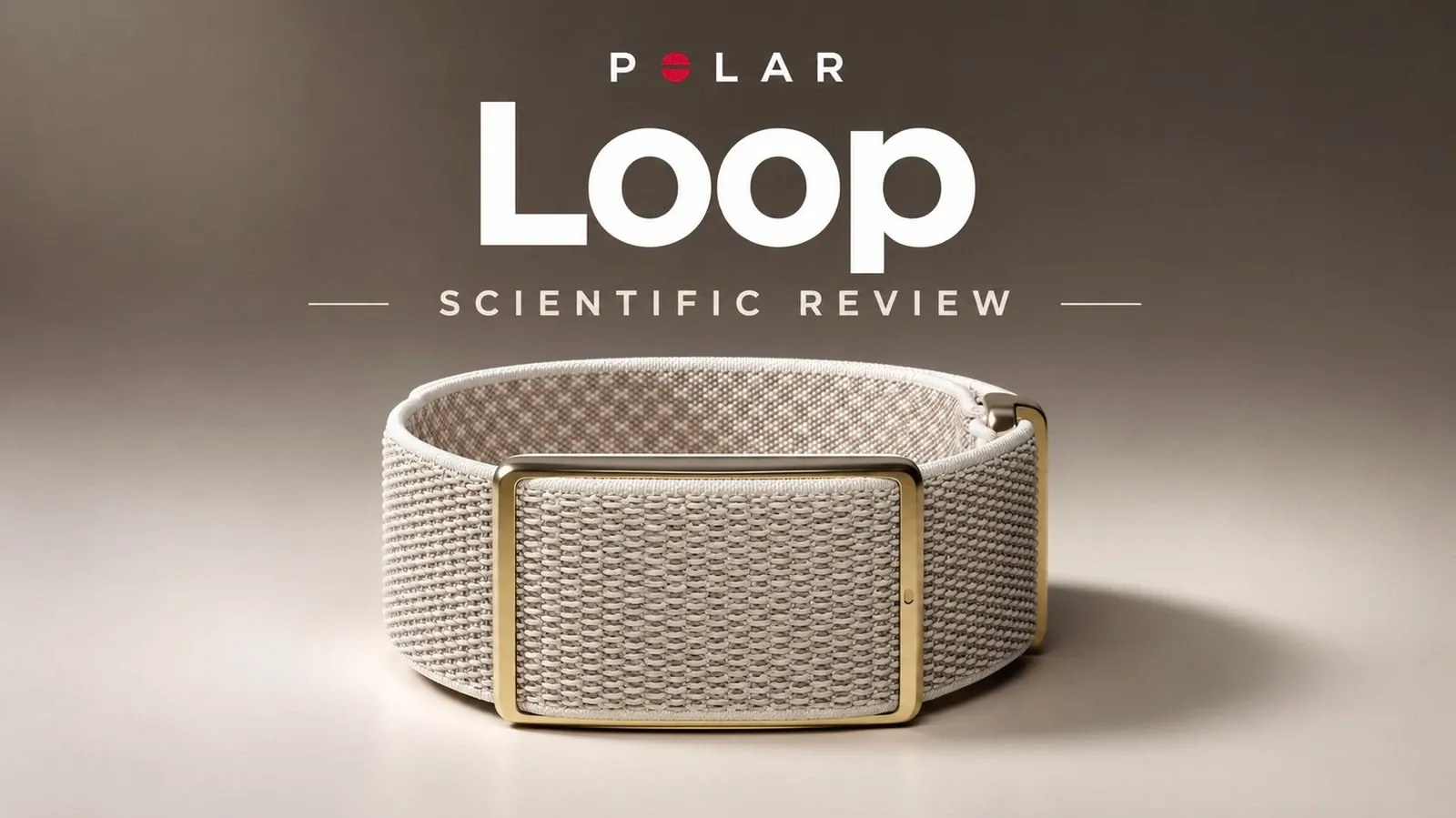
The Polar Loop, a fitness tracker priced at $200, has been evaluated in a detailed review by the Quantified Scientist, a post-doctoral researcher with expertise in biological data analysis. Over a week of testing, the device’s heart rate and sleep tracking capabilities were assessed using two units placed on the wrist and biceps. While the Polar Loop demonstrated accurate nighttime heart rate tracking, particularly with biceps placement, which closely matched the Polar H10 ECG chest strap, its performance during exercise revealed significant limitations. For instance, wrist-based tracking during running produced unreliable readings, with correlations as low as 0.42 and occasional spikes to 180 BPM, far above expected ranges. These findings highlight the device’s mixed results depending on activity type and placement.
Explore how the Polar Loop compares to competitors like the Fitbit Air and Amazfit Helio strap, both of which outperformed it in heart rate and sleep tracking accuracy. You’ll also gain insight into the device’s struggles with auto-detection during cycling, its moderate sleep tracking performance, and the challenges posed by weightlifting activities. Additionally, the review examines the Polar Flow app and its integration within the broader Polar ecosystem, alongside considerations for users prioritizing data security. This analysis provides a comprehensive breakdown of the Polar Loop’s strengths and weaknesses, helping you determine whether it meets your fitness tracking needs.
Heart Rate Tracking: Mixed Results
TL;DR Key Takeaways :
- The Polar Loop’s heart rate tracking accuracy varied by activity and placement, performing well during nighttime with minimal movement but struggling significantly during exercise, especially with wrist-based tracking.
- Biceps placement generally provided more reliable data than wrist placement, but both struggled with activities like outdoor cycling and weightlifting, where incomplete data and unrealistic readings were common.
- Sleep tracking was rated as “okay,” with moderate performance and tendencies to overestimate deep and REM sleep compared to EEG reference devices, falling short of competitors like Fitbit Air and Amazfit Helio strap.
- The Polar Flow app was described as underwhelming compared to competitors, though the device may appeal to users prioritizing potential data security benefits due to Polar’s European origins.
- The Polar Loop was deemed overshadowed by more capable and affordable alternatives, such as the Fitbit Air and Amazfit Helio strap, with its $200 price tag not justified by its performance in the 2026 review.
The Polar Loop’s heart rate tracking accuracy depended on activity type and placement. During nighttime, when movement is minimal and heart rate is stable, the device performed well. Both wrist and biceps placements closely matched the Polar H10 ECG chest strap, with a minor offset of about 0.5 BPM. Heart rate variability (HRV) during sleep was also captured accurately, with the biceps placement yielding slightly better results.
Biceps placement generally provided more reliable data than the wrist. While official biceps bands are available, the review used the provided straps for testing both placements.
The device struggled during exercise. For spinning, the biceps placement achieved a correlation of 0.99 with the ECG reference, while the wrist placement lagged at 0.57. Running posed greater challenges: the wrist placement showed a low correlation of 0.42, while the biceps placement performed better at 0.91. Wrist-based readings during running often detected unrealistically high heart rates, reaching up to 180 BPM, well above typical ranges.
Outdoor cycling and weightlifting further highlighted the device’s limitations. During initial outdoor cycling sessions, manual start was used, but later sessions relied on auto-detection with standard sensitivity. Auto-detection frequently missed rides or captured only portions. Increasing sensitivity improved reliability but still resulted in incomplete data. For example, the wrist placement detected only the last third of one ride, while another session recorded just over half. The biceps placement also struggled, capturing only one-third of one ride and about half of another. Heart rate readings at the start of sessions were unrealistically low, with sudden jumps mid-session.
Weightlifting posed significant challenges, as neither placement detected heart rate peaks during high-intensity lifts. Tension on the sensors likely caused this issue. Sudden dips in heart rate were also observed, possibly due to data export problems.
Sleep Tracking: Adequate but Not Exceptional
The Polar Loop’s sleep tracking was rated as “okay,” reflecting moderate performance. Deep sleep agreement on the wrist was 69%, while light and REM sleep agreements were both 59%. The biceps placement showed slightly worse deep sleep tracking but similar results for light and REM stages. Both placements tended to overestimate deep and REM sleep compared to the EEG reference device. The wrist placement detected additional deep sleep, while the biceps placement also recorded extra deep sleep. REM sleep tracking showed both missed and extra detections across placements.
Compared to competitors, the Polar Loop fell short. Devices like the Fitbit Air and Amazfit Helio strap outperformed it in sensitivity and Coen’s Kappa metrics, which measure agreement with reference data. While the Polar Loop was not among the worst performers, it was far from the best, with older Huawei and Chorus devices ranking lower.

Learn more about fitness trackers by reading our previous articles, guides and features :
- Leaked Apple Watch Air Points to a Permanent Series Shift
- Apple’s Screenless Fabric Fitness Band May Launch In 2028
- Fitbit Edge vs Fitbit Air: Trades Lightweight Design for GPS
- Why Apple’s Secret “Watch Air” Project Is Giving Fitness Brands Nightmares
- Fitbit Edge Replaces the Charge 6 with a 46% Larger Display
- Leaked Apple Watch Air Reveals a Completely New Smartwatch
- Fitbit Edge Beats Google Fitbit Air with Built-in GPS and an ECG
- Google and WHOOP Should Be Worried About Apple’s Rumored ‘Watch Air’
- WHOOP vs FitBit Air vs Garmin CIRQA vs Amazfit Helio
- Garmin CIRQA vs Fitbit Air: $200 Premium Beats $100 Value
App and Ecosystem Considerations
The Polar Flow app, which pairs with the Polar Loop for data analysis, was described as underwhelming. Competing apps from Fitbit and Whoop were noted as superior, with the Whoop app being a particular favorite despite its higher cost. The Polar Loop may appeal to users already invested in the Polar ecosystem, as it integrates with other Polar devices. Additionally, the device might attract users concerned about data security, given Polar’s European origins and potential adherence to stricter privacy regulations. A colleague specifically chose the Polar Loop for its European company status and possible data security benefits. However, it is unclear whether all Polar data is stored on European servers.
Competitors and Alternatives
Several competitors outperformed the Polar Loop in key areas. The Fitbit Air, priced at $100, was highlighted as a better option for heart rate and sleep tracking. The Amazfit Helio strap and Garmin Circa also demonstrated superior heart rate accuracy. While the Polar Loop’s $200 price positions it as a mid-range device, its performance does not justify the cost when compared to these alternatives.
The Polar Loop’s heart rate tracking on the biceps was rated as “okay” in the 2026 testing, a downgrade from its previous “good” rating. The wrist placement consistently received a “bad” rating in both old and new tests. The average correlation for heart rate measurements dropped from 92 in earlier tests to 86 in the latest review, indicating a decline in performance.
The Quantified Scientist concluded that while the Polar Loop is not a poor device, it is overshadowed by more capable and affordable competitors. Its strengths in nighttime heart rate tracking and potential data security benefits may appeal to specific users, but for most, alternatives like the Fitbit Air or Amazfit Helio strap offer better value and performance.
Media Credit: The Quantified Scientist
Disclosure: Some of our articles include affiliate links. If you buy something through one of these links, Geeky Gadgets may earn an affiliate commission. Learn about our Disclosure Policy.
