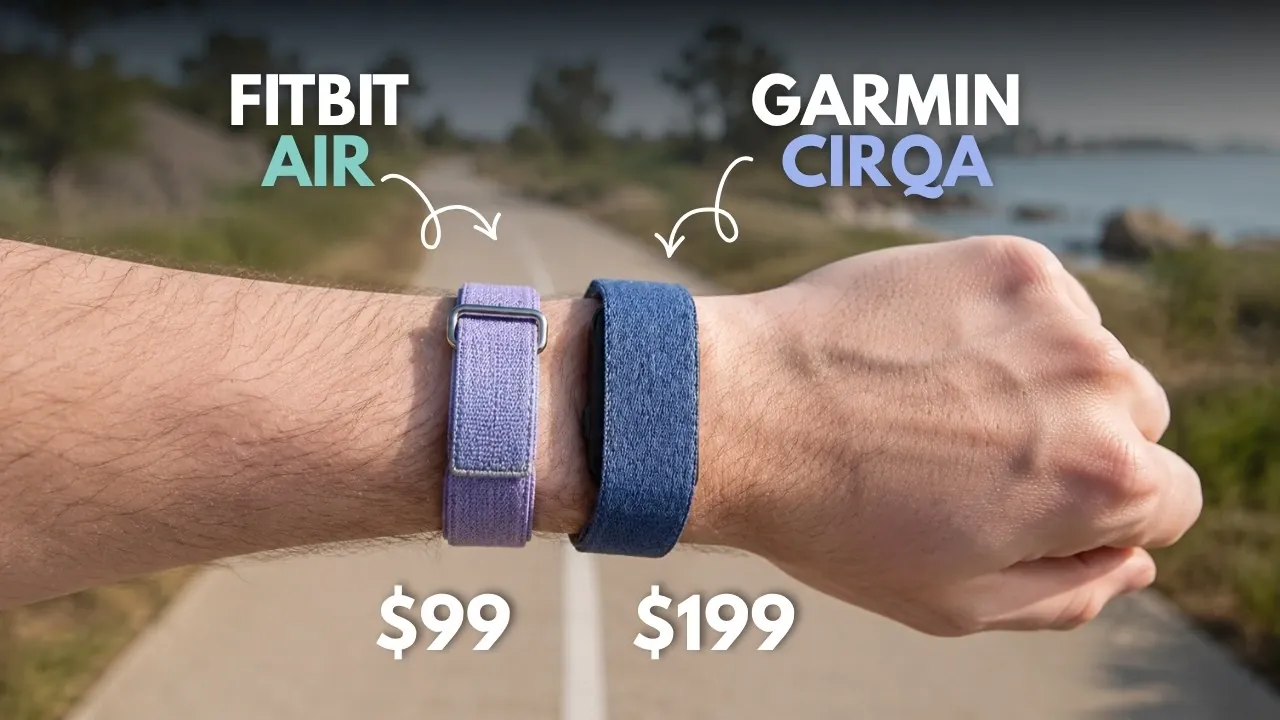
The Garmin CIRQA and Fitbit Air represent two distinct approaches to fitness tracking, each catering to different user priorities. As Tech Court explores in this comparison, the Garmin CIRQA stands out with its advanced performance metrics like Training Readiness and HRV Status, designed for users seeking detailed insights into their fitness and recovery. On the other hand, the Fitbit Air focuses on simplicity and accessibility, offering a streamlined experience for general wellness tracking at half the price. With a $200 price tag for the CIRQA versus $100 for the Fitbit Air, the discussion centers on whether Garmin’s enhanced functionality and ecosystem integration justify the significant cost difference.
In this breakdown, you’ll gain insight into how these devices differ in areas like design flexibility, where Garmin’s upper-arm wear option contrasts with Fitbit’s minimalist wrist-only approach. Explore how each tracker handles health monitoring, including Garmin’s emphasis on performance optimization versus Fitbit’s user-friendly wellness data. Additionally, the discussion covers practical considerations such as battery life, subscription models and the type of user each device best serves. This guide will help you weigh the features and decide which fitness tracker aligns with your lifestyle and goals.
Design: Comfort Meets Functionality
TL;DR Key Takeaways :
- The Garmin CIRQA and Fitbit Air are screenless fitness trackers with shared features like heart rate, sleep, HRV, stress and activity tracking, but differ significantly in price and target audience.
- Garmin CIRQA offers advanced performance metrics, adaptability with upper-arm wear and a 10-day battery life, making it ideal for athletes and fitness enthusiasts.
- Fitbit Air focuses on simplicity, affordability and everyday wellness with a lightweight wrist-worn design and a 7-day battery life, catering to casual users.
- Garmin CIRQA provides deeper insights with features like Body Battery, HRV Status and Training Readiness, while Fitbit Air emphasizes user-friendly, straightforward health tracking.
- Garmin CIRQA integrates seamlessly into Garmin’s ecosystem without requiring subscriptions, whereas Fitbit Air locks some features behind a subscription to Google’s premium services.
The design of a fitness tracker plays a crucial role in its comfort and practicality for daily use.
– Fitbit Air: With its slim, lightweight and exclusively wrist-worn design, the Fitbit Air is a discreet option for everyday wear. Its minimalist approach caters to users who prioritize simplicity and comfort.
– Garmin CIRQA: Slightly bulkier but more versatile, the CIRQA can be worn on the upper arm, offering flexibility for activities like weightlifting or cycling, where wrist-based wear might be less effective or comfortable.
Your choice here depends on whether you value subtlety or adaptability in your fitness tracker.
Health Tracking Features: Depth vs Simplicity
Both the Garmin CIRQA and Fitbit Air provide a robust suite of health-tracking features, including:
- Heart rate monitoring
- HRV tracking
- Sleep analysis
- Stress tracking
- Skin temperature monitoring
- Respiration tracking
- Activity tracking
However, Garmin sets itself apart with advanced metrics designed for performance optimization, such as:
- Body Battery for energy level insights
- HRV Status for stress and recovery trends
- Fitness Age to assess overall fitness levels
- Recovery Metrics for post-workout recovery guidance
- Training Readiness to optimize workout timing
Additionally, the CIRQA supports over 80 activity profiles, making it ideal for users engaged in diverse sports and fitness activities. Fitbit Air, on the other hand, simplifies health insights, catering to individuals focused on general wellness rather than detailed performance tracking.

Learn more about Garmin CIRQA with other articles and guides we have written below.
- Everything You Need to Know About Garmin’s New Screenless Wearable
- FCC Filings Suggest Garmin CIRQA May Launch Around July 19th 2026
- Why Garmin is Ditching Screens for Its Next Big Wearable
- Garmin CIRQA vs WHOOP 5.0: Which Fitness Tracker Should You Buy?
- Leak Suggests Garmin CIRQA Fitness Tracker Could Feature EDA Sensors
- Garmin CIRQA vs Google Fitbit Air: Which Fitness Tracker Suits You Best?
- Garmin CIRQA Trademarks Hint at EDA Stress Tracking
- Garmin CIRQA Locks Heart Rate Graphs Behind a Paid Subscription
- Garmin CIRQA Accuracy Tested Against Whoop and Fitbit
- Hands-on with New Garmin CIRQA Fitness Tracker: 10-Day Battery and No Screen
Accuracy: A Matter of Precision
Both devices perform reliably in step tracking, delivering comparable results in real-world tests. However, Garmin excels in heart rate accuracy, particularly when worn on the upper arm. This makes the CIRQA a better choice for activities requiring precise heart rate monitoring, such as interval training or endurance sports. Fitbit Air, while accurate for general use, may not match Garmin’s precision in high-intensity scenarios.
Sleep Tracking: Insights Tailored to Your Needs
Sleep tracking is a critical feature for many users and both devices deliver strong performance in this area.
– Fitbit Air: Known for its refined algorithms, the Fitbit Air provides easy-to-read sleep reports that are user-friendly and accessible.
– Garmin CIRQA: Offers additional tools such as a sleep score, sleep coach and nap detection. These features provide deeper insights but may require more effort to fully use.
If you prefer straightforward sleep data, Fitbit Air is the better choice. For those seeking a more detailed analysis of their sleep patterns, Garmin CIRQA offers greater depth and functionality.
Battery Life: Charging Frequency Matters
Battery life is a significant factor in the overall user experience.
– Garmin CIRQA: Features an impressive battery life of up to 10 days on a single charge, making it ideal for users who prefer less frequent charging.
– Fitbit Air: Offers a respectable 7-day battery life, which is sufficient for most users but falls short of Garmin’s longevity.
For extended use without frequent recharging, Garmin CIRQA has a clear advantage.
Subscription and Ecosystem: Cost vs Integration
The two devices differ in their approach to subscriptions and ecosystem integration.
– Garmin CIRQA: Does not require a subscription for core features and integrates seamlessly with Garmin’s broader ecosystem. This includes advanced training tools and compatibility with other Garmin devices, making it a strong choice for users already invested in Garmin products.
– Fitbit Air: Locks some advanced features behind a subscription to Google’s premium services. While this may be a drawback for users seeking a one-time purchase, it remains a cost-effective option for basic functionality.
Your decision here depends on whether you value a subscription-free experience or are comfortable with ongoing costs for additional features.
Target Users: Who Should Choose What?
Each device caters to a specific audience, making it essential to align your choice with your individual needs and goals.
– Garmin CIRQA: Best suited for athletes, fitness enthusiasts and users already invested in Garmin’s ecosystem. Its advanced recovery metrics, training insights and performance-focused features make it ideal for optimizing fitness routines and achieving specific health goals.
– Fitbit Air: Designed for general wellness and casual activity tracking. Its simplicity, affordability and user-friendly interface make it a great choice for individuals prioritizing everyday health monitoring over advanced metrics.
Understanding your priorities will help you determine which device aligns better with your lifestyle and fitness objectives.
Making the Right Choice
Choosing between the Garmin CIRQA and Fitbit Air ultimately depends on your goals and what you value most in a fitness tracker.
– If you prioritize advanced performance metrics, training insights, and ecosystem integration, the Garmin CIRQA justifies its higher price point.
– If you value affordability, simplicity, and everyday health tracking, the Fitbit Air offers excellent value at half the cost.
Both devices are capable tools, but understanding your specific needs will ensure you make the best decision for your health and fitness journey.
Media Credit: Tech Court
Disclosure: Some of our articles include affiliate links. If you buy something through one of these links, Geeky Gadgets may earn an affiliate commission. Learn about our Disclosure Policy.
