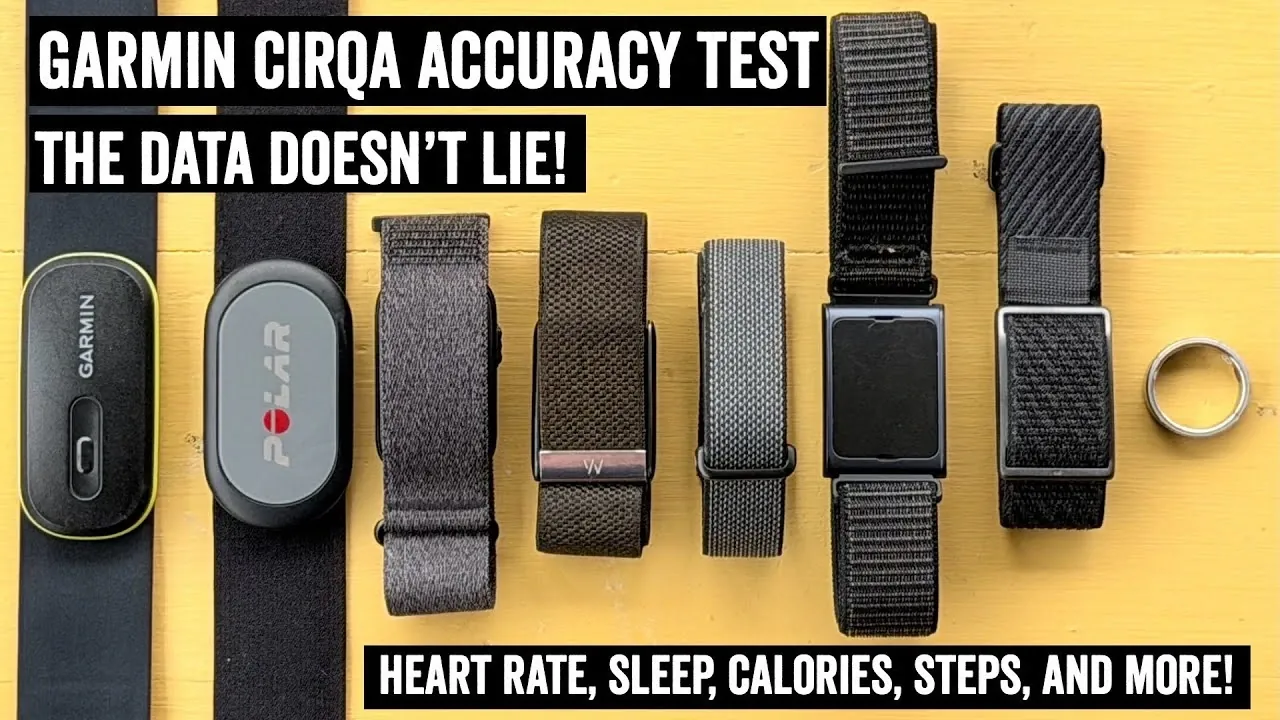
Garmin CIRQA’s performance in accuracy-focused metrics highlights its role as a wearable for users with targeted tracking needs. In a detailed testing by DC Rainmaker in the video below, the device’s capabilities are assessed across areas such as heart rate monitoring, sleep tracking and step counting. A standout feature is its bicep band configuration, which delivers improved heart rate accuracy during steady-state activities like running and cycling. However, limitations arise in interval workouts and colder conditions, where competitors such as Whoop and Fitbit often perform more consistently.
Discover how Garmin CIRQA handles features like automatic workout detection, where manual initiation contrasts with the automated tracking of some competitors. Gain insight into its calorie estimation approach, which leans toward conservative outputs and understand how sensor placement can influence tracking accuracy. This review offers a clear comparison of its strengths and weaknesses to help you evaluate its suitability for your fitness goals.
Garmin CIRQA Accuracy Tested
TL;DR Key Takeaways :
- Heart Rate Accuracy: Bicep placement offers superior heart rate accuracy during steady-state workouts, while wrist placement is better for daily activity and sleep tracking.
- Automatic Workout Detection: Garmin CIRQA struggles with automatic workout detection, often missing non-traditional activities, but includes a manual workout initiation button for accuracy.
- Sleep Tracking: Provides reliable sleep tracking with minimal errors, though occasional misclassifications occur during periods of inactivity.
- Step Counting and Calorie Estimation: Delivers consistent step counts without inflation but offers conservative calorie estimates, which may appeal to users seeking realistic data.
- Performance Limitations: Struggles with interval workouts, colder temperatures and lacks the seamless tracking capabilities of competitors like Whoop and Fitbit.
Heart Rate Accuracy: Placement Matters
Heart rate monitoring accuracy is heavily influenced by the placement of the device. Garmin CIRQA’s bicep band delivers superior accuracy during steady-state workouts, such as running and cycling, outperforming its wristband counterpart. This makes it a preferred choice for users focused on exercise-specific metrics. Conversely, the wristband is better suited for tracking daily metrics like casual activity and sleep patterns.
Garmin CIRQA performs reliably during steady-state exercises but struggles with interval workouts and colder temperatures. In these scenarios, competitors like Whoop and Fitbit demonstrate more consistent results. This variability underscores the importance of selecting the appropriate placement based on the activity type to achieve optimal performance.
Automatic Workout Detection: A Work in Progress
Automatic workout detection remains a significant challenge for Garmin CIRQA. Despite incremental improvements, the device frequently misses activities such as bike commutes and strength training sessions. This inconsistency places it behind competitors like Whoop and Fitbit, which excel in this feature by offering more robust detection algorithms.
To mitigate this limitation, Garmin CIRQA includes a manual workout initiation button, allowing users to ensure accurate data capture. While this feature is practical, it highlights the device’s reliance on user input rather than fully automated detection. Users who prioritize seamless tracking may find this limitation less appealing.

Gain further expertise in Garmin CIRQA by checking out these recommendations.
- Everything You Need to Know About Garmin’s New Screenless Wearable
- FCC Filings Suggest Garmin CIRQA May Launch Around July 19th 2026
- Why Garmin is Ditching Screens for Its Next Big Wearable
- What the New Garmin CIRQA and Vivosmart 6 Leak Actually Reveals
- Garmin CIRQA vs WHOOP 5.0: Which Fitness Tracker Should You Buy?
- Leak Suggests Garmin CIRQA Fitness Tracker Could Feature EDA Sensors
- Garmin CIRQA vs Google Fitbit Air: Which Fitness Tracker Suits You Best?
- Garmin CIRQA Trademarks Hint at EDA Stress Tracking
- Hands-on with New Garmin CIRQA Fitness Tracker: 10-Day Battery and No Screen
- Garmin CIRQA Hits 77% Deep Sleep Accuracy but Struggles with REM
Sleep Tracking: Reliable but Not Exceptional
Garmin CIRQA delivers reliable sleep tracking, with start and wake times typically accurate within 5–10 minutes. However, occasional errors occur when users are inactive but not asleep, leading to misclassification. This issue is not unique to Garmin, as similar inaccuracies are observed across other wearables.
When compared to competitors, no single device emerges as a clear leader in sleep duration and quality scoring. Garmin CIRQA provides consistent results but does not significantly outperform other devices in this category. For users seeking dependable but unremarkable sleep tracking, Garmin CIRQA remains a viable option.
Step Counting: Consistency Over Precision
In step counting, Garmin CIRQA offers consistent daily totals but lacks the precision of Fitbit Air, which leads in controlled tests. Other devices, such as Polar Loop and Amazfit Helio, tend to inflate step counts during activities like cycling by converting activity time into steps, skewing the results. Garmin CIRQA avoids such inflation, maintaining a more realistic step count. However, its overall accuracy remains average, making it a solid but unexceptional choice for step tracking.
Calorie Estimation: A Common Challenge
Calorie estimation is a challenging metric for most wearables and Garmin CIRQA is no exception. It tends to overview lower calorie burn compared to competitors, which may align more closely with actual energy expenditure. This conservative approach could appeal to users seeking a more cautious and realistic method of calorie tracking.
In contrast, devices like Polar Loop frequently overestimate calorie burn, particularly during high-intensity activities, reducing their reliability. Garmin CIRQA’s conservative estimates, while not perfect, provide a more grounded perspective for users aiming to monitor their energy expenditure accurately.
Key Observations
- Bicep vs. Wrist Placement: Bicep placement enhances heart rate accuracy during workouts, while wrist placement is better suited for daily activity and sleep tracking.
- Manual Workout Initiation: Garmin CIRQA’s manual workout button ensures data accuracy but highlights its limitations in automatic detection.
- Sleep Tracking: Reliable for most users, though occasional misclassifications occur during periods of inactivity.
Strengths and Weaknesses
Garmin CIRQA demonstrates several strengths that make it a competitive option in the wearable market:
- Accurate heart rate tracking: Particularly effective during steady-state activities like running and cycling.
- Reliable sleep monitoring: Provides consistent results with minimal errors in start and wake times.
- Manual workout initiation: Offers users control over data capture, making sure accuracy when automatic detection falls short.
However, the device also exhibits notable weaknesses:
- Inconsistent automatic workout detection: Struggles to identify non-traditional activities like bike commutes and strength training.
- Reduced accuracy in specific conditions: Interval workouts and colder temperatures present challenges for heart rate tracking.
- Limited calorie estimation precision: Conservative estimates may not satisfy users seeking detailed energy expenditure data.
Competitor Comparison
When compared to its peers, Garmin CIRQA holds its own in some areas but falls short in others:
- Whoop and Fitbit: These devices excel in automatic workout detection and 24/7 high-fidelity heart rate tracking, offering a more seamless user experience.
- Amazfit Helio: Quick to detect activities but prone to prematurely ending them, which can disrupt data accuracy.
- Polar Loop: Inflates calorie and step counts during certain activities, reducing its reliability for precise tracking.
Garmin CIRQA performs well in steady-state activity tracking but struggles to match the seamless performance and advanced features of competitors like Whoop and Fitbit.
Recommendations for Improvement
To enhance its competitive edge, Garmin should prioritize the following improvements:
- Automatic workout detection: Refine algorithms to reduce missed activities and improve detection of non-traditional exercises.
- Heart rate tracking consistency: Address performance issues during interval workouts and in colder conditions to deliver more reliable results.
- Calorie estimation models: Develop more precise algorithms to provide accurate energy expenditure data across various activity types.
By addressing these areas, Garmin CIRQA could significantly improve user satisfaction and strengthen its position in the wearable market.
Final Thoughts
Garmin CIRQA offers dependable performance in steady-state activity tracking and sleep monitoring, making it a solid choice for users who prioritize these features. However, its reliance on manual input and inconsistencies in automatic workout detection and interval tracking highlight areas for improvement.
For users seeking seamless automatic detection and advanced tracking capabilities, devices like Whoop and Fitbit may be more suitable alternatives. Nonetheless, Garmin CIRQA remains a viable option for those who value manual control, steady-state accuracy and a conservative approach to calorie estimation.
Media Credit: DC Rainmaker
Disclosure: Some of our articles include affiliate links. If you buy something through one of these links, Geeky Gadgets may earn an affiliate commission. Learn about our Disclosure Policy.
