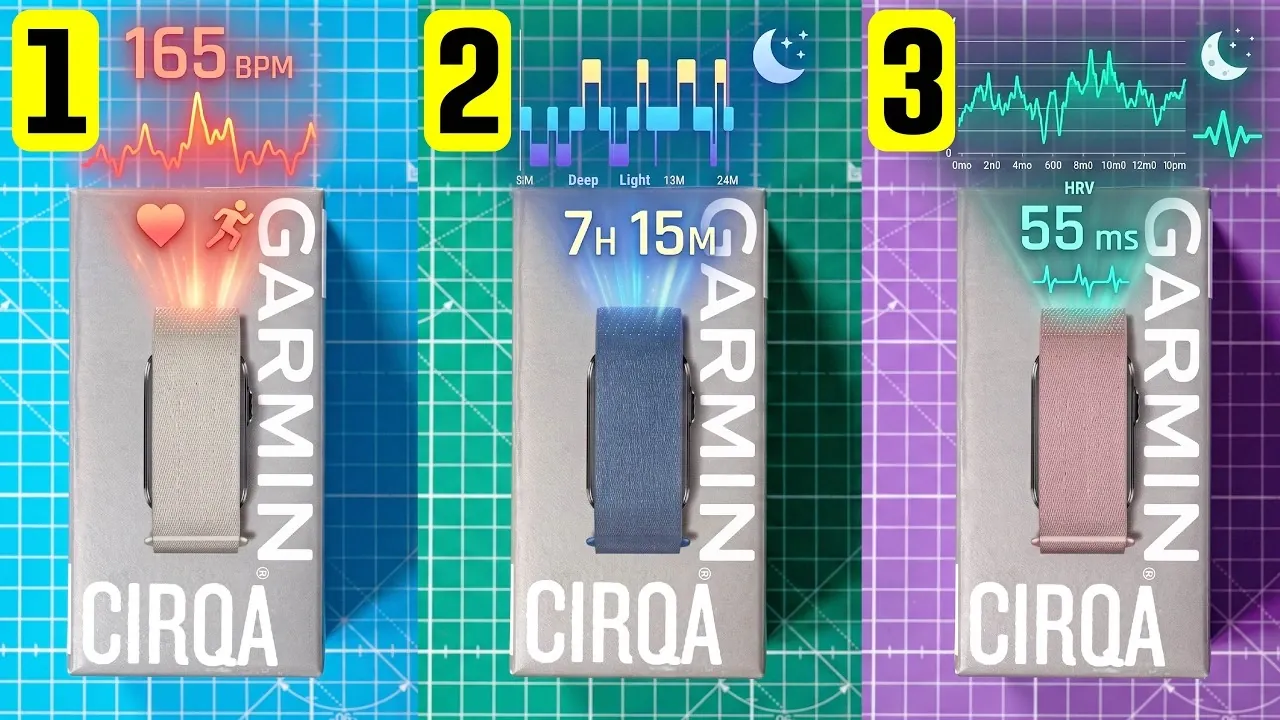
The Quantified Scientist examines the Garmin CIRQA, a wearable designed for fitness and health tracking. With features like heart rate variability (HRV) monitoring and sleep stage analysis, the CIRQA offers a range of insights into daily wellness. Notably, it achieves a 77% agreement with reference data in deep sleep detection, highlighting its reliability in tracking restorative sleep. However, the device faces challenges such as reduced accuracy in REM sleep detection and slower data syncing, which limit its overall performance.
Discover how the CIRQA handles different activities, including its high accuracy in indoor cycling and its limitations during weightlifting due to wrist tension. Gain insight into upcoming algorithm updates aimed at improving sleep tracking and exercise monitoring. This Q&A also explores its compatibility with alternative wearing methods and its effectiveness for steady-state workouts.
Garmin CIRQA Screen-less Fitness Tracker
TL;DR Key Takeaways :
- The Garmin CIRQA excels in heart rate tracking, particularly during nighttime, but shows minor inaccuracies during brief periods of elevated heart rates.
- HRV measurement is consistent within typical ranges, offering insights into stress and recovery, though accuracy diminishes in higher HRV ranges.
- Sleep tracking is reliable for deep sleep (77% accuracy) but struggles with REM detection (46% accuracy), limiting detailed sleep insights.
- Exercise monitoring is highly accurate for cycling and steady-state activities but less reliable for weightlifting and interval training due to heart rate fluctuations and wrist tension.
- Planned algorithm updates aim to improve sleep tracking, exercise monitoring and compatibility, showcasing Garmin’s commitment to refining the CIRQA’s performance and versatility.
Heart Rate Tracking and HRV Measurement
The Garmin CIRQA excels in heart rate tracking, particularly during nighttime monitoring. It reliably captures overall trends, making it a valuable tool for users focused on maintaining or improving heart health. The device’s ability to consistently track heart rate over extended periods ensures that users can monitor their cardiovascular health with confidence. However, during brief periods of elevated heart rates, the device may exhibit minor inaccuracies, which could affect users who require precise data for specific activities or health conditions.
In terms of HRV measurement, the CIRQA delivers consistent results within typical ranges, offering insights into stress levels and recovery. This feature is particularly beneficial for individuals aiming to optimize their training or manage stress. However, the device’s accuracy diminishes slightly in higher HRV ranges, which may limit its utility for users who rely on precise variability data for advanced health insights. Despite this, the CIRQA remains a reliable option for general HRV tracking.
Sleep Stage Tracking: Strengths and Limitations
Sleep tracking is a core feature of the Garmin CIRQA, but its performance varies across different sleep stages. The device demonstrates notable strengths in some areas while facing challenges in others:
- Deep Sleep: The CIRQA performs well in detecting deep sleep, achieving a 77% agreement with reference data. This makes it a reliable tool for users interested in monitoring restorative sleep phases.
- Light Sleep: The device shows moderate accuracy, with a 64% agreement rate. While not perfect, it provides a reasonable approximation of light sleep patterns.
- REM Sleep: REM sleep detection remains a significant challenge, with only 46% agreement. The device often misclassifies REM sleep as light sleep, which can hinder users seeking detailed insights into their sleep quality and cognitive recovery.
For individuals aiming to gain a comprehensive understanding of their sleep patterns, these inconsistencies, particularly in REM detection, may pose a limitation. However, the CIRQA’s strengths in deep sleep tracking make it a useful tool for monitoring overall sleep health.

Deep dive into the latest in Garmin CIRQA by exploring our other resources and articles.
- Everything You Need to Know About Garmin’s New Screenless Wearable
- FCC Filings Suggest Garmin CIRQA May Launch Around July 19th 2026
- Why Garmin is Ditching Screens for Its Next Big Wearable
- What the New Garmin Cirqa and Vivosmart 6 Leak Actually Reveals
- Garmin CIRQA vs WHOOP 5.0: Which Fitness Tracker Should You Buy?
- Leak Suggests Garmin CIRQA Fitness Tracker Could Feature EDA Sensors
- Garmin CIRQA vs Google Fitbit Air: Which Fitness Tracker Suits You Best?
- Garmin CIRQA Trademarks Hint at EDA Stress Tracking
- Hands-on with New Garmin CIRQA Fitness Tracker: 10-Day Battery and No Screen
- 30+ Garmin CIRQA Features: $199 Screenless Fitness Tracker
Exercise Monitoring: Strengths and Challenges
The Garmin CIRQA offers mixed results when it comes to exercise monitoring, with its performance varying across different types of physical activities:
- Indoor Cycling: The device delivers exceptional accuracy, with a correlation of 0.99. This makes it a highly reliable choice for stationary bike workouts.
- Outdoor Biking: The CIRQA performs well, achieving a correlation of 0.94. It provides consistent data for cyclists who prefer outdoor routes.
- Running: The accuracy of the device depends on the type of running activity. While steady runs yield reliable results, interval training presents challenges due to rapid heart rate fluctuations.
- Weightlifting: The device struggles with accuracy during weightlifting exercises. Wrist tension during these activities interferes with heart rate readings, reducing reliability.
The CIRQA’s strengths in cycling and steady-state activities make it a strong contender for fitness enthusiasts focused on these types of workouts. However, its limitations in weightlifting and interval training may frustrate users with more diverse exercise routines.
Device Syncing and Compatibility
The Garmin CIRQA’s data syncing process is slower compared to other Garmin devices, which could be a drawback for users accustomed to faster updates. While the Garmin app provides robust data aggregation and analysis, its interface may feel less intuitive for users seeking detailed insights. This could impact the overall user experience, particularly for those who prioritize seamless data access.
Additionally, the CIRQA’s compatibility with generic biceps bands is limited due to its unique connector size. This restriction may disappoint users who prefer alternative wearing options, especially for activities where wrist-based tracking is less effective. Addressing this limitation could enhance the device’s versatility and appeal to a broader audience.
Algorithm Updates and Future Prospects
Garmin has announced plans to release algorithm updates aimed at addressing the CIRQA’s current limitations. These updates are expected to improve sleep stage tracking and exercise monitoring, potentially enhancing the device’s overall performance. Over the next 7–10 days, further testing will evaluate the impact of these updates, including experiments with biceps bands to determine whether alternative wearing methods improve heart rate tracking during activities like weightlifting.
These planned updates and ongoing tests highlight Garmin’s commitment to refining the CIRQA’s capabilities. If successful, these improvements could significantly enhance the device’s accuracy and versatility, making it a more well-rounded option for health and fitness tracking.
A Wearable with Potential and Areas for Growth
The Garmin CIRQA demonstrates considerable potential as a versatile wearable device. Its strengths in heart rate tracking during exercise and nighttime HRV measurements make it a competitive option for fitness enthusiasts. The device’s reliable performance in cycling and steady-state activities further solidifies its appeal for users focused on these types of workouts.
However, the CIRQA’s limitations in REM sleep detection, interval training and weightlifting accuracy highlight areas where improvement is needed. Additionally, its slower syncing process and limited compatibility with alternative wearing options may impact its overall utility for some users.
For now, the CIRQA is a solid choice for individuals prioritizing exercise monitoring and basic heart rate tracking. As Garmin continues to refine the device through algorithm updates and further testing, the CIRQA has the potential to evolve into a more comprehensive health and fitness tracker.
Media Credit: The Quantified Scientist
Disclosure: Some of our articles include affiliate links. If you buy something through one of these links, Geeky Gadgets may earn an affiliate commission. Learn about our Disclosure Policy.
