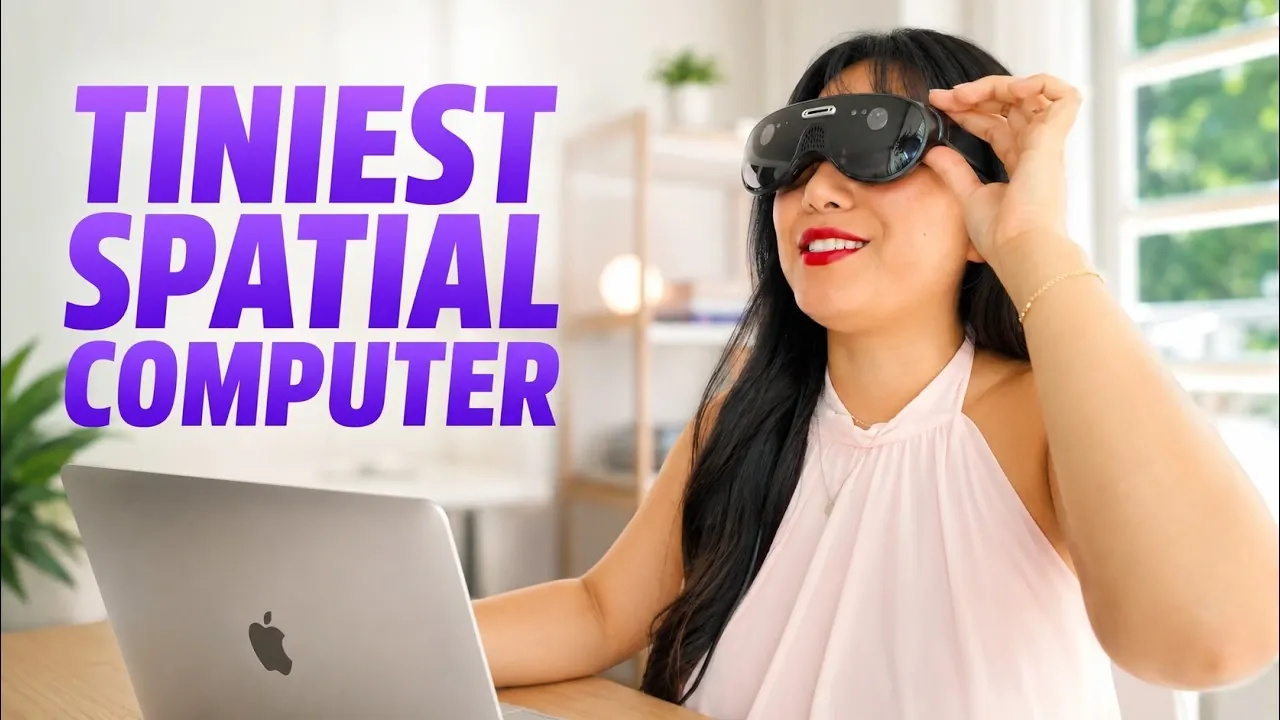
The URXR1 glasses by Unseen Reality integrate mixed-reality technology to merge virtual and physical environments, featuring Six Degrees of Freedom (6DoF) and advanced hand-tracking. These glasses, priced at $799, also function as an external display when connected to devices like laptops or smartphones. Jasmine Uniza examines how this lightweight prototype addresses practical use cases while contending with issues such as motion blur and limited software compatibility.
Explore this overview to learn about the portable monitor capabilities of the URXR1 glasses, the advantages of customizable floating screens and their potential applications for professionals in design and engineering. The discussion also provide more insights into key limitations, including heat generation and the lack of built-in audio, providing a clear view of the device’s current strengths and weaknesses.
URXR1 Spatial Computing Glasses
TL;DR Key Takeaways :
- The URXR1 glasses by Unseen Reality are lightweight, portable mixed-reality glasses designed to integrate virtual and real-world environments, offering features like Six Degrees of Freedom (6DoF) and hand-tracking for immersive interaction.
- Key productivity features include floating screens, 3D model interaction for professionals and proprietary software integration inspired by the Apple Vision Pro, allowing multitasking and creative applications.
- Strengths of the glasses include portability, mixed-reality awareness, compatibility with laptops and smartphones and the ability to function as a portable monitor for flexible workspaces.
- Challenges include incomplete software, lack of built-in audio, motion blur during dynamic use, heat generation with extended use and a premium price point starting at $799 on Kickstarter.
- Unseen Reality aims to expand the glasses’ capabilities to include virtual reality applications, positioning them as a forward-looking tool for professionals and tech enthusiasts in the evolving spatial computing landscape.
The URXR1 glasses are engineered to deliver an immersive and intuitive mixed-reality experience. Their standout features include:
- Six Degrees of Freedom (6DoF): This feature enables precise movement tracking, allowing users to interact naturally with virtual objects in their environment.
- Hand-Tracking Capabilities: The glasses support intuitive manipulation of virtual elements, enhancing user immersion and reducing reliance on external controllers.
- External Display Functionality: When connected to a laptop or smartphone, the glasses function as a portable monitor, making them ideal for multitasking or remote work setups.
- Intuitive Controls: Simple button-based interactions allow users to adjust settings and manage virtual screens with ease, eliminating the need for complex learning curves.
These features, though still under refinement, highlight the potential for a more seamless and interactive digital experience, catering to both professional and personal use cases.
Software and Productivity Benefits
The URXR1 glasses are designed with productivity in mind, using spatial computing to enhance workflows and unlock new possibilities. Their software and functionality offer several advantages:
- Floating Screens: Users can create customizable virtual environments, organizing their workspace in ways that traditional monitors cannot replicate.
- 3D Model Interaction: Professionals in fields such as engineering, architecture and design can directly engage with 3D models, allowing more effective visualization and collaboration.
- Proprietary Software Integration: Inspired by the Apple Vision Pro, Unseen Reality is developing software to support multitasking and creative applications. This software integrates seamlessly with existing devices, eliminating the need for standalone computing hardware.
By using the processing power of laptops and smartphones, the URXR1 glasses cater to professionals who value flexibility and portability. This makes them particularly appealing to digital nomads and individuals working in dynamic or non-traditional environments.

Learn more about spatial computing with other articles and guides we have written below.
- 12 Apple Watch Features You Are Probably Ignoring Right Now
- Apple Vision Pro 2 Leaks: Release Date, M5 Chip & New Design
- iOS 27 Leaks Reveal the End of an Era: Apple’s New Priorities Confirmed
- Why Apple’s iPhone Ultra Fold Changes Everything We Know About Smartphones
- The End of the Annual Launch? Why Apple Is Splitting the iPhone 18 Release for the First Time Ever
- Secret iPhone Features You Probably Aren’t Using
- How the INAIR Elite Suite Transforms VITURE Beast Glasses Into a Spatial Computer
- XREAL Aura : Inside the $1,500 Spatial Computing Smart Glasses
- XREAL Aura Hybrid AR and VR Glasses: Hands on Guide
- What is spatial computing and how does it work?
Strengths of the URXR1 Glasses
The URXR1 glasses offer several advantages over traditional virtual reality (VR) headsets, making them a versatile tool for a wide range of users:
- Portability: The lightweight and compact design ensures easy transport, addressing one of the major drawbacks of bulkier VR devices.
- Mixed-Reality Awareness: Unlike VR headsets that isolate users, these glasses maintain awareness of the real world, allowing safer use in public or shared spaces.
- Device Compatibility: By connecting to laptops and smartphones, the glasses reduce the need for additional hardware, streamlining the overall tech setup.
- Monitor Replacement: The ability to function as a portable monitor provides a practical alternative for users who frequently work in different locations or require a flexible workspace.
These strengths position the URXR1 glasses as a practical and innovative solution for professionals, creatives and tech enthusiasts seeking to enhance their digital interactions.
Challenges and Limitations
Despite their promising features, the URXR1 glasses face several challenges that could hinder their widespread adoption:
- Incomplete Software: The current software is limited to use with a provided laptop, which may deter early adopters seeking broader compatibility.
- Audio Limitations: The lack of built-in audio requires users to rely on external headphones or speakers, which could detract from the overall experience.
- Motion Blur: Tracking fast-moving objects or using the glasses while in motion can result in noticeable motion blur, impacting usability in dynamic scenarios.
- Heat Generation: Extended use may cause the glasses to heat up, raising concerns about comfort and long-term durability.
- Price Point: Priced at $799 on Kickstarter (rising to $899 post-launch), the glasses are positioned at a premium level, potentially limiting accessibility for some users.
These limitations underscore the areas where further development and refinement are needed to enhance the product’s appeal and usability.
What Lies Ahead?
Unseen Reality envisions a future where the URXR1 glasses expand their capabilities to include virtual reality applications, broadening their appeal beyond productivity-focused use cases. By emphasizing spatial computing and using existing hardware for processing power, the company aims to redefine how users interact with digital environments.
The URXR1 glasses represent a bold step forward in mixed-reality technology, offering a glimpse into the evolving landscape of spatial computing. While challenges remain, their innovative features and practical applications position them as a compelling option for professionals and tech enthusiasts. As development progresses, these glasses could play a pivotal role in shaping the next generation of digital interaction, bridging the gap between virtual and real-world experiences.
Media Credit: Jasmine Uniza ☕️
Disclosure: Some of our articles include affiliate links. If you buy something through one of these links, Geeky Gadgets may earn an affiliate commission. Learn about our Disclosure Policy.
