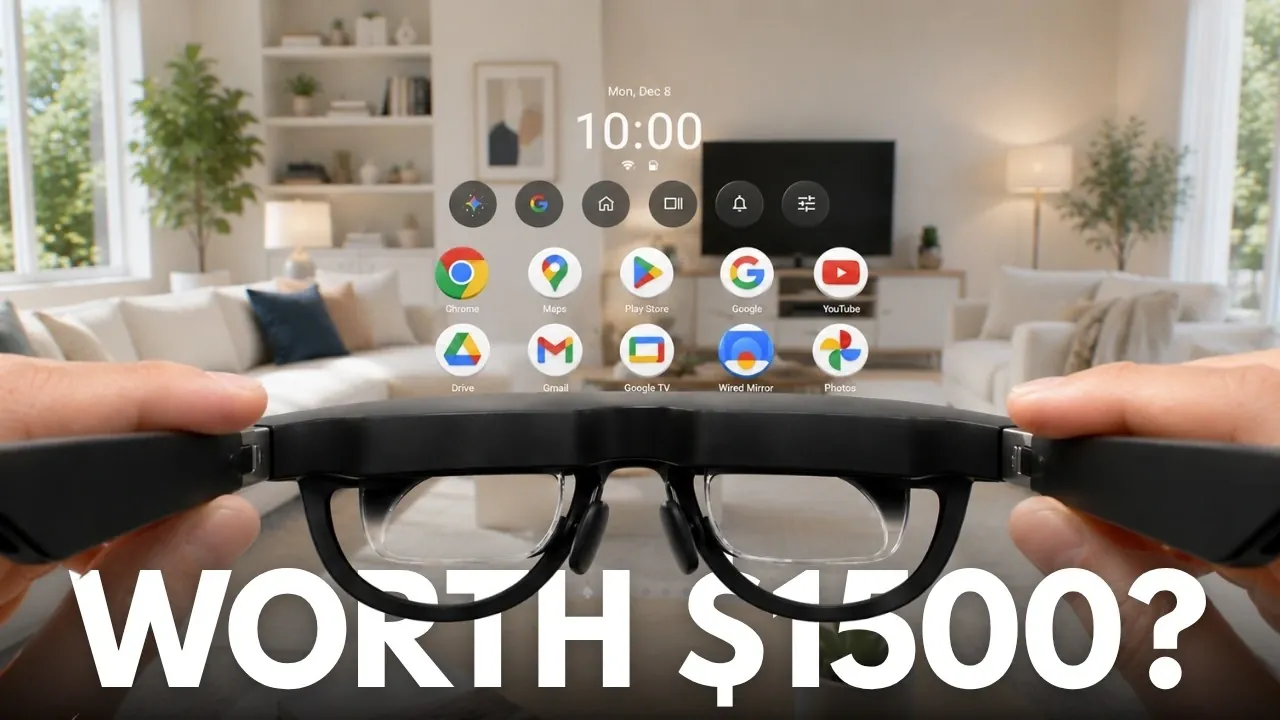
The XREAL Aura has captured attention in the XR space with its lightweight design, advanced features and integration of technologies like Google’s Gemini AI and the Qualcomm Snapdragon Reality Elite platform. Weighing under 95 grams, these glasses promise portability and versatility, offering a 70-degree field of view and the ability to function as a portable monitor. However, as Tech Court highlights, the $1,500 price tag has sparked debate, with some questioning whether the features justify the cost compared to more established devices like laptops or VR headsets.
In this overview, you’ll explore key aspects of the XREAL Aura, including its standout features like high-resolution displays and its potential for enhancing multitasking and on-the-go productivity. You’ll also gain insight into the challenges posed by its reliance on an external compute puck and consumer feedback calling for improvements in resolution and connectivity. By the end, you’ll have a clearer understanding of how the XREAL Aura fits into the broader XR market and the hurdles it faces in appealing to a wider audience.
What Sets the XREAL Aura Apart?
TL;DR Key Takeaways :
- The XREAL Aura XR glasses feature innovative technology, including Google’s Gemini AI and Qualcomm’s Snapdragon Reality Elite platform, offering advanced processing power and intuitive interaction.
- Weighing under 95 grams, the glasses prioritize portability and comfort, with a 70-degree field of view and high-resolution displays for an immersive experience.
- Key functionalities include serving as a portable monitor, enhancing multitasking and providing travel-friendly entertainment, making them versatile for both professionals and casual users.
- The $1,500 price tag has sparked debate, with critics questioning its value compared to alternatives, while supporters argue it reflects the innovation and premium nature of the device.
- Consumer feedback highlights areas for improvement, such as higher resolution, broader field of view, simplified connectivity and reducing reliance on the external compute puck for better portability.
The XREAL Aura is engineered to deliver an immersive and versatile XR experience, boasting several standout features that cater to both casual users and professionals:
- Wide Field of View: A 70-degree field of view ensures an expansive and engaging visual experience, enhancing immersion for users.
- Lightweight Design: At under 95 grams, the glasses are designed for comfort, even during extended use.
- Advanced Processing Power: The Qualcomm Snapdragon Reality Elite platform powers the device, with an external compute puck handling intensive tasks to maintain the glasses’ lightweight form factor.
- Google’s Gemini AI Integration: Natural language processing enables seamless interaction, allowing users to control the device and access information intuitively.
- Portable Monitor Capability: The glasses double as a portable monitor, making them ideal for professionals who travel frequently or work remotely.
- High-Resolution Displays: Crisp visuals enhance the immersive experience, while USB-C connectivity ensures compatibility with a wide range of devices, including smartphones.
These features position the XREAL Aura as a versatile tool for various applications, from productivity to entertainment. However, its practicality and price remain subjects of ongoing discussion.
The $1,500 Price Tag: Justified or Overpriced?
The XREAL Aura’s $1,500 price point has sparked a polarized response. Critics argue that the cost is steep, especially when compared to alternatives such as laptops, flagship smartphones, or VR headsets, which often provide similar or greater functionality at a lower price. Many suggest that a price range of $800 to $1,000 would make the device more accessible to a broader audience.
Supporters, on the other hand, emphasize that the price reflects the innovative nature of the technology and the innovation required to create such a lightweight, feature-rich product. They argue that early adopters are accustomed to paying a premium for new advancements and the XREAL Aura is no exception.
This debate underscores a critical challenge for XR companies: convincing consumers that these devices offer tangible value in their daily lives. Competing against more established technologies, XR products must justify their cost by delivering unique and practical benefits.

Enhance your knowledge on XREAL Aura by exploring a selection of articles and guides on the subject.
- What Makes XREAL Aura the Most Important XR Release Of 2026
- Meet XREAL’s $1,500 Aura XR Glasses Coming in Fall 2026
- Xreal Aura vs Galaxy XR : 6 Degrees of Freedom and a Wider FOV Define the Xreal Aura
- Google and XREAL Debut the Project Aura XR Smart Glasses
- What to Expect from Google’s 2026 Smart Glasses Reveal
- New XREAL Aura Spatial Computing Glasses : Snapdragon Reality Elite, 70-Degree FOV
- Xreal 1 Pro vs Viture Beast: Best 2026 XR Glasses for Multitasking and Portable Work
- What Xreal Project Aura XR Glasses Reveal About Android XR’s Future
Practical Applications and Consumer Insights
While the XREAL Aura is unlikely to replace smartphones or laptops, it has the potential to serve as a complementary device in specific scenarios. Some of its most promising use cases include:
- Portable Monitor: A secondary display for professionals who need to work efficiently while traveling.
- Travel-Friendly Entertainment: A compact alternative to traditional screens for watching movies or gaming on the go.
- Enhanced Multitasking: A secondary screen that boosts productivity by allowing users to manage multiple tasks simultaneously.
Despite these potential applications, consumer feedback has highlighted areas where the device could improve:
- Higher Resolution: Users have expressed a desire for sharper visuals to further enhance the immersive experience.
- Broader Field of View: Expanding the visual range could make the device even more engaging for users.
- Portability Challenges: The reliance on an external compute puck adds bulk, which some users find inconvenient for on-the-go use.
- Simplified Connectivity: Direct USB-C connectivity with smartphones is a frequently requested feature to streamline the user experience.
These insights suggest that while the XREAL Aura offers impressive features, there is room for refinement to better meet consumer expectations and enhance usability.
Implications for the XR Industry
The reception of the XREAL Aura reflects a broader evolution in consumer attitudes toward XR technology. Initially, skepticism revolved around the functionality and practicality of XR devices. Today, the conversation has shifted to focus on their value proposition and how they compare to more established technologies.
However, significant challenges remain for the XR industry. Devices like the XREAL Aura must compete with a wide range of products at similar price points, including flagship smartphones, gaming PCs and VR headsets. To stand out, XR companies must strike a balance between innovation and consumer expectations for affordability, convenience and practicality.
The $1,500 price tag of the XREAL Aura highlights a recurring issue within the XR market: the need to make advanced technology more accessible to mainstream audiences. Without addressing concerns related to cost and usability, XR risks remaining a niche market, appealing primarily to early adopters and tech enthusiasts.
A Vision for the Future of XR
The XREAL Aura represents a significant milestone in the development of XR technology, showcasing the potential of lightweight, portable and feature-rich devices. However, its high price remains a barrier to widespread adoption, limiting its appeal to a niche audience.
For the XREAL Aura to achieve broader success, it must demonstrate clear value to consumers, justifying its cost through practical applications and unique benefits. This challenge is emblematic of the hurdles facing the XR industry as a whole, which must address issues of affordability, usability and consumer trust to achieve mainstream acceptance.
As XR technology continues to evolve, the XREAL Aura serves as both a testament to the progress made and a reminder of the work still needed. While it offers a glimpse into the future of XR, its ultimate success will depend on the industry’s ability to bridge the gap between innovation and accessibility.
Media Credit: Tech Court
Disclosure: Some of our articles include affiliate links. If you buy something through one of these links, Geeky Gadgets may earn an affiliate commission. Learn about our Disclosure Policy.
