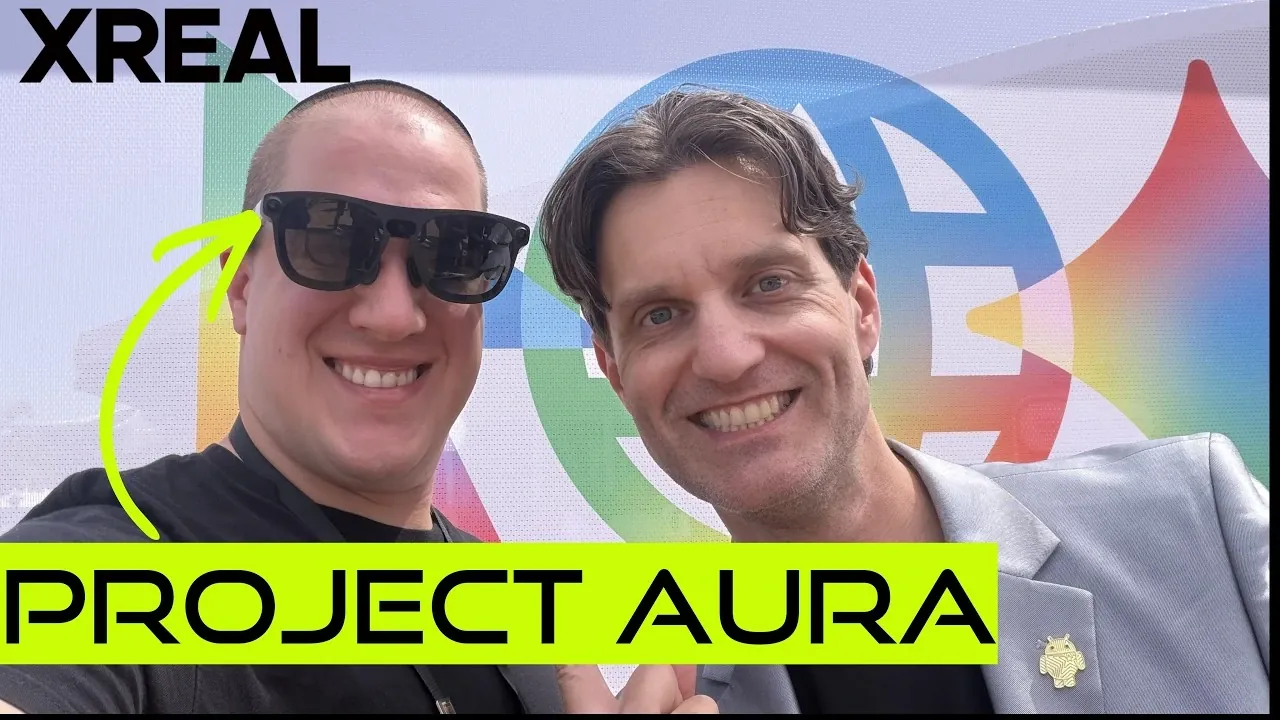
Project Aura XR smart glasses, introduced at Google I/O 2023, represent Xreal’s effort to deliver a functional Extended Reality (XR) experience. Featuring Flat Prism Lenses with a 70° field of view and a lightweight design suited for prolonged use, the glasses prioritize both usability and comfort. The modular “Aura puck” accessory adds USB-C ports and thermal management, allowing better device compatibility. According to tabGeeks, these features aim to support a balance between professional tasks and personal activities.
Explore how Project Aura integrates Gemini AI for contextual assistance alongside multimodal input options such as gaze tracking and gesture controls. Gain insight into its compatibility with AR, VR and MR applications and examine its potential use cases in productivity, entertainment and mobile workflows. This explainer also highlights the developer program and the practical scenarios where these glasses could be applied.
Hardware Features
TL;DR Key Takeaways :
- Project Aura, unveiled at Google I/O 2023 by Xreal, is a new XR device combining AR, VR and MR technologies, designed for both developers and everyday users with a focus on accessibility and seamless integration of physical and virtual worlds.
- Key hardware features include flat prism lenses with a 70° field of view, lightweight design for extended use, modular connectivity via the “Aura puck,” and DisplayPort support for compatibility with PCs, Macs and Chromebooks.
- The glasses run on Android XR, offering Gemini AI integration, multimodal input options (gaze tracking, gestures, controllers), and optimization for diverse immersive experiences across AR, VR and MR applications.
- Xreal’s Android XR Fantastic option Developer Program supports app ecosystem growth by providing developer kits and compatibility with existing Galaxy XR apps, fostering innovation and collaboration within the XR community.
- Set to launch later this year, Project Aura emphasizes affordability, portability and real-world applications, including productivity, entertainment and on-the-go convenience, while addressing limitations like partial light blocking and reliance on gaze tracking.
The hardware of Project Aura is carefully engineered to balance performance, comfort and practicality, making it a standout device in the XR market. Its innovative features include:
- Flat Prism Lenses: These lenses provide a 70° field of view, enhancing immersion while maintaining a sleek and compact design that avoids the bulkiness of traditional XR headsets.
- Lightweight Build: Designed for extended use, the glasses prioritize comfort, making sure they remain practical for diverse environments, from office settings to outdoor use.
- Modular Connectivity: The “Aura puck” accessory enhances functionality by adding USB-C ports, a fingerprint sensor and efficient thermal management, making sure compatibility with a wide range of devices.
- DisplayPort Support: Seamless integration with PCs, Macs and Chromebooks expands the device’s usability, making it suitable for both professional and personal applications.
These features collectively make Project Aura a versatile and practical choice for users seeking a balance between power and portability, whether for productivity or entertainment.
Software and Functionality
The software ecosystem of Project Aura is designed to unlock the full potential of XR technologies, offering a robust platform for immersive experiences. Running on Android XR, the glasses support a wide range of applications and functionalities, including:
- Gemini AI Integration: This AI-powered system delivers contextual assistance, allowing intuitive interactions with connected devices and applications, enhancing user convenience.
- Multimodal Input: The glasses support gaze tracking, gesture input and external controllers, providing flexible and intuitive ways to interact with virtual environments.
- AR, VR and MR Optimization: Tailored for diverse immersive experiences, the device excels in applications ranging from augmented overlays to fully immersive mixed-reality scenarios.
These capabilities ensure that Project Aura is not only versatile but also adaptable to a wide range of use cases, from gaming and entertainment to professional workflows and educational applications.

Enhance your knowledge on smart glasses by exploring a selection of articles and guides on the subject.
- Google’s New AI Smart Glasses Are Leaving Meta Behind
- Move Over, Ray-Ban Meta: Samsung’s AI Galaxy Smart Glasses Are Finally Coming This Year
- Nothing Al Smart Glasses : Premium AR Features with Everyday Comfort
- Apple Glasses Leak: The Features That Could Kill Meta’s Ray-Bans
- Samsung Galaxy Smart Glasses: The Newest Addition to the Ecosystem Arrives in 2026
- Leak: Apple Testing Four Distinct Frame Styles for Upcoming 2027 Smart Glasses
- Forget Vision Pro: Apple Glass “Early Look” Set for 2026 (Leaked)
- Google’s Gemini Smart Glasses Make Meta Ray-Bans Look Outdated
- The Wait Is Almost Over: Apple’s Smart Glasses Just Hit a Major Production Milestone
- The Hidden Genius Behind Apple’s Upcoming Smart Glasses
Developer Program: Fostering Innovation
To support the growth of its app ecosystem, Xreal has introduced the Android XR Fantastic option Developer Program. This initiative is designed to empower developers with the tools and resources needed to create or adapt applications for the Aura platform. Key highlights of the program include:
- Developer Kits: These kits provide developers with the necessary hardware and software tools to test and optimize their applications for the glasses, making sure seamless integration and performance.
- Galaxy XR App Compatibility: Existing Galaxy XR apps can be adapted with minimal effort, simplifying the transition for developers and encouraging the expansion of the app ecosystem.
This program underscores Xreal’s commitment to fostering collaboration and innovation within the XR development community, paving the way for a richer and more diverse range of applications.
Consumer Availability
Project Aura is expected to launch later this year, with availability through both online and in-store retail channels. Xreal has emphasized affordability and ease of use, aiming to make the device accessible to a broader audience. By addressing the limitations of bulkier and more expensive XR devices, Project Aura seeks to appeal to both tech enthusiasts and casual users alike. Its lightweight design, combined with its competitive pricing, positions it as a practical option for anyone looking to explore the possibilities of XR technology.
Real-World Applications
The versatility of Project Aura makes it suitable for a wide range of real-world scenarios, offering practical benefits across various domains:
- Productivity: Virtual desktop environments enable multitasking across devices, enhancing efficiency and workflow for professionals and remote workers.
- Entertainment: The glasses provide immersive gaming experiences and high-quality media consumption, offering a new dimension to leisure activities.
- Portability: Their lightweight and compact design make them ideal for use in various settings, from travel to casual environments, making sure convenience and ease of use.
These applications highlight how Project Aura can seamlessly integrate into your daily life, whether for work, entertainment, or on-the-go convenience.
Limitations to Consider
While Project Aura offers numerous advantages, it is important to consider some of its trade-offs:
- Gaze Tracking: The reliance on gaze tracking, rather than full eye-tracking technology, may limit precision in certain applications, particularly those requiring fine-tuned interactions.
- Partial Light Blocking: The glasses do not fully block external light, which can reduce immersion in VR scenarios but enhances usability in mixed-reality environments by maintaining situational awareness.
These limitations reflect a deliberate balance between functionality and accessibility, making sure the device remains approachable for a wider audience while addressing key user needs.
Future Developments
Looking ahead, Project Aura is positioned as a platform for ongoing innovation in XR technology. Xreal has outlined several areas of focus for future iterations, including:
- Expanding the App Ecosystem: The developer program is expected to drive the creation of new applications, enriching the XR experience and broadening its appeal.
- Advancements in Optics and Design: Future versions are likely to feature improved optics, enhanced performance and even more compact, user-friendly designs, further refining the user experience.
These developments suggest that Project Aura is not just a standalone product but a foundation for the evolution of XR technology, with the potential to shape the future of how we interact with digital content.
Shaping the Future of XR
Project Aura represents a bold step forward in the XR landscape, combining advanced hardware, versatile software and a user-centric design. Whether you are a developer aiming to create immersive applications or a consumer exploring new ways to engage with digital content, these smart glasses offer a compelling solution. With its launch on the horizon, Project Aura is set to redefine the boundaries of augmented, virtual and mixed reality, paving the way for a more immersive and connected future.
Media Credit: tabGeeks
Disclosure: Some of our articles include affiliate links. If you buy something through one of these links, Geeky Gadgets may earn an affiliate commission. Learn about our Disclosure Policy.
