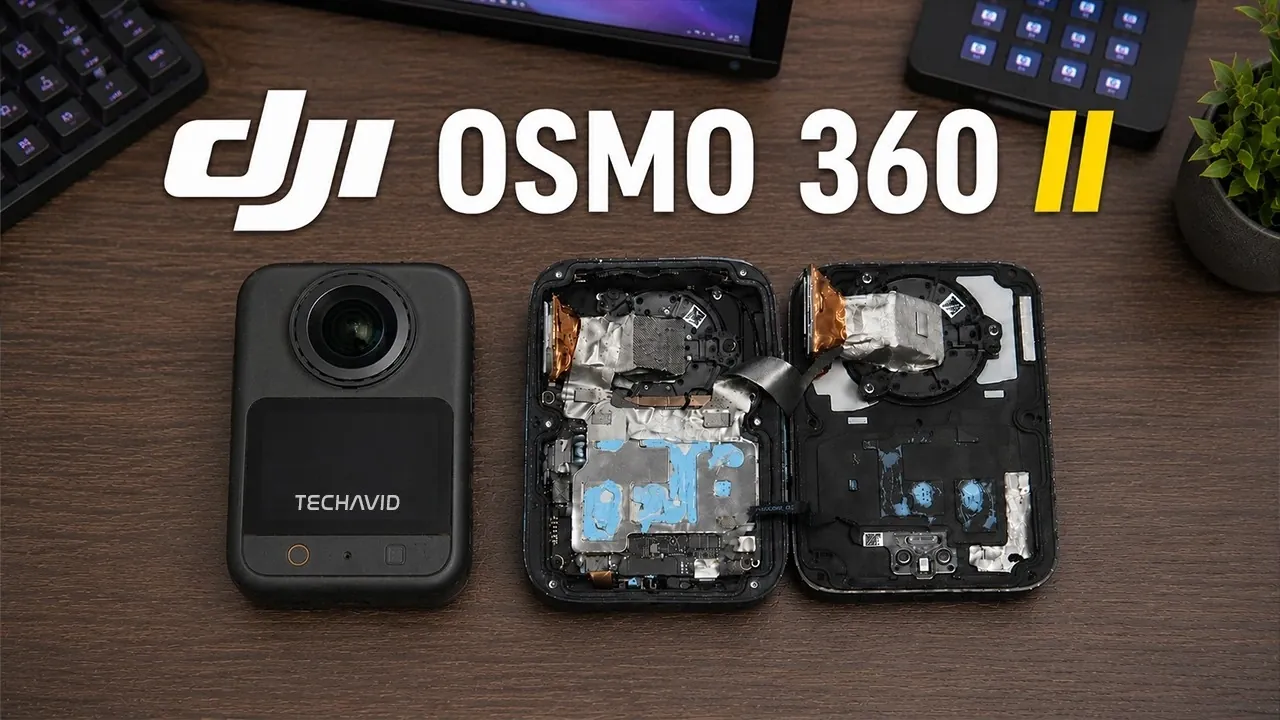
Leaked images and regulatory filings have shed light on the DJI Osmo 360 II, hinting at a device that balances familiarity with thoughtful upgrades. According to TechAvid, the camera’s design remains largely consistent with its predecessor, making sure compatibility with existing accessories like mounts and cages. However, subtle refinements, such as a redesigned lens ring with added notches, suggest improved usability, particularly for lens adjustments. Additionally, the inclusion of a 2150mAh battery, a 10% increase in capacity, signals a focus on extended recording sessions, appealing to both casual users and professionals.
Dive into this explainer to uncover how the Osmo 360 II’s USB-C Power Delivery technology enables faster charging at up to 27 watts, minimizing downtime between shoots. You’ll also explore its globally certified design, which positions the camera for distribution in key markets, including the U.S., despite recent trade restrictions. Finally, gain insight into the unconfirmed features that could define its performance, from sensor details to stabilization capabilities and how these might shape its role in the content creation landscape.
Battery Enhancements and Faster Charging
TL;DR Key Takeaways :
- The DJI Osmo 360 II features a 10% improved battery capacity (2150mAh) and USB-C Power Delivery technology, allowing faster charging at up to 27 watts for extended and efficient use.
- The design remains largely similar to its predecessor, making sure compatibility with existing accessories, while subtle improvements like a redesigned lens ring enhance usability and adaptability.
- The internal layout prioritizes reliability and ease of use, maintaining features like a centrally located circuit board and removable battery for straightforward maintenance and seamless operation.
- Regulatory certifications from major bodies (FCC, CE, UKCA, BIS, KC, EAC) confirm the Osmo 360 II’s readiness for a global launch, including availability in the U.S. market.
- Key performance details, such as sensor type, image quality and stabilization capabilities, remain unconfirmed, leaving some uncertainty about the camera’s full potential and suitability for professional use.
One of the most notable upgrades in the Osmo 360 II is its improved battery performance. The new 2150mAh battery represents a 10% increase in capacity compared to the previous model’s 1950mAh. This enhancement directly translates to longer recording times, making the device more suitable for extended shoots, whether for professional projects or casual use.
Additionally, the inclusion of USB-C Power Delivery technology supports charging speeds of up to 27 watts. This improvement significantly reduces downtime, allowing users to recharge the device faster and return to capturing content with minimal interruptions. For content creators who rely on efficiency, this faster charging capability is a practical and valuable addition.
Familiar Design with Subtle Improvements
The Osmo 360 II maintains a design that closely resembles its predecessor, making sure compatibility with existing accessories such as selfie sticks, cages and mounts. This continuity is a strategic advantage for users who have already invested in DJI’s ecosystem, as it eliminates the need for additional purchases.
However, the device introduces minor yet meaningful design tweaks. For instance, the redesigned lens ring now features notches, which could simplify lens replacement and improve the camera’s adaptability for various shooting scenarios. These subtle refinements reflect a focus on usability and convenience, catering to both professionals and hobbyists who value practicality in their equipment.

Below are more guides on DJI Osmo from our extensive range of articles.
- Why the DJI Osmo Pocket 4P is Launching Under a Completely Different Name in the U.S.
- DJI Pocket 4 Pro Leaks with a 6K Dual-Camera, but US Buyers Might Miss Out
- Why the DJI Pocket 4 Pro’s 1-Inch Sensor is a Game-Changer for Creators
- DJI Osmo Pocket 4P Global Launch is Finally Here
- DJI’s Osmo Pocket 4 Pro Faces a Hidden Threat from Insta360
- Everything We Know About the DJI Pocket 4 Pro Sensor Upgrade
- Why DJI Kept the Osmo Pocket 4P Specs a Secret at Cannes
- Why the DJI Osmo Pocket 4P Might Disappoint Social Media Creators
- DJI Pocket 4 vs Pocket 4P : Are the New Pro Features Worth the Upgrade?
- Why the DJI Pocket 4 Pro’s New Dual-Lens System is a Massive Deal
Internal Layout: Reliability and Ease of Use
Internally, the Osmo 360 II retains a layout similar to the original model, emphasizing reliability and user-friendliness. The centrally located circuit board and removable battery design remain unchanged, allowing for straightforward maintenance and quick battery swaps during long shooting sessions. This consistency ensures that users familiar with the original Osmo 360 will experience a seamless transition to the new model.
While the internal structure does not introduce new innovations, it reinforces the camera’s practicality for everyday use. By prioritizing reliability and ease of use, DJI continues to cater to the needs of content creators who require dependable tools for their work.
Regulatory Certifications Signal Global Launch
The Osmo 360 II has secured certifications from major regulatory bodies, including FCC, CE, UKCA, BIS, KC and EAC. These approvals confirm that the device meets international standards, paving the way for a global release. Notably, the FCC certification was obtained prior to recent U.S. restrictions on DJI, making sure the camera’s availability in the American market.
The wide range of certifications suggests that DJI is targeting key regions for distribution, positioning the Osmo 360 II as a globally accessible product. This comprehensive approach reflects a well-coordinated strategy to introduce the camera to diverse markets, catering to the needs of content creators worldwide.
Unconfirmed Features: What We Don’t Know
Despite the insights provided by leaks and regulatory filings, several critical features of the Osmo 360 II remain unverified. Key details such as the camera’s sensor type, processor, image quality, recording resolutions, frame rates, codecs and stabilization capabilities have not yet been confirmed. These specifications are crucial for evaluating the camera’s overall performance and determining its suitability for various use cases.
Until DJI releases official information, potential buyers are left to speculate about the device’s full capabilities. The absence of confirmed performance details introduces an element of uncertainty, particularly for professionals who rely on specific technical features to meet their creative demands.
Global Launch Strategy
The combination of incremental design improvements, enhanced battery technology and comprehensive regulatory certifications suggests that DJI is preparing for a strategic global launch. While the exact release date remains unclear, the Osmo 360 II appears ready for distribution across multiple markets. By addressing the needs of both professionals and hobbyists, DJI aims to position the camera as a versatile tool for a broad audience.
These developments indicate that the Osmo 360 II is designed to appeal to a wide range of users, from casual content creators to seasoned professionals. The focus on compatibility, usability and reliability underscores DJI’s commitment to delivering a product that meets the diverse demands of its customer base.
Anticipation and Expectations
The DJI Osmo 360 II builds on the strengths of its predecessor with meaningful upgrades in battery capacity, charging speed and lens design. Its compatibility with existing accessories and adherence to global regulatory standards make it an appealing option for a wide range of users. However, the absence of confirmed performance specifications leaves some uncertainty about its full potential.
As anticipation grows, the Osmo 360 II’s ability to meet user expectations will depend on how its unverified features align with the demands of content creators. For now, the leaks and certifications paint a promising picture of a device that could become a valuable addition to DJI’s lineup, offering both reliability and versatility for capturing high-quality content.
Media Credit: TechAvid
Disclosure: Some of our articles include affiliate links. If you buy something through one of these links, Geeky Gadgets may earn an affiliate commission. Learn about our Disclosure Policy.
