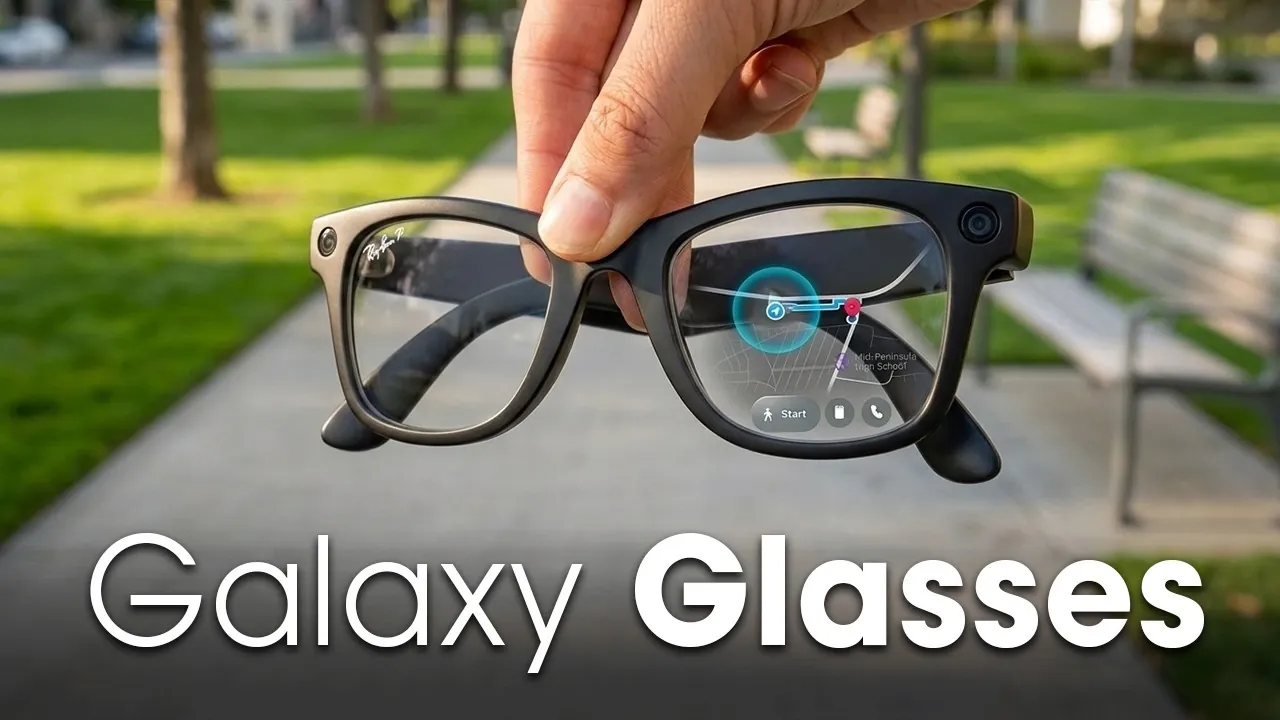
Samsung is reportedly advancing its position in the wearable technology market with the development of smart glasses featuring a built-in display. Leaks suggest these glasses will include a 245mAh battery, a capacity comparable to other display-equipped smart glasses currently available. This move highlights Samsung’s intent to establish a strong presence in the growing smart glasses sector, with a particular focus on heads-up display (HUD) and augmented reality (AR) technologies. By using its expertise in consumer electronics, Samsung is poised to deliver a product that could redefine the wearable experience for users. Here’s a closer look at the potential impact and features of this innovation. The video below gives us more details on the rumored Samsung Galaxy Smart Glasses.

Battery Capacity: A Window into Display Capabilities
The 245mAh battery capacity is a critical detail that offers insight into the glasses’ potential functionality. Displays, especially those integrated into smart glasses, require consistent and efficient power to operate effectively. For comparison, Meta’s display-enabled smart glasses feature a similar 248mAh battery, reinforcing the likelihood that Samsung’s glasses will include a built-in display. This capacity suggests the glasses will support a minimal HUD, capable of providing essential visual information such as notifications, navigation prompts, or fitness tracking data. While this feature may not represent a new leap, it offers a practical entry point for Samsung into the competitive smart glasses market. By focusing on reliability and usability, Samsung is laying the groundwork for future advancements in wearable displays.
Dual Variants: Catering to Diverse Needs
Samsung appears to be adopting a dual-variant strategy, potentially offering both display and non-display versions of its smart glasses. The display variant is expected to emphasize HUD functionality, delivering visual overlays for notifications or navigation. In contrast, the non-display version may prioritize features such as cameras, audio integration, and artificial intelligence (AI) capabilities. This approach allows Samsung to cater to a broader audience, from early adopters of AR technology to users seeking enhanced wearable features without the complexity of a display.
By offering these distinct options, Samsung is positioning itself as a versatile player in the wearable market. Users can choose a model that aligns with their specific needs, whether they prioritize visual information or multimedia functionality. This strategy not only broadens the product’s appeal but also demonstrates Samsung’s commitment to addressing diverse consumer preferences.
HUD Features: A Step Toward AR Integration
The built-in display is expected to feature a minimal HUD, rather than delivering a fully immersive AR experience. This means users can anticipate simple overlays of information, such as incoming messages, turn-by-turn directions, or basic alerts, rather than complex 3D visuals or interactive AR environments. While modest compared to advanced AR systems, this functionality represents an important step in Samsung’s journey toward more sophisticated AR integration.
By starting with a simpler display, Samsung can focus on refining the technology, user interface, and overall experience. This incremental approach allows the company to gather valuable user feedback and improve its offerings in subsequent iterations. Over time, these foundational efforts could pave the way for more advanced features, such as gesture recognition, spatial mapping, and immersive visual overlays.
Future Prospects: Advanced AR on the Horizon
Samsung’s initial focus on a single-display HUD could serve as a stepping stone toward more advanced AR capabilities. As AR technology continues to evolve, future iterations of Samsung’s smart glasses may incorporate features such as dual-display systems, enhanced spatial mapping, and gesture-based controls. These advancements could enable users to interact with their surroundings in entirely new ways, blending digital and physical environments seamlessly.
Additionally, the integration of AI-driven features could further enhance the glasses’ functionality, allowing personalized experiences such as context-aware notifications, voice-activated commands, and real-time translation. By gradually expanding its AR capabilities, Samsung has the potential to become a significant competitor in the AR market, challenging established players like Meta and Apple. This forward-looking strategy underscores Samsung’s commitment to innovation and its ambition to shape the future of wearable technology.
Market Positioning: A Balanced Approach
When compared to Meta’s smart glasses, Samsung’s rumored offering appears to take a measured and balanced approach. By focusing on essential features such as a built-in display, cameras, and AI capabilities, Samsung is targeting a middle ground between functionality and affordability. This strategy could attract users who are curious about AR but hesitant to invest in high-cost, fully immersive devices.
The inclusion of audio technology and AI-driven enhancements in the non-display variant further highlights Samsung’s dedication to delivering a versatile wearable experience. These features could appeal to users seeking practical, everyday applications, such as hands-free communication, music playback, or voice assistant integration. By addressing a wide range of use cases, Samsung is positioning its smart glasses as a compelling option for both tech enthusiasts and casual users.
A Promising Start for Samsung in Wearables
Samsung’s rumored smart glasses with a built-in display represent a significant step forward in the evolution of wearable technology. The 245mAh battery capacity hints at a focus on minimal HUD functionality, while the potential for dual variants broadens the product’s appeal to diverse user groups. Although the initial AR features may be limited, this launch marks a foundational step toward more advanced AR capabilities in the future.
By entering the smart glasses market with a thoughtful and incremental approach, Samsung is demonstrating its ability to adapt to emerging trends and meet consumer demands. As the company continues to refine its technology and expand its offerings, it has the potential to become a key player in the rapidly evolving landscape of wearable technology.
Here are additional guides from our expansive article library that you may find useful on Samsung Galaxy Glasses.
- Samsung Galaxy Glasses (2026): Specs, Price, and Android XR
- Samsung Galaxy AI Smart Glasses Release Date Revealed
- Samsung Smart Glasses 2026: Features, Specs, and Release Date
- World’s First Eye-Tracking Smart Glasses: Fully Tested
- Samsung Galaxy Buds 4 Pro: Features, Specs, and Release
- iPhone 18 Pro Max: Under-Display Face ID Shrinks Dynamic Island
Source & Image Credit: TechAvid
Disclosure: Some of our articles include affiliate links. If you buy something through one of these links, Geeky Gadgets may earn an affiliate commission. Learn about our Disclosure Policy.
