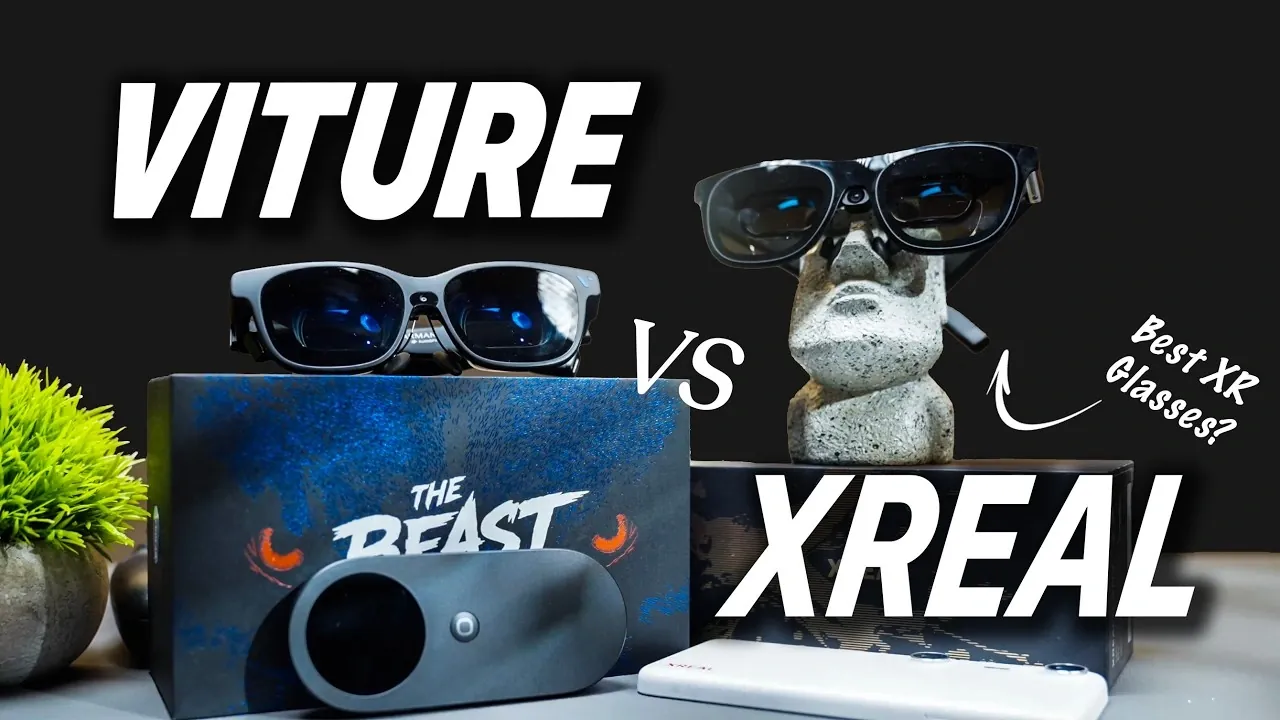
The Xreal 1 Pro and Viture Beast are two XR glasses released in 2026, offering distinct approaches to integrating virtual and augmented realities into daily life. After three months of testing, KevZ highlights key differences, such as the Viture Beast’s higher display resolution of 1920×1200 pixels and brightness of 1250 nits, compared to the Xreal 1 Pro’s 1920×1080 resolution and 700 nits brightness. These differences make the Viture Beast better suited for use in bright environments, while both models include HDR10 support and similar fields of view for immersive visuals.
Dive into a detailed comparison of their 3D rendering performance, comfort features and multitasking capabilities. Discover how the Xreal 1 Pro uses onboard AI for real-time 3D conversion, while the Viture Beast relies on external software for enhanced rendering. Gain insight into their ergonomic designs, including adjustable nose pads and durable materials, as well as their productivity features like ultrawide display modes and optional accessories.
Display Technology: Clarity and Immersion
TL;DR Key Takeaways :
- The Viture Beast outperforms the Xreal 1 Pro in display quality, offering higher resolution (1920×1200 vs. 1920×1080) and brightness (1250 nits vs. 700 nits), making it better for bright environments.
- For 3D rendering, the Xreal 1 Pro provides convenient real-time AI conversion, while the Viture Beast delivers superior quality through external software, catering to different user preferences.
- Both models prioritize comfort and usability, but the Viture Beast features a premium build, while the Xreal 1 Pro offers customizable frame covers for personalization.
- The Xreal 1 Pro excels in productivity with features like a 6 DOF camera attachment, while the Viture Beast is optimized for gaming with its three-panel layout and gaming-centric accessories.
- Audio performance varies: the Xreal 1 Pro offers better bass for immersive experiences, while the Viture Beast minimizes sound leakage, making sure privacy in public spaces.
The display quality of XR glasses is a critical factor in delivering an immersive experience. Both the Xreal 1 Pro and Viture Beast are equipped with Sony micro-OLED displays, making sure sharp visuals and vibrant color reproduction. However, the Viture Beast edges ahead with a resolution of 1920×1200 pixels and a brightness of 1250 nits, compared to the Xreal 1 Pro’s 1920×1080 resolution and 700 nits brightness. These specifications make the Viture Beast better suited for environments with higher ambient light.
Both models support HDR10, which enhances contrast and color depth, resulting in more lifelike visuals. The field of view (FOV) is nearly identical, with the Xreal 1 Pro offering 57 degrees and the Viture Beast slightly wider at 58 degrees. This subtle difference contributes to an immersive experience, whether you’re watching movies, gaming, or working on productivity tasks. For users prioritizing display brightness and resolution, the Viture Beast offers a slight advantage.
3D Rendering: Convenience vs Quality
3D rendering capabilities are a significant consideration for users seeking immersive content. The Xreal 1 Pro employs onboard AI for real-time 3D conversion, offering a convenient plug-and-play experience. However, this approach occasionally results in visual artifacts such as tearing or distortion, which may detract from the overall experience.
In contrast, the Viture Beast relies on external software for 3D rendering. While this requires additional setup and technical know-how, it delivers superior results with fewer artifacts. For users who prioritize seamless and high-quality 3D performance, the Viture Beast is the better option, despite its steeper learning curve. The choice between these models depends on whether you value convenience or uncompromised quality.

Uncover more insights about XR Glasses in previous articles we have written.
- Why the VITURE Beast XR Glasses Are Redefining the AR and VR Experience
- Everything We Know About the Samsung Galaxy Glasses Launch in 2026
- Why Google’s New Audio Glasses Could Change How You Navigate the World
- VITURE’s Beast XR Display Glasses Official Launch $549 : Most Customizable XR Experience Yet
- Samsung’s Next Big Wearable: How Galaxy Glasses Will Change the Way You Use Android
- What to Expect from Google’s 2026 Smart Glasses Reveal
- August 2026: Mark Your Calendars for the Samsung Galaxy Glasses Debut
- Move Over, Ray-Ban Meta: Samsung’s AI Galaxy Smart Glasses Are Finally Coming This Year
- Meet XREAL’s $1,500 Aura XR Glasses Coming in Fall 2026
- 5 Smart Glasses Tested: Why an $89 Pair Beats Ray-Ban Meta
Comfort and Design: Balancing Style and Usability
Comfort and design are essential for extended use of XR glasses. Both the Xreal 1 Pro and Viture Beast weigh approximately 90 grams, making them lightweight and suitable for prolonged wear. Adjustable arms and swappable nose pads ensure a secure and personalized fit. However, neither model includes built-in diopter adjustment, which could be a limitation for users requiring vision correction.
The Viture Beast stands out with its premium build quality, featuring a sleek and durable design that exudes sophistication. On the other hand, the Xreal 1 Pro offers swappable frame covers, allowing users to customize the device’s appearance to match their style. While both models prioritize comfort, the choice between them may come down to aesthetic preferences and build quality.
Productivity Features: Portable Workstations
XR glasses are increasingly being adopted as portable productivity tools, offering a unique alternative to traditional monitors. Both the Xreal 1 Pro and Viture Beast support ultrawide and multi-screen modes, allowing users to manage multiple tasks simultaneously. These features are particularly beneficial for professionals who require flexibility and mobility in their work setups.
The Xreal 1 Pro distinguishes itself with an optional 6 DOF camera attachment, which enhances stability and tracking in dynamic environments. This feature is especially useful for users who need precise tracking for tasks such as design or engineering. Meanwhile, the Viture Beast offers a three-panel layout, making it ideal for multitasking and organizing workflows. While neither device fully replicates the functionality of a multi-monitor setup, they provide a compelling solution for on-the-go productivity.
Audio Performance: Immersion and Privacy
Audio quality is a crucial aspect of the XR experience, contributing to both immersion and privacy. Both the Xreal 1 Pro and Viture Beast feature internal speakers designed to minimize sound leakage, making sure privacy in shared spaces. The Xreal 1 Pro delivers slightly better bass performance, enhancing the audio experience for gaming and movies.
In contrast, the Viture Beast excels in controlling sound leakage, making it a more discreet option for use in public settings. This feature is particularly valuable for users who frequently use their XR glasses in environments where privacy is a concern. Depending on your priorities, whether it’s richer audio or enhanced discretion, either model can meet your needs.
Accessories and Ecosystem: Enhancing Functionality
The accessory ecosystem plays a significant role in extending the functionality of XR glasses. Xreal offers a diverse range of add-ons, including the Beam Pro input device and a spatial camera system, which expand its applications across various professional and creative tasks. These accessories make the Xreal 1 Pro a versatile choice for users seeking a comprehensive XR solution.
On the other hand, Viture focuses on gaming-centric accessories, such as connection hubs and mobile controllers. These additions make the Viture Beast a preferred option for gamers looking to enhance their experience. Both ecosystems cater to specific user needs, whether for productivity or entertainment, allowing you to tailor your XR setup to your preferences.
Use Cases: Tailored Experiences
Each model excels in specific scenarios, making them suitable for different user priorities:
- Movie Watching: Both models deliver large, immersive screens that are perfect for enjoying films and streaming content.
- Gaming: The Viture Beast offers superior compatibility with gaming consoles and accessories, providing a seamless gaming experience.
- Productivity: Both devices serve as portable alternatives to traditional monitors, though they may not fully replicate the functionality of multi-monitor setups.
Future Developments: What’s Next?
The XR industry continues to evolve rapidly, with new advancements on the horizon. Xreal’s upcoming Project Aura promises to introduce a premium XR glasses model with enhanced features, including improved display technology and expanded functionality. While details remain limited, this development underscores the ongoing innovation in XR technology, offering users even more advanced options in the near future.
Choosing the Right XR Glasses
Selecting between the Xreal 1 Pro and Viture Beast ultimately depends on your specific needs and priorities:
- Xreal 1 Pro: Best for users seeking a streamlined interface, convenient 3D conversion and a robust accessory ecosystem.
- Viture Beast: Ideal for those prioritizing superior display quality, high-performance 3D rendering and excellent gaming support.
Both models represent the forefront of XR technology in 2026, catering to diverse needs ranging from entertainment to productivity. By aligning your choice with your priorities, whether it’s display quality, ease of use, or gaming compatibility, you can select the XR glasses that best suit your lifestyle and requirements.
Media Credit: KevZ
Disclosure: Some of our articles include affiliate links. If you buy something through one of these links, Geeky Gadgets may earn an affiliate commission. Learn about our Disclosure Policy.
