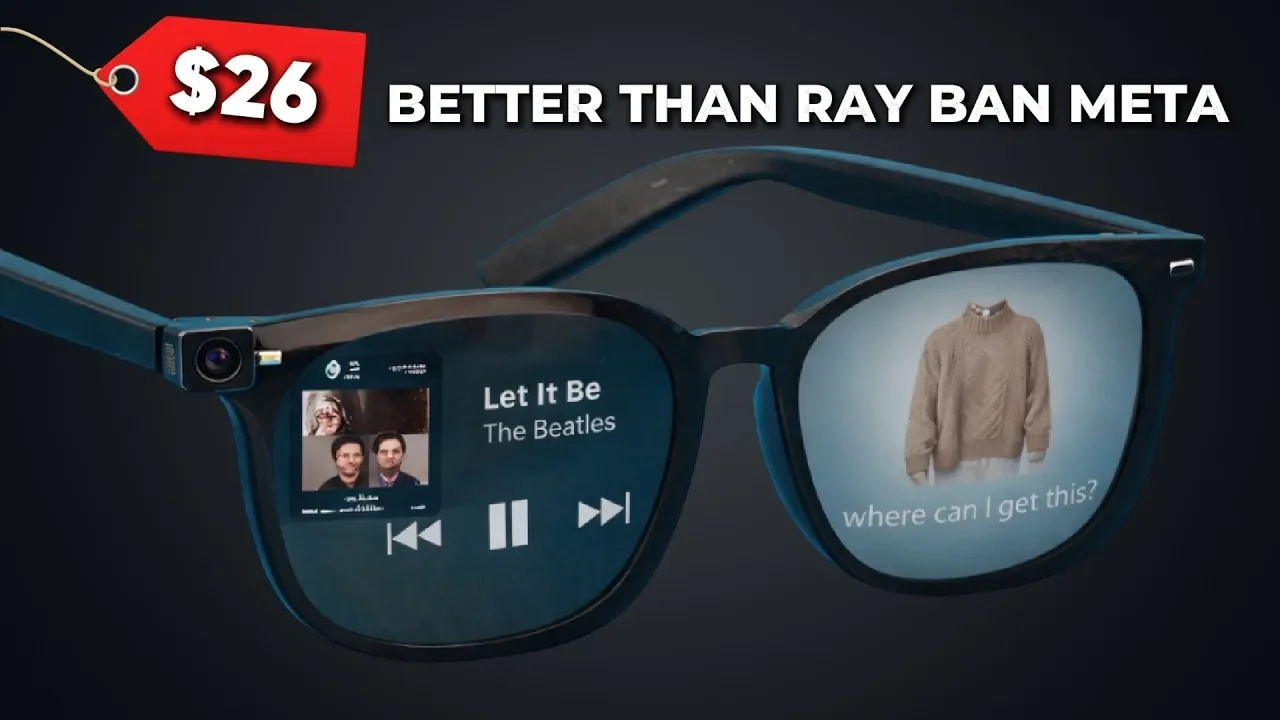
Smart glasses have become increasingly accessible, offering a variety of features across different price ranges. In his detailed analysis, Steven Sullivan compares five models to the Ray-Ban Meta Gen 1, highlighting their strengths and limitations. Among the options discussed, the $89 smart glasses stand out for their sleek design and superior sound quality, making them a practical and stylish alternative. On the other hand, budget-friendly options like the $10 and $26 models come with significant trade-offs, such as inconsistent performance and limited functionality, which may not meet the needs of most users.
Explore how these models differ in key areas like AI integration, lens versatility and build quality. You’ll gain insight into the practical benefits of mid-range options, such as the $74 glasses, which balance affordability with advanced features like real-time translation and a 4K HD camera. Additionally, the breakdown covers the premium $239 Dymesty AI glasses, which, despite their high-end materials, struggle to justify their price. This overview will help you weigh the trade-offs and identify the smart glasses that best align with your lifestyle and priorities.
$10 Smart Glasses: Affordable, But Are They Worth It?
TL;DR Key Takeaways :
- Smart glasses now cater to various budgets and needs, ranging from basic functionality to advanced AI features.
- The $10 and $26 models are affordable but suffer from limited features, technical issues and inconsistent performance.
- The $74 smart glasses offer a balance of affordability and advanced AI capabilities, including real-time translation and object recognition.
- The $89 smart glasses stand out as the best alternative to Ray-Ban Meta Gen 1, combining sleek design, superior sound quality and practical features.
- The $239 Dymesty AI glasses provide a premium build but fall short due to mixed performance, reliance on external AI systems and a high price tag.
For those on a tight budget, the $10 smart glasses might seem like an appealing option. These glasses include basic features such as:
- AI translation
- Bluetooth 6.0 connectivity
- UV protection
- IPX5 waterproofing
- Hands-free calling
While the price is undeniably attractive, the drawbacks are significant. The plastic frame feels flimsy, and the dark lenses are non-adjustable, limiting their usability in varying lighting conditions. Translation accuracy is inconsistent and the AI meeting summarization feature is rudimentary, often failing to capture key details. These glasses may suffice if cost is your only concern, but their limited functionality and poor build quality make them a less-than-ideal choice for most users.
$26 Smart Glasses: A Step Up with Lens Versatility
Priced at $26, this model offers a noticeable improvement in both build quality and functionality. Key features include:
- Magnetic clip-on lenses (UV400, blue light blocking and night vision)
- Touch controls
- IP65 waterproofing
The magnetic lens system adds convenience, allowing users to switch between different lens types with ease. The glasses also feel sturdier compared to the $10 model. However, technical issues such as audio glitches—where sound occasionally outputs from only one side, and unreliable remote camera controls detract from the overall experience. Additionally, the lack of an app or advanced AI features limits their appeal for tech-savvy users. These glasses are a reasonable choice for those who prioritize lens versatility but can tolerate minor technical flaws.

Check out more relevant guides from our extensive collection on smart glasses that you might find useful.
- Samsung Smart Glasses 2026: Features, Specs and Release Date
- Nothing AI Smart Glasses : Design, Features & Pricing Strategy
- Apple Glass Early Look: 2026 Release Date & Leaked Features
- Samsung Smart Glasses: Features, Release Date and
- Samsung Galaxy Glasses (2026): Specs, Price and Android XR
- Apple Glasses: Everything We Know So Far
- Google Smart Glasses with Dockable Earbuds Leaked
- AI Smart Glasses Coming in Weeks: Maverick AI Pro & More
- Ray-Ban Meta Gen 3 Smart Glasses: 2026 Release & Rumors
- Rokid Glasses vs Rokid AI Glasses Style : Display vs Comfort
$74 Smart Glasses: AI Features at a Reasonable Price
At $74, these glasses strike a balance between affordability and advanced functionality. They come equipped with:
- 4K HD camera
- Real-time translation
- AI assistant integration
- Object recognition
- Open-ear audio
The standout feature is the intuitive “look and ask” AI experience, which enables seamless interaction with objects and environments. The 4K HD camera delivers decent photo and video quality, though the dynamic range is somewhat limited, especially in low-light conditions. Most features require an accompanying app, which adds complexity but also enhances functionality. While the design is fairly average, these glasses are a solid option for users seeking advanced AI capabilities without exceeding a mid-range budget.
$89 Smart Glasses: Style Meets Functionality
For $89, these glasses offer an appealing combination of style and practicality. Their features include:
- Real-time translation
- AI assistant integration
- Intuitive touch controls
- Superior sound quality
The sleek design and seamless voice assistant functionality make these glasses versatile for everyday use. Unlike some other models, they lack a camera, but their overall performance compensates for this omission. The superior sound quality enhances the user experience, making them ideal for hands-free calls and audio playback. If you’re looking for a fashionable yet functional alternative to the Ray-Ban Meta Gen 1, this model delivers a well-rounded experience.
$239 Dymesty AI Glasses: Premium Build, Mixed Results
The Dymesty AI glasses, priced at $239, aim to provide a high-end experience with features such as:
- Titanium frame
- 48-hour battery life
- AI meeting recording
- Real-time translation
- Voice assistant integration
The titanium frame and lightweight design exude quality, offering a premium feel that sets them apart from lower-priced models. However, the glasses fall short in other areas. The AI functionality heavily relies on Siri or Google Assistant, limiting its independence. Additionally, the accompanying app is prone to lag and the audio quality is underwhelming for the price. While the 48-hour battery life is impressive, the inconsistent recording features and high price tag make these glasses a less compelling option for most users.
Which Smart Glasses Should You Choose?
After evaluating these models, the $89 smart glasses emerge as the best alternative to the Ray-Ban Meta Gen 1, offering a compelling mix of style, sound quality and practical features. They are particularly well-suited for users seeking a fashionable and functional device for everyday use.
The $74 glasses are another strong contender, providing advanced AI and camera functionality at a mid-range price. They are ideal for those who prioritize innovative features without exceeding a reasonable budget. In contrast:
- The $10 and $26 models fall short due to limited features, technical issues and inconsistent performance.
- The $239 Dymesty glasses, while premium in design, fail to justify their high price with their mixed performance and reliance on external AI systems.
Ultimately, your choice will depend on your priorities, whether it’s affordability, advanced features, or a balance of both. By understanding your specific needs and preferences, you can confidently select the smart glasses that align with your expectations and lifestyle.
Media Credit: Steven Sullivan
Disclosure: Some of our articles include affiliate links. If you buy something through one of these links, Geeky Gadgets may earn an affiliate commission. Learn about our Disclosure Policy.
