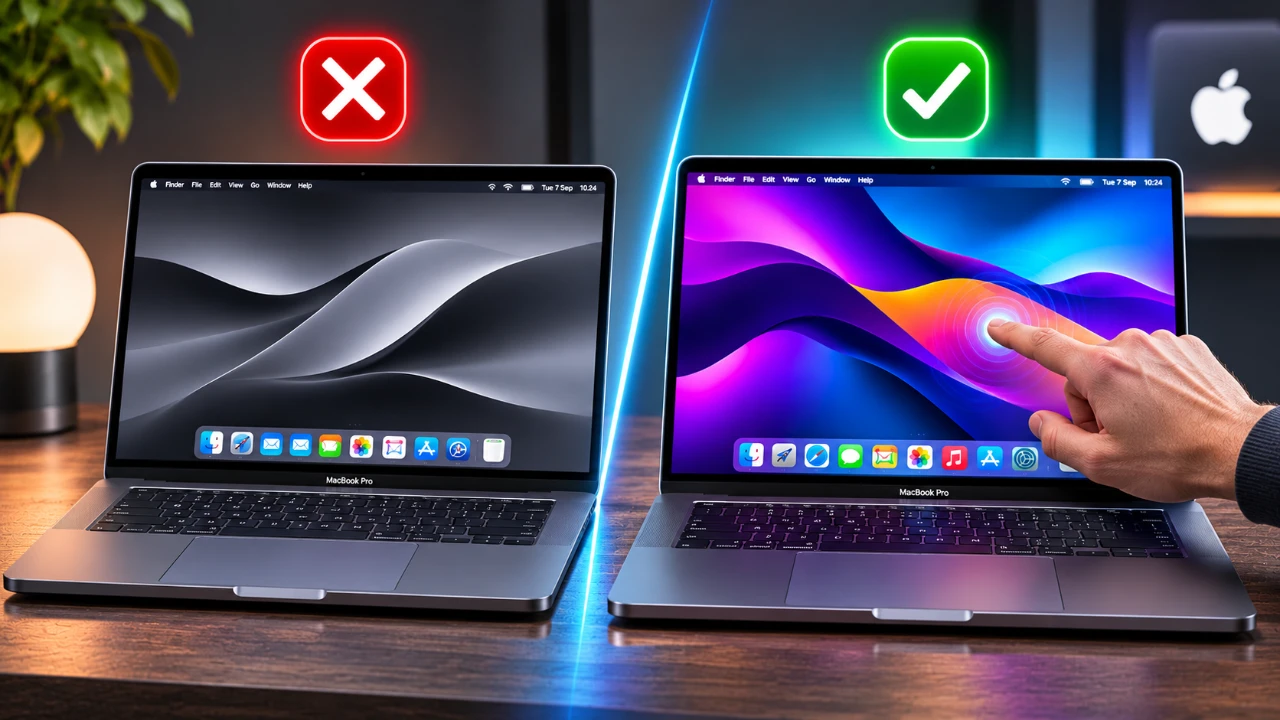
Apple is reportedly preparing to redefine its MacBook Pro lineup by introducing touchscreen OLED displays as the new standard. This move represents a pivotal change in Apple’s product strategy, potentially signaling the end of non-touch MacBook Pro models. While this evolution promises to deliver advanced technology, it also raises important questions about pricing, accessibility, and how macOS will adapt to touch functionality. For users, this shift could redefine how they interact with their devices, offering new possibilities while challenging those accustomed to traditional workflows.
TL;DR Key Takeaways :
- Touchscreen OLED Standard: Is Apple planning to phase out mini-LED panels in favor of vibrant touch-enabled OLED screens across future MacBook Pros?
- Estimated $400 Price Jump: Premium display manufacturing and touch architecture are rumored to drive up starting costs significantly.
- Thinner Enclosure Design: Expect a lighter, sleeker chassis build echoing Apple’s historic Retina display transition era.
- macOS Touch Adaptation: While unlocking direct gestures and creative workflows, macOS will require deep optimization for touch input.

What’s Changing: Touchscreen OLED Displays
Apple’s decision to transition from mini-LED to OLED displays in its MacBook Pro lineup represents a significant technological upgrade. OLED technology offers several notable advantages that enhance the user experience:
- Superior contrast ratios and deeper blacks for more immersive visuals
- Vivid and precise color reproduction, ideal for creative professionals
- Improved energy efficiency, potentially extending battery life
In addition to these display enhancements, Apple is expected to modernize the MacBook Pro’s design with thinner enclosures, slimmer bezels and lighter builds. These changes aim to create a sleeker, more portable device while maintaining the premium feel that MacBook Pros are known for. This shift echoes Apple’s strategy during the Retina Display rollout in 2012-2013, where older models were gradually phased out in favor of newer, more advanced designs. By making touchscreen OLED models the default, Apple is setting the stage for a similar evolution in its MacBook Pro lineup.
Why This Matters: A Strategic Pivot
Historically, Apple has resisted adding touchscreens to its Mac lineup, emphasizing touch functionality on iPads instead. However, this shift reflects a broader strategy to integrate innovative technologies across its product ecosystem. By 2027, Apple is expected to release MacBook Pro models featuring M7 chips and AI-focused hardware, further enhancing performance and efficiency.
This strategic pivot underscores Apple’s commitment to staying competitive in the laptop market. The gradual adoption of OLED displays across the MacBook range suggests a long-term vision that prioritizes innovation while phasing out older technologies. For users, this means access to devices that combine advanced display technology with the power of Apple Silicon, offering a seamless blend of performance and visual excellence.
Pricing: A Barrier for Some?
While the advantages of touchscreen OLED displays are clear, they come with a notable increase in cost. Current estimates suggest that OLED MacBook Pros will be priced approximately $400 higher than their mini-LED counterparts.
For professional users and students on a budget, this pricing shift could pose a challenge. The potential elimination of non-touch models may raise the entry-level price for MacBook Pros, making them less accessible to some users. This could particularly impact those who rely on MacBook Pros for work or study but may not find the additional cost of advanced features justifiable.
However, as production efficiencies improve and economies of scale take effect, the cost of OLED technology may decrease over time, potentially making these models more affordable for a broader audience.
Touchscreens and macOS: A Work in Progress
The inclusion of touchscreens in MacBook Pros introduces new possibilities for user interaction. Tasks such as annotating documents, navigating creative software, or performing quick gestures could become more intuitive and efficient. For creative professionals, the ability to interact directly with the screen may streamline workflows and enhance productivity.
However, macOS was originally designed for keyboard and trackpad input and adapting it to fully support touchscreens without compromising the desktop experience remains a challenge. While Apple has made progress in optimizing macOS for touch functionality, further refinements will be necessary to ensure seamless integration. For many users, touch functionality may remain an optional feature rather than a core necessity, depending on their specific needs and preferences.
Why OLED Displays Matter
For creative professionals and users who demand high-quality visuals, OLED displays offer significant advantages over mini-LED technology:
- Enhanced contrast ratios and deeper blacks for more lifelike images
- Improved color accuracy, crucial for photo and video editing
- A superior visual experience for tasks requiring precise detail
These benefits make OLED displays particularly appealing for those in fields such as graphic design, video production and photography. However, the higher production cost of OLED technology contributes to the increased price of these models. For users who do not rely heavily on display quality, the added expense may not be justifiable, making it essential to weigh the benefits against the cost.
Looking Ahead: What’s Next for MacBook Pros?
By 2027, Apple is expected to introduce an entry-level 14-inch MacBook Pro featuring OLED displays and M7 chips. This model could serve as a benchmark for the gradual adoption of OLED technology across the MacBook range. Over time, advancements in manufacturing and supply chain efficiencies may help reduce costs, making OLED models more accessible to a wider audience.
Additionally, Apple’s focus on integrating AI hardware into its devices suggests that future MacBook Pros will deliver enhanced performance tailored to machine learning, data analysis, and other advanced applications. These developments highlight Apple’s ongoing commitment to pushing the boundaries of laptop technology, making sure that its devices remain at the forefront of innovation.
What Should You Do?
If you’re considering upgrading to a new MacBook Pro, here are some key factors to consider:
- Evaluate whether the benefits of OLED displays and touch functionality align with your specific needs and workflow.
- If you already own a recent MacBook Pro with Apple Silicon, upgrading solely for these features may not be necessary, as these models already offer exceptional performance and reliability.
- For those on a budget, older MacBook Pro models with Apple Silicon remain viable options, providing excellent performance without the added cost of OLED technology.
By carefully assessing your priorities and budget, you can make an informed decision that ensures your investment aligns with your professional or personal requirements. Whether you choose to embrace the latest advancements or stick with a tried-and-true model, Apple’s evolving MacBook Pro lineup offers options to suit a variety of needs.
Here are more guides from our previous articles and guides related to MacBook Pro that you may find helpful.
- Apple’s M6 MacBook Pro Leaks Reveal a Surprising Strategy Shift
- The OLED MacBook Pro Is Finally Confirmed for October—And It Changes Everything
- What to Expect From Apple’s Rumored M6 MacBook Pro Drop This Month
- Leaked OLED MacBook Pro Marks Apple’s Biggest Mac Shift in Years
- Apple Officially Confirm New Macs Are Arriving Next Week
- Leaked M6 MacBook Pro: Apple’s Biggest Silicon Leap in Years
Source & Image Credit: SaranByte
Disclosure: Some of our articles include affiliate links. If you buy something through one of these links, Geeky Gadgets may earn an affiliate commission. Learn about our Disclosure Policy.
