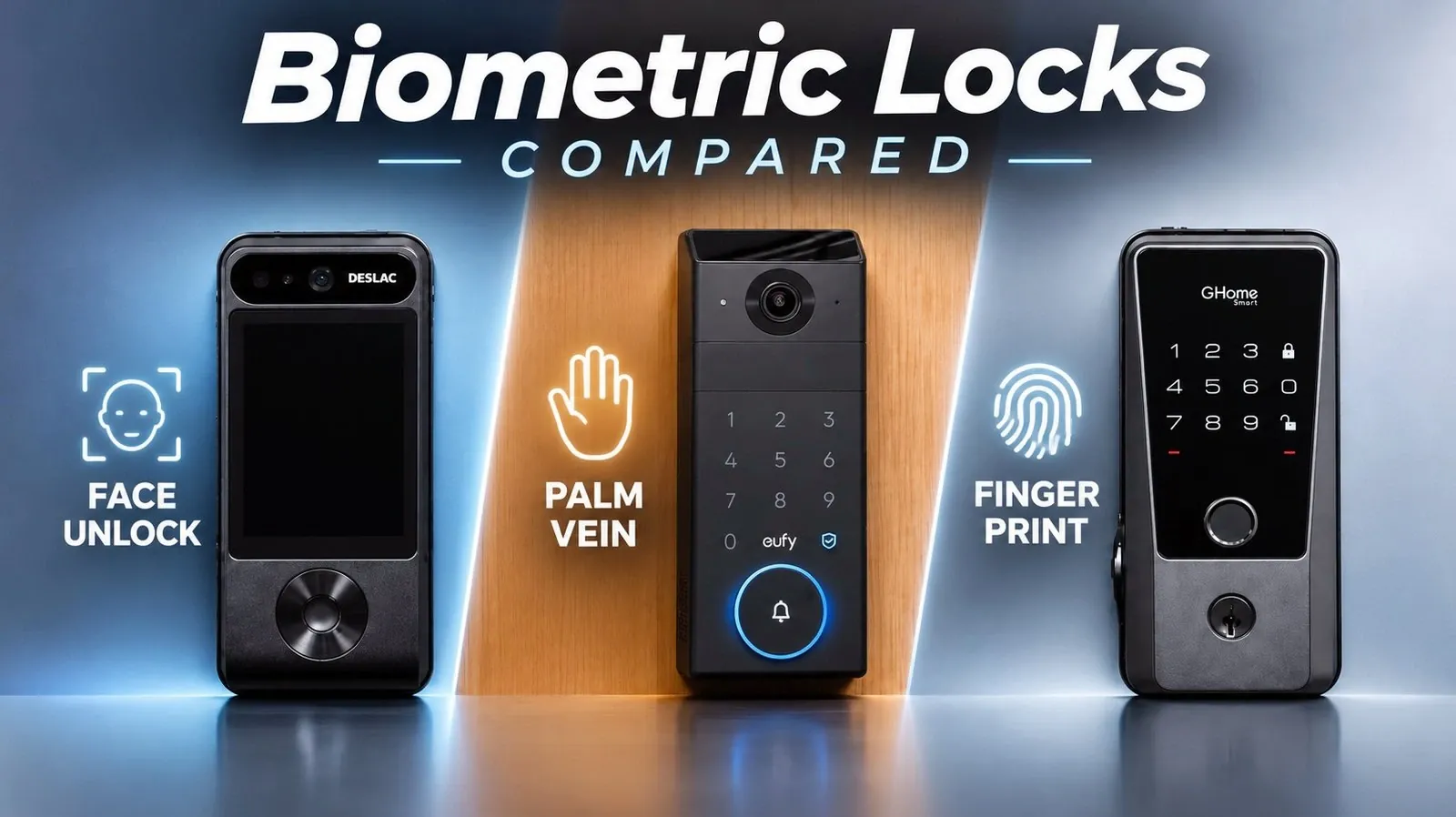
Biometric technology has revolutionized how we secure and access our homes, with palm vein, face, and fingerprint recognition emerging as the top contenders. Palm vein recognition, for instance, uses near-infrared light to map unique vein patterns beneath the skin, offering a highly secure solution that resists spoofing and performs reliably under various conditions. Devices like the Eufy Family Lock S3 Max, with its 99.9% accuracy rate and 0.6-second unlock time, exemplify the precision and privacy benefits of this method. On the other hand, face recognition prioritizes hands-free convenience, with models like the SwitchBot Lock Ultra Vision using 3D structured light for enhanced security. Meanwhile, fingerprint recognition remains the fastest and most budget-friendly option, though it is more sensitive to environmental factors. These distinctions highlight the diverse strengths of each technology, as explored by Smart Home 101.
Explore how these technologies compare in terms of security, speed, and usability to determine which best suits your needs. Gain insight into the unique advantages of palm vein recognition for households seeking top-tier security, the practicality of face recognition for hands-free access, and the speed and affordability of fingerprint locks for everyday use. This breakdown also examines hybrid models that combine multiple biometric methods, offering flexibility and reliability for varied scenarios. By understanding these factors, you can make an informed decision tailored to your household’s priorities.
Biometric Smart Locks Compared
TL;DR Key Takeaways :
- Palm vein recognition is considered the most secure biometric technology for smart locks, with near-infrared light mapping unique vein patterns beneath the skin, making it highly resistant to spoofing and unaffected by external factors like dirt or worn skin.
- The Eufy Family Lock S3 Max, priced at $400, offers palm vein recognition with 99.9% accuracy, a 0.6-second unlock time, and local data storage for privacy, while budget options like the Desloc K140 Plus ($150) and Tapo DL130 ($230) provide alternatives with varying features.
- Face recognition, ranked second in security, offers hands-free convenience with advanced models like the SwitchBot Lock Ultra Vision ($210) using 3D structured light for enhanced spoofing resistance, though it requires users to be within detection range.
- Fingerprint recognition is the fastest and most affordable biometric option, with reliable models priced between $80 and $150, but it is less secure and more sensitive to conditions like wet or aged skin, making it third in security compared to palm vein and face recognition.
- Modern smart locks increasingly combine multiple biometric methods (e.g., Tapo DL130 and Desloc V150 Plus) and support Matter for smart home integration, while key features like local encrypted storage, mechanical key backups, and tamper alerts enhance security and functionality.
Face Recognition: Hands-Free Convenience
The Eufy Family Lock S3 Max exemplifies this technology with a 99.9% accuracy rate and an unlock time of approximately 0.6 seconds. Priced at around $400, it combines palm vein recognition with a 2K doorbell camera and a rear video screen, storing all vein data locally for enhanced privacy. For a more budget-friendly option, the Desloc K140 Plus offers palm vein recognition for $150, featuring a false acceptance rate of 1 in 10,000 and a 10,000 mAh battery lasting up to nine months. The Tapo DL130, priced at $230, integrates palm vein and fingerprint recognition for added versatility.
This technology is particularly advantageous for users prioritizing security or those with worn-down fingerprints, such as older adults. Its ability to read beneath the skin ensures consistent performance. As palm vein recognition becomes more accessible across various price points, it is emerging as a practical choice for a wider audience.
Face recognition offers exceptional convenience, especially for users with full hands. Advanced models like the SwitchBot Lock Ultra Vision use 3D structured light to map facial contours, reducing the risk of spoofing with flat photos. The Ultra Vision claims a false recognition rate below 0.0001% and unlocks from a distance of 2 to 3 feet. Priced at $210, it processes and stores data locally, avoiding vulnerabilities tied to cloud-based storage. However, face recognition requires users to be within its detection range for accurate operation.
The Desloc V150 Plus enhances this technology by including a curved fingerprint sensor as a backup. It also features a perovskite solar panel for trickle charging, even in low light. Launched at $260, it appeals to users seeking both convenience and energy efficiency.
While face recognition ranks second in security after palm vein technology, it is particularly appealing for households prioritizing hands-free operation. Proper 3D depth sensing is essential, as cheaper models with flat cameras are more susceptible to spoofing. For users concerned about battery life, solar-powered options like the Desloc V150 Plus extend usability.
Fingerprint Recognition: Fast and Affordable
Fingerprint recognition remains the fastest and most affordable biometric option for smart locks. Capacitive sensors in models like the Desloc K120 and GoMed K D10 SE2 read fingerprint ridges and unlock in under a second. Reliable fingerprint locks are typically priced between $80 and $150, making them accessible to most households.
However, this technology is more sensitive to real-world conditions. Wet hands, dry or cracked skin, bandages, and aging can affect performance. Older users may face challenges as fingerprint ridges naturally wear down over time. Additionally, cheaper sensors may occasionally be fooled by fake prints, placing fingerprint recognition third in security compared to palm vein and face recognition.
Despite these limitations, fingerprint locks are a practical choice for users prioritizing speed and simplicity. They also serve as a reliable backup when paired with a keypad code. While fingerprint recognition offers the least security of the three biometric technologies, it remains sufficient for most households and is the fastest option for everyday use.

Browse through more resources below from our in-depth content covering more areas on smart home technologies.
- IKEA Fixes BILRESA Battery Life with Quiet Hardware Revisions
- Apple’s Leaked Home Hub Looks Ready to Rival the Echo Show
- Apple Event Confirmed for October 13: New Smart Display, Apple TV 4K, and More
- Inside Apple’s Massive, Secretive Smart Home Takeover
- Apple’s Smart Home Revolution Is Finally Here: Here’s What’s Changing
- Inside Apple’s Upcoming HomePad Launch: Everything Leaked So Far
- Home Hub, New Apple TV, and More: Fresh Leaks Detail Apple’s October 13 Event
- Apple’s “Welcome Home” Event: Everything Apple is Announcing Today
- Apple Quietly Preps a New Screen for the Center of Your Home
- IKEA Smart Home Without Dirigera : Homey Pro, Home Assistant & HomeKit
Smart Lock Features and Integration
Modern smart locks extend beyond biometric methods, offering features that improve functionality and user experience. Models like the Family Lock S3 Max, SwitchBot Lock Ultra Vision, and Desloc V150 Plus support Matter, allowing integration with platforms such as Apple Home, Alexa, and Google Home. This interoperability makes them compatible with diverse smart home setups.
Another trend is combining multiple biometric methods. For instance, the Tapo DL130 pairs palm vein recognition with fingerprint backup, while the Desloc V150 Plus integrates face recognition with a fingerprint sensor. These hybrid designs provide flexibility and reliability, catering to varied user needs. Combining multiple methods also gives users multiple entry options.
Key features for any biometric lock include local encrypted storage, a mechanical key backup, and tamper alerts. These safeguards maintain security regardless of the chosen technology.
Choosing the Right Biometric Technology
The choice between palm vein, face, and fingerprint recognition depends on individual priorities. Palm vein recognition offers the highest security, making it ideal for users who prioritize safety. Face recognition provides unmatched convenience for hands-free operation, while fingerprint recognition delivers the fastest and most affordable solution for daily use.
Palm vein locks are particularly suitable for households with older individuals or those requiring top-tier security. Face recognition is a strong option for users frequently carrying items and needing hands-free access. Fingerprint locks remain a practical choice for budget-conscious households seeking fast and straightforward entry. Each technology has unique strengths, and the best choice depends on how the front door is used daily.
Media Credit: Smart Home 101
Disclosure: Some of our articles include affiliate links. If you buy something through one of these links, Geeky Gadgets may earn an affiliate commission. Learn about our Disclosure Policy.
