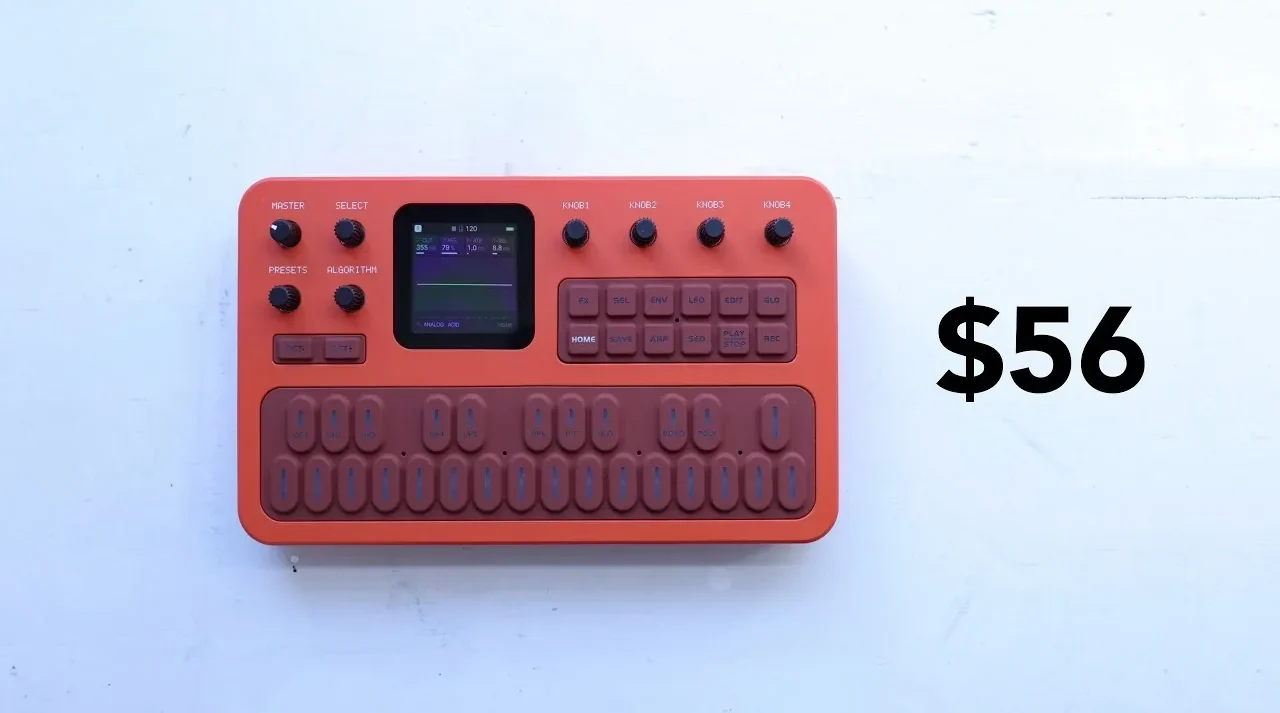
The FM-1 synthesizer from MVAVE is a compact device priced under $100, combining a small form factor with a versatile firmware ecosystem. Key features include a full-color screen, USB connectivity, and battery-powered portability. A major milestone was the release of custom firmware like Feluca, which introduced new synthesis engines and expanded the FM-1’s capabilities to include generative soundscapes and groove box functionality, as highlighted by David Hilowitz Music.
Discover how firmware options such as Groove OS enable the FM-1 to function as a standalone music production unit. Learn about AM1, a generative synthesizer inspired by Brian Eno’s ambient techniques, and explore the collaborative development of open source projects like Feluca that continue to shape the FM-1’s role in sound design and synthesis experimentation.
Custom Firmware Revolution
TL;DR Key Takeaways :
- The FM-1 synthesizer, priced under $100, has gained attention for its affordability, portability, and functionality, featuring a full-color screen, USB connectivity, and battery-powered operation.
- Custom firmware development for the FM-1 began after a September video, with updates reportedly fixing bugs, adding new synthesis engines, and improving the interface, making it a standout device for developers and musicians.
- Notable firmware options include Groove OS ($29), which transforms the FM-1 into a Groove Box, and Feluca, a free open source firmware that introduced multiple new synthesizer engines and spurred further community-driven innovation.
- The FM-1’s firmware ecosystem offers diverse options, such as Grim for eerie tones, AM1 for generative music inspired by Brian Eno, and Coral Flower for creative recording and playback, alongside firmware replicating vintage synthesizer sounds.
- The FM-1’s success has reportedly influenced other devices like the SP 404 and OP1 to adopt custom firmware and prompted competitors to explore open source hardware, while MVAVE has teased a successor, the FM-2.
The FM-1’s firmware revolution began shortly after a September video highlighted the device. Within 15 days, a developer released custom firmware that fixed bugs in the original FM engine, added a new synthesis engine, and introduced a visually appealing color interface. These updates improved functionality and usability, making the FM-1 a standout among synthesizers.
Soon after, Groove OS, a $29 firmware, turned the FM-1 into a fully functional Groove Box. Meanwhile, Feluca, a free and open source firmware, introduced multiple new synthesizer engines, including physical synthesis inspired by Mutable Instruments. Feluca’s open source nature spurred further development, allowing others to create additional engines. In just two weeks, the number of firmwares listed on firmwarehub.com grew from 45 to 154, reflecting the rapid pace of innovation.
Diverse Firmware Options
The FM-1’s firmware ecosystem offers a wide range of options. Some focus on unique soundscapes, such as Grim, which generates eerie tones, or AM1, a generative synthesizer inspired by Brian Eno’s “Music for Airports.” AM1 lets users toggle notes and select scale modes to control musical keys. Another firmware, Coral Flower, loosely inspired by the Orchid by Telepathic Instruments, provides a creative interface for recording and playback.
Other firmware transforms the FM-1 into standalone instruments, drum machines, or groove boxes capable of composing full tracks. For example, Obervave replicates the sound of late ’70s Oberheim synthesizers, appealing to fans of vintage analog aesthetics.

Deep dive into the latest in synthesizer by exploring our other resources and articles.
- Concept Sony Bracelet Computer
- This Is The Worlds Smallest Android Phone (Video)
- Dove Audio waveplane oscillator for Euro or MU modular synthesisers
- Majella Audio IMPLEXUS analog performance oriented synthesizer
- Synthesiser Bike – The Arduino Powered Mobile Music Machine (video)
- M-VAVE’s FM1 Packs a Yamaha DX7 Into a $67 Game Boy-Sized Synth
- ZTE Tania Windows Phone Smartphone Coming To The US
- Metal Slug Defense lands for iOS and Android
- Wee Noise Makers pocket open source synthesizer, sequencer and groove box
- Portable Wavedrum Mini Synthesizer Is Perfect For Any Party
Why the FM-1 Stands Out
The FM-1’s success lies in its combination of affordability, portability, and functionality. Its full-color screen, often absent in similar devices, significantly improves usability and enhances the user experience. This feature has been a key factor in attracting developers and musicians alike.
The FM-1’s rise also mirrors the ethos of the homebrew software scene seen in vintage gaming consoles like the Game Boy Advance. Developers initially reverse-engineered the FM-1 using AI tools and ingenuity, creating a homebrew SDK before MVAVE released an official open source SDK. By embracing this community-driven approach and releasing customizable firmware, MVAVE has fostered goodwill and strengthened the FM-1’s ecosystem.
The connection to the Game Boy Advance is more than symbolic. In 2004, a small music program was developed for the platform but never completed. Now, as the Game Boy Advance nears its 25th anniversary in 2026, it remains a nostalgic touchstone for homebrew and DIY music communities.
Personal Connection to the FM-1
The creator owns two FM-1 synthesizers, one pink and one orange, reflecting a personal investment in the device’s potential and versatility. The availability of multiple color options highlights the FM-1’s appeal as a customizable and approachable tool for musicians.
Impact Beyond the FM-1
The firmware boom sparked by the FM-1 has influenced other devices. For example, the SP 404 and OP1 now support custom firmware like Doom OS and Hundcraft, which expand their capabilities. Doom OS adds a new step sequencer to the SP 404, while Hundcraft enhances the OP1 with additional features. The FM-1’s success has also prompted competitors such as Behringer and Akai to announce open source hardware projects. Meanwhile, MVAVE has teased the FM-2, a successor to the FM-1, signaling continued innovation in this space.
The FM-1 illustrates how open source development and community creativity can unlock the potential of digital synthesizers. With its growing library of firmware and accessible price point, the FM-1 has become an exciting platform for musicians and developers. However, its appeal ultimately depends on users’ willingness to explore and experiment with custom firmware, making it a device best suited for the curious and adventurous.
Media Credit: David Hilowitz Music
Disclosure: Some of our articles include affiliate links. If you buy something through one of these links, Geeky Gadgets may earn an affiliate commission. Learn about our Disclosure Policy.
