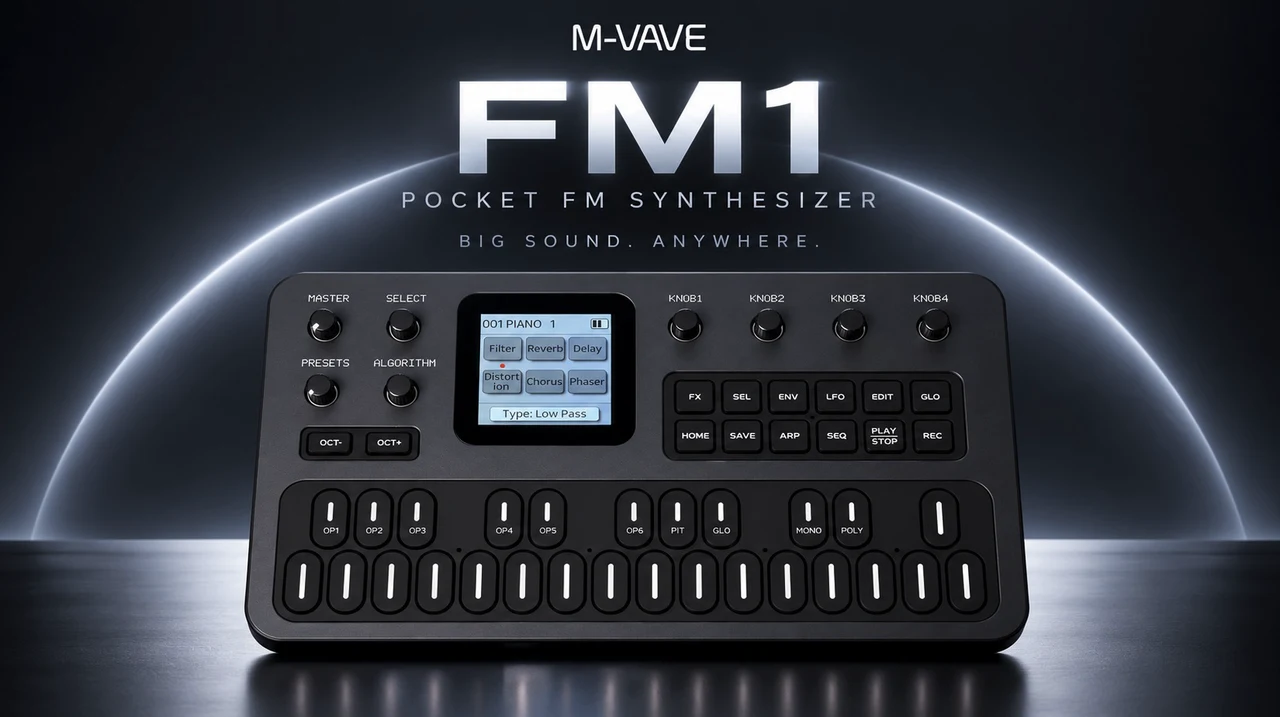
The FM1 by M-VAVE offers musicians a compact and affordable way to explore FM synthesis, a sound design technique popularized by the Yamaha DX7 in the 1980s. Priced at just $67, the FM1 combines portability with functionality, featuring a design roughly the size of a Game Boy. David Hilowitz Music highlights how this synthesizer balances simplicity with depth, offering 128 preset slots compatible with Yamaha DX7 sounds and six onboard effects, including reverb, chorus and distortion. Its USB-C connectivity supports MIDI, charging and audio output, making sure smooth integration with modern setups, whether in a studio or on the go.
Explore how the FM1’s arpeggiator and sequencer expand creative possibilities, allowing intricate patterns and dynamic compositions. Gain insight into its practical design, from the intuitive interface that welcomes beginners to its compatibility with external MIDI controllers for enhanced playability. Whether you’re revisiting the iconic tones of the DX7 or crafting contemporary electronic textures, this overview provides a clear look at what makes the FM1 a versatile and accessible choice for musicians today.
M-VAVE’s FM1 Features & Design
TL;DR Key Takeaways :
- The FM1 by M-VAVE is a portable and affordable FM synthesizer priced at $67, offering musicians a modern way to explore the iconic sounds of the Yamaha DX7.
- Its compact design, roughly the size of a Game Boy, emphasizes portability and ease of use, making it ideal for musicians on the go.
- Key features include USB-C connectivity for MIDI, charging and audio output, six customizable onboard effects and 128 preset slots compatible with Yamaha DX7 presets.
- The FM1 combines classic 1980s FM synthesis tones with modern enhancements like an arpeggiator and sequencer, allowing both nostalgic and innovative sound creation.
- Designed for seamless integration with modern tools, the FM1 supports external MIDI controllers and software like Dexed, making it versatile for both live performances and studio setups.
The FM1’s design emphasizes portability and ease of use, making it a practical solution for musicians on the move. Roughly the size of a Game Boy, it is small enough to fit into a pocket or bag, making sure it can accompany you wherever inspiration strikes. Despite its compact size, the FM1 is packed with modern features that enhance its usability and integration with contemporary setups.
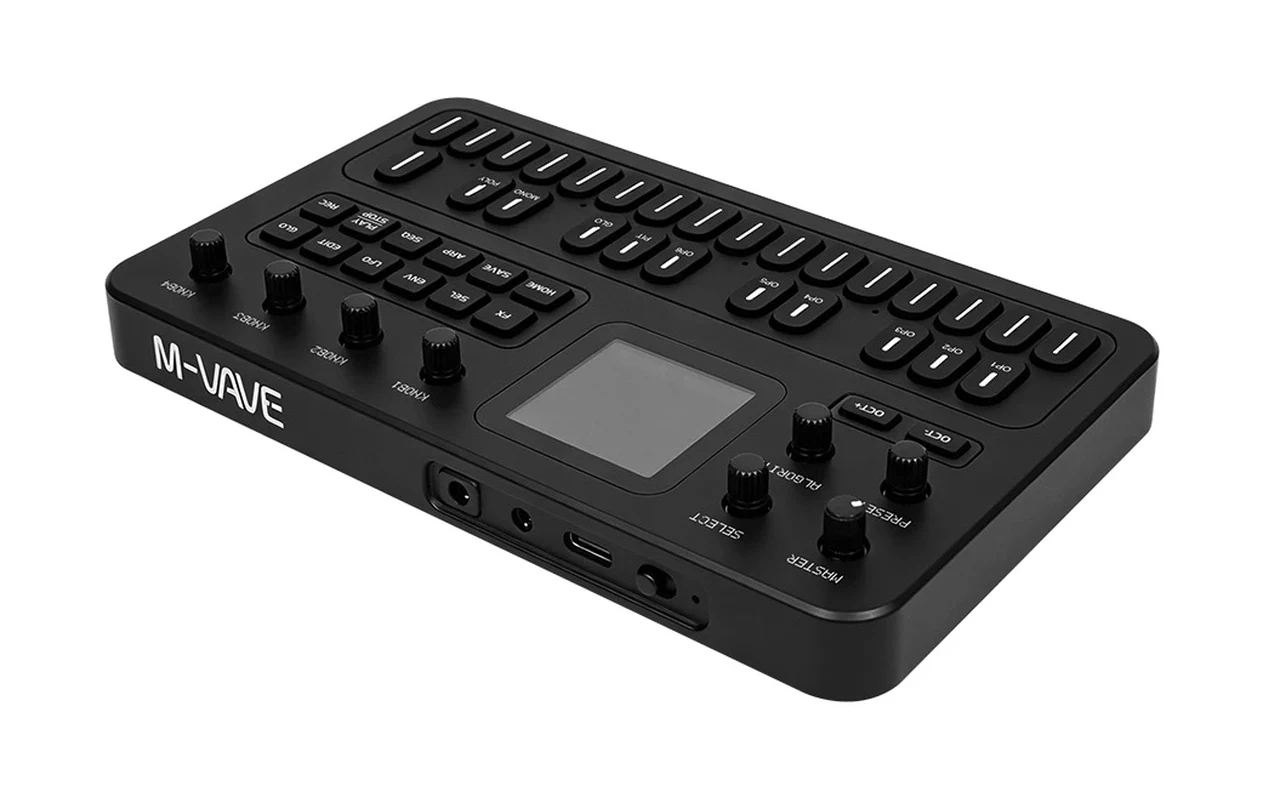
Connectivity is a key strength of the FM1. It includes a USB-C port that supports MIDI, charging and audio output, making sure seamless compatibility with modern devices. Additional features include:
- A headphone jack for private practice and sound monitoring.
- TRS-A MIDI input for external control, allowing integration with other MIDI devices.
- Six onboard effects: filter, chorus, reverb, delay, distortion and phaser, all of which can be reordered to create customized soundscapes.
- 128 preset slots, fully compatible with Yamaha DX7 presets, allowing users to explore a wide range of sounds.
These features make the FM1 both user-friendly and flexible, whether you’re experimenting in a home studio or performing live. Its intuitive interface ensures that even beginners can quickly navigate its capabilities, while seasoned users will appreciate its depth and versatility.
Sound Capabilities
The FM1 excels in reproducing the iconic sounds of the Yamaha DX7, a synthesizer that defined much of the music of the 1980s. Its factory presets are carefully designed to emulate the DX7’s tones while avoiding any legal issues related to proprietary content. This approach provides a legal and accessible pathway for musicians to explore FM synthesis.
In addition to faithfully recreating the DX7’s signature sounds, the FM1 introduces modern enhancements that expand its creative potential. Features such as an arpeggiator and sequencer allow users to craft intricate patterns and dynamic compositions. These tools make the FM1 a versatile instrument, capable of producing everything from nostalgic 1980s tones to innovative electronic textures.

Here are more guides from our previous articles and guides related to synthesizer that you may find helpful.
- Build an Arduino synthesizer from scratch €44
- This Is The Worlds Smallest Android Phone (Video)
- ZTE Tania Windows Phone Smartphone Coming To The US
- Metal Slug Defense lands for iOS and Android
- GR-1 Granular Synthesizer Hardware Musical Instrument (video)
- Turn your Nintendo DS into a digital synthesizer with Korg DS-10 Synth
A Brief History of FM Synthesis
FM synthesis, or Frequency Modulation synthesis, transformed sound design when it was developed by John Chowning in the 1970s. This innovative technique allowed for the creation of complex, harmonically rich tones that were previously unattainable with traditional subtractive synthesis. Yamaha’s DX7, released in 1983, brought FM synthesis to the mainstream, becoming one of the most influential synthesizers of all time. Its distinctive sound shaped countless tracks across genres like pop, rock and electronic music, leaving a lasting impact on the music industry.
Today, FM synthesis is experiencing a resurgence as musicians rediscover its unique tonal palette. Instruments like the FM1 play a significant role in this revival, offering modern tools that make FM synthesis more accessible than ever before.
How the FM1 Compares to the Yamaha DX7
While the FM1 draws inspiration from the Yamaha DX7, it is designed to meet the needs of modern musicians. Unlike the bulky and expensive DX7, the FM1 is lightweight, portable and affordable, making it an excellent option for casual use or as a secondary synthesizer. Its compact size and straightforward interface allow users to focus on creativity without being overwhelmed by complexity.
However, the FM1’s smaller size and limited key range mean it may not fully replicate the tactile playing experience of the original DX7. For musicians seeking a more hands-on approach, pairing the FM1 with an external MIDI controller is a practical solution. This setup allows users to enjoy the FM1’s sound engine while benefiting from the enhanced playability of a full-sized keyboard.
Integration with Modern Tools
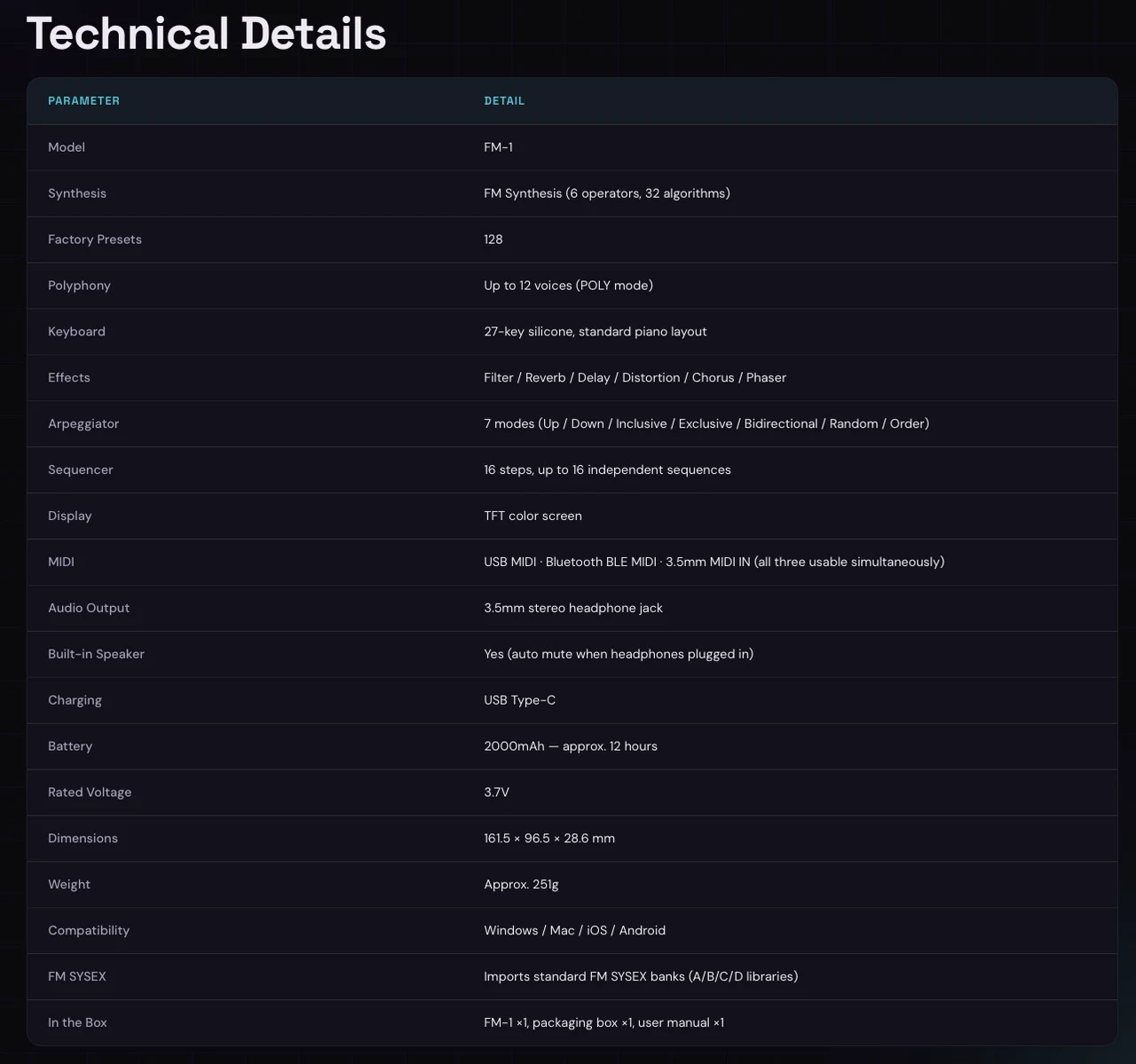
The FM1 is designed to integrate seamlessly with contemporary music production workflows. Its USB-C connectivity supports integration with software like Dexed, a popular DX7 emulator and online editors, allowing users to manage and transfer presets effortlessly. This compatibility ensures that the FM1 can function as both a standalone instrument and a valuable component of a larger production setup.
Additionally, the FM1’s MIDI input allows it to be controlled by external devices, such as MIDI keyboards or sequencers. This feature enhances its versatility, making it suitable for live performances and more intricate studio arrangements. Whether you’re a producer working in a digital audio workstation or a performer seeking a portable instrument, the FM1 adapts to your needs.
Usability and Practical Considerations
The FM1’s compact design and small keys make it ideal for quick sound testing and experimentation. However, its limited size may not be suitable for extended play or live performances. For serious musicians, connecting the FM1 to an external MIDI controller can provide greater playability and expression, unlocking its full potential.
Despite these limitations, the FM1’s intuitive interface and robust feature set make it a valuable tool for both beginners and professionals. Its affordability and portability allow users to explore FM synthesis without a significant financial or spatial commitment. Whether you’re a hobbyist or a seasoned producer, the FM1 offers a practical way to incorporate FM synthesis into your workflow.
Reviving a Classic Sound
The FM1 reflects a broader trend in music production: the revival of 1980s sounds and the renewed interest in FM synthesis. Iconic DX7 presets, once staples of pop music, are being reimagined in contemporary tracks, blending nostalgia with modern innovation. This resurgence underscores the enduring appeal of FM synthesis and its ability to inspire creativity across generations.
By offering a compact, affordable and feature-rich instrument, the FM1 ensures that the legacy of FM synthesis continues to thrive. Its combination of classic tones and modern enhancements makes it a valuable tool for musicians seeking to explore the unique possibilities of FM synthesis in today’s music landscape.
Media Credit: David Hilowitz Music
Disclosure: Some of our articles include affiliate links. If you buy something through one of these links, Geeky Gadgets may earn an affiliate commission. Learn about our Disclosure Policy.
