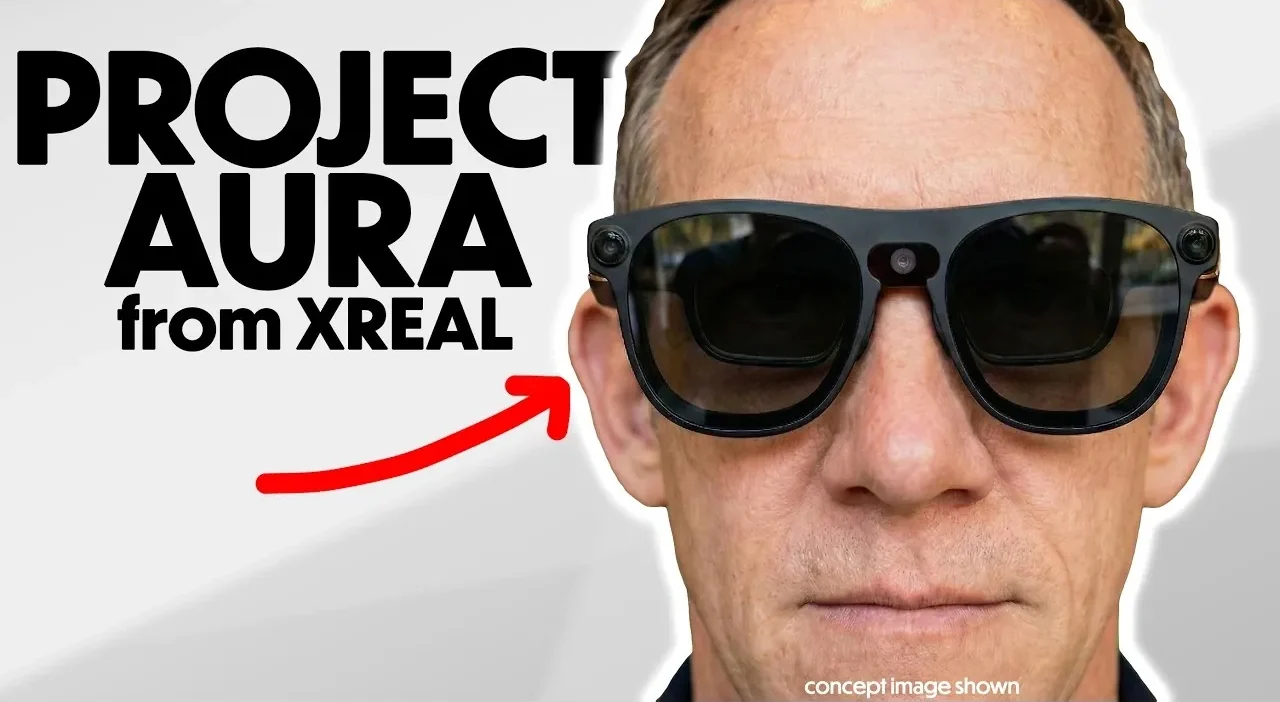
Google and XREAL have collaborated on Project Aura, a pair of XR smart glasses that combine features of augmented reality with practical design considerations. With a 70° field of view, six degrees of freedom (6DoF) tracking and optical see-through technology, the glasses are intended for short-term use, emphasizing comfort and usability. Jason Howell examines how the Android XR platform underpins this device, allowing compatibility with applications like Google Maps and YouTube Music while maintaining a compact and lightweight form.
Explore the AI-driven capabilities of Project Aura, including real-time translation and spatial awareness and how these features support both work and leisure. Learn about its application in scenarios such as tabletop gaming and multitasking through PC Connect. This overview also examines the balance the glasses achieve between advanced functionality and everyday accessibility.
What is Project Aura?
TL;DR Key Takeaways :
- Google and XREAL’s Project Aura introduces lightweight XR glasses with a 70° field of view, optical see-through technology and 6DoF tracking, offering a practical and portable AR experience for episodic use.
- Powered by the Android XR platform, the glasses seamlessly integrate popular apps like Google Maps and YouTube Music, enhancing usability and convenience with minimal developer effort.
- AI features, including Gemini integration, provide advanced tools like real-time translation, contextual notifications and expert guidance, creating an intelligent and adaptive user experience.
- Key use cases include PC integration for multitasking, immersive tabletop gaming and navigation, making the glasses versatile for both professional and casual applications.
- Project Aura bridges the gap between lightweight AI glasses and bulky VR headsets, offering a balanced, accessible and forward-thinking XR solution for everyday life.
Project Aura is the result of a strategic partnership between Google and XREAL, aimed at creating lightweight XR glasses that connect to a smartphone-shaped compute pack. These glasses feature a 70° field of view, optical see-through technology and full six degrees of freedom (6DoF) tracking. Designed for episodic use rather than prolonged wear, they prioritize comfort and practicality, making them ideal for tasks such as navigation, immersive content viewing, or gaming.
Unlike bulky VR headsets, Project Aura offers a streamlined experience while delivering more immersion than traditional AI glasses. This middle-ground approach makes it a versatile tool for both casual and professional users. The glasses balance functionality with portability, making sure they are practical for a wide range of applications without compromising comfort or usability.
How Android XR Powers Project Aura
The Android XR platform is the backbone of Project Aura’s functionality, allowing developers to adapt existing apps for XR with minimal effort. This integration allows popular applications like Google Maps, Uber and YouTube Music to be seamlessly accessed directly within your field of view, enhancing convenience and usability.
AI-powered features further elevate the user experience by providing intelligent and context-aware tools. For example:
- Visual Positioning: Navigate unfamiliar environments with precision using advanced spatial awareness.
- Contextual Notifications: Receive relevant updates tailored to your location and activities, making sure you stay informed without unnecessary distractions.
These features work in harmony to create an intuitive and efficient interface, making the glasses a powerful tool for everyday tasks. By using the Android XR platform, Project Aura ensures compatibility with a wide range of applications, making it a practical addition to your digital ecosystem.

Here are more detailed guides and articles that you may find helpful on smart glasses.
- Google’s New AI Smart Glasses Are Leaving Meta Behind
- Move Over, Ray-Ban Meta: Samsung’s AI Galaxy Smart Glasses Are Finally Coming This Year
- Nothing Al Smart Glasses : Premium AR Features with Everyday Comfort
- Apple Glasses Leak: The Features That Could Kill Meta’s Ray-Bans
- Samsung Galaxy Smart Glasses: The Newest Addition to the Ecosystem Arrives in 2026
- Leak: Apple Testing Four Distinct Frame Styles for Upcoming 2027 Smart Glasses
- Forget Vision Pro: Apple Glass “Early Look” Set for 2026 (Leaked)
- Google’s Gemini Smart Glasses Make Meta Ray-Bans Look Outdated
- The Wait Is Almost Over: Apple’s Smart Glasses Just Hit a Major Production Milestone
- The Hidden Genius Behind Apple’s Upcoming Smart Glasses
AI and Gemini: Enhancing the Experience
Artificial Intelligence is at the core of Project Aura, with Gemini AI integration adding advanced capabilities that enhance functionality and adaptability. Key tools include:
- Expert Helper: Receive step-by-step guidance for complex tasks, simplifying processes and improving efficiency.
- Real-Time Translation: Communicate seamlessly across languages, breaking down barriers in global interactions.
- Compound Queries: Perform sophisticated interactions, such as editing images or managing tasks, using intuitive voice commands.
By combining contextual awareness with advanced computing power, Project Aura creates a unified system that adapts to your needs and environment. This integration of AI and XR technologies delivers a seamless and intelligent user experience, making the glasses a versatile tool for both personal and professional use.
Key Features and Use Cases
Project Aura is designed to support a variety of use cases, making it a versatile tool for different scenarios. Some standout features include:
- PC Connect: Pin windows and integrate apps directly into your workspace, allowing efficient multitasking and enhanced productivity.
- Tabletop Gaming: Enjoy immersive gaming experiences with spatialized visuals and intuitive hand gesture controls, redefining interactive entertainment.
- Episodic Use: Engage in activities like watching immersive content or navigating new locations without the discomfort of prolonged wear.
These features highlight the glasses’ potential to enhance productivity, entertainment and navigation. Whether you are working, exploring, or relaxing, Project Aura offers tools that seamlessly integrate into your daily life, making it a valuable addition to your digital toolkit.
How Project Aura Stands Out
Project Aura occupies a unique position in the XR landscape by offering a balanced approach to immersion and practicality. It provides more functionality and engagement than lightweight AI glasses while being less cumbersome and restrictive than traditional VR headsets. This balance makes it an appealing option for users seeking a practical and versatile XR solution.
The glasses are designed to cater to a wide range of users, from professionals looking for enhanced productivity tools to casual users seeking immersive entertainment experiences. By addressing the limitations of existing XR devices, Project Aura sets itself apart as a forward-thinking innovation in spatial computing.
The Road Ahead for XR Technology
Google envisions XR as a fantastic computing platform and Project Aura represents a significant step toward realizing this vision. With further updates and advancements expected in 2026 and beyond, the ultimate goal is to achieve ambient computing, where AI anticipates your needs and spatial technology integrates seamlessly into your daily life.
By combining AI, spatial computing and intuitive design, Project Aura aims to redefine how you interact with both digital and physical environments. As the technology evolves, it promises to unlock new possibilities for productivity, entertainment and communication. This progression underscores the potential of XR to become an integral part of modern life, shaping the way you engage with the world around you.
Media Credit: Jason Howell
Disclosure: Some of our articles include affiliate links. If you buy something through one of these links, Geeky Gadgets may earn an affiliate commission. Learn about our Disclosure Policy.
