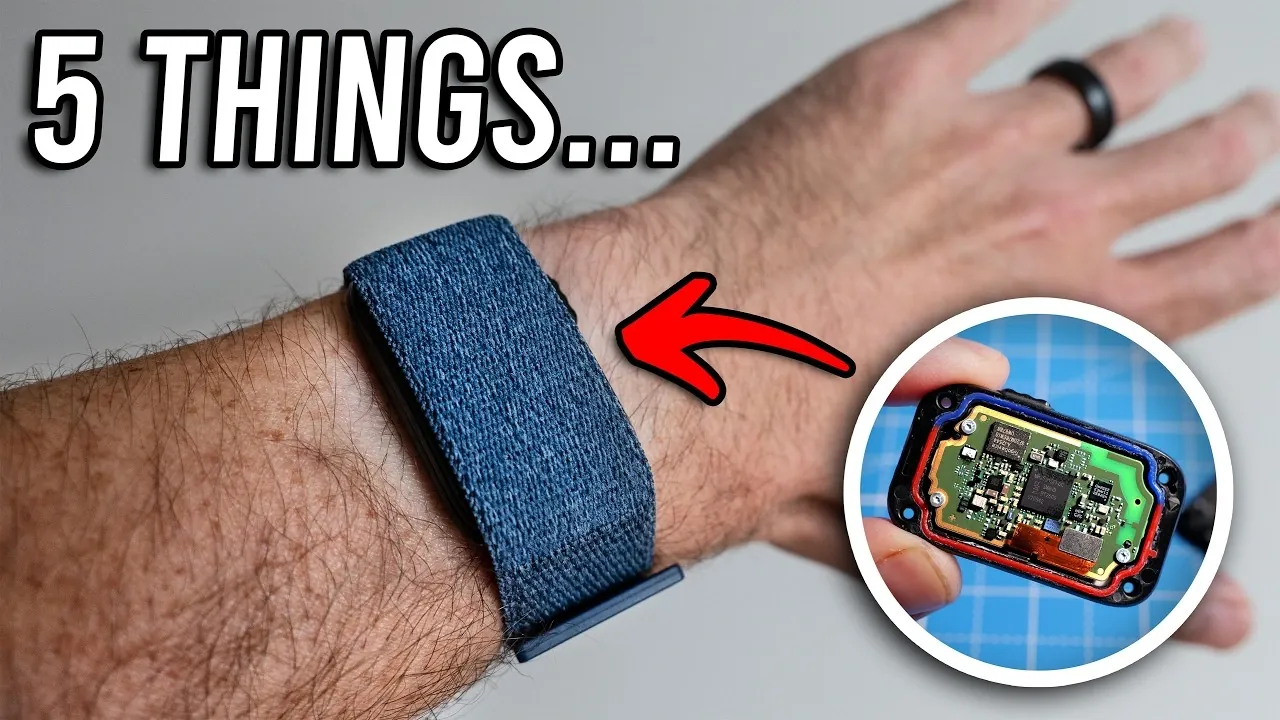
Garmin’s CIRQA fitness tracker has garnered attention for its minimalist, screenless design and practical features, but even well-rounded devices have room for improvement. In a recent breakdown by Chase the Summit, five specific areas for enhancement are highlighted, starting with the live activity page. For instance, the inability to customize displayed metrics, such as calorie burn or elevation gain, limits its adaptability for diverse fitness goals. Additionally, key features like heart rate graphs remain locked behind a subscription, raising questions about accessibility for all users.
Dive into this thoughtful critique to uncover actionable insights on how the CIRQA could evolve. Explore why integrating an internal GPS might elevate its standalone utility, how refining the band attachment system could simplify daily use and what benefits an upgraded heart rate sensor might bring to intense workouts. These targeted improvements could significantly enhance the CIRQA’s usability, making it a more compelling option for both casual users and dedicated fitness enthusiasts.
Garmin CIRQA Screenless Fitness Tracker
TL;DR Key Takeaways :
- The live activity page could be improved by making heart rate graphs accessible without a subscription, adding customization options for displayed metrics and incorporating navigation features like maps for outdoor activities.
- The band attachment system could benefit from a more user-friendly design, such as clip-in or magnetic mechanisms, to simplify frequent band swaps for style or practicality.
- Automatic activity detection needs refinement, including better recognition of low-intensity movements and adjustable sensitivity settings to capture a wider range of activities accurately.
- Upgrading the heart rate sensor to Garmin’s Gen 5 Elevate technology would enhance accuracy and reliability, especially during high-intensity workouts or rapid heart rate changes.
- Adding internal GPS would allow the CIRQA to track outdoor activities independently of a smartphone, increasing its versatility for users, though it may impact battery life.
1. Enhancing the Live Activity Page
The live activity tracking feature is a cornerstone of the CIRQA’s functionality, but it has room for improvement to better meet user needs.
- Heart rate graph accessibility: Currently, this critical metric is locked behind a subscription, limiting access to essential data that should ideally be standard for all users.
- Lack of customization: The inability to tailor the live activity page to display preferred metrics, such as calorie burn, pace, or elevation gain, reduces its adaptability to individual fitness goals.
- Absence of navigation features: The lack of a map view or navigation functionality diminishes its utility for outdoor activities like hiking or running, where visual guidance is often crucial.
By addressing these gaps, Garmin could make the live activity page more intuitive and adaptable, empowering users to focus on metrics that matter most to their fitness journeys.
2. Improving Band Attachment Design
The CIRQA’s 14mm quick-release pins are functional but could benefit from a more user-friendly design. Frequent band swaps, whether for style or practicality, can feel unnecessarily cumbersome.
A more intuitive attachment system, such as a clip-in or magnetic design, would simplify the process of changing bands. This improvement would not only enhance convenience but also make the device more accessible to users who value ease of use. Whether switching to a sportier band for a workout or a formal one for daily wear, the process should be seamless and efficient.

Explore further guides and articles from our vast library that you may find relevant to your interests in Garmin CIRQA.
- Everything You Need to Know About Garmin’s New Screenless Wearable
- FCC Filings Suggest Garmin CIRQA May Launch Around July 19th 2026
- Why Garmin is Ditching Screens for Its Next Big Wearable
- What the New Garmin Cirqa and Vivosmart 6 Leak Actually Reveals
- Garmin CIRQA vs WHOOP 5.0: Which Fitness Tracker Should You Buy?
- Leak Suggests Garmin CIRQA Fitness Tracker Could Feature EDA Sensors
- Garmin CIRQA vs Google Fitbit Air: Which Fitness Tracker Suits You Best?
- Garmin CIRQA Trademarks Hint at EDA Stress Tracking
- 30+ Garmin CIRQA Features: $199 Screenless Fitness Tracker
- Garmin CIRQA Smart Band Officially Launches £180 Requires No Subscription
3. Refining Automatic Activity Detection
Automatic activity detection is a valuable feature, but its current implementation has limitations that can hinder its effectiveness.
- Missed low-intensity movements: The thresholds for detecting activities often fail to capture casual or low-intensity movements, such as leisurely walks or light stretching.
- Need for adjustable sensitivity: Introducing customizable sensitivity settings in the Garmin Connect app would allow users to fine-tune activity detection parameters, making sure that all movements, no matter how subtle, are accurately recorded.
This refinement would provide a more comprehensive view of daily activity levels, especially for users with varied fitness routines. By capturing a broader range of movements, the CIRQA could better support users aiming to track their overall activity and wellness.
4. Upgrading the Heart Rate Sensor
The CIRQA currently utilizes Garmin’s Gen 4 Elevate sensor for heart rate monitoring, which is reliable but not the company’s latest technology. Upgrading to the Gen 5 Elevate sensor could significantly enhance the device’s performance.
- Improved accuracy: The newer sensor offers better precision during high-intensity workouts or activities involving rapid heart rate changes.
- Enhanced reliability: For users who rely on precise heart rate data for training or health monitoring, this upgrade would provide more dependable metrics.
For fitness enthusiasts and health-conscious users, this enhancement would elevate the CIRQA’s appeal, making sure it remains competitive in a market that increasingly values accuracy and reliability.
5. Adding Internal GPS
Currently, the CIRQA relies on a paired smartphone’s GPS for outdoor activity tracking. While this approach conserves battery life, it limits the device’s standalone functionality.
Integrating an internal GPS would enable users to track runs, hikes, or bike rides without needing to carry their phones. However, Garmin would need to carefully balance this feature with potential impacts on battery performance. For many users, the convenience of standalone GPS would outweigh the trade-off of more frequent charging, making the device more versatile for outdoor enthusiasts.
The Garmin CIRQA is a thoughtfully designed fitness tracker that excels in many areas, but there is clear potential for further refinement. Enhancing the live activity page, improving the band attachment system, refining activity detection, upgrading the heart rate sensor and adding internal GPS are all practical steps Garmin could take to elevate the CIRQA’s functionality and appeal.
By addressing these areas, Garmin could transform the CIRQA into a more versatile and user-friendly device, catering to a broader range of users and activities. While it is already a strong contender in the fitness tracker market, these improvements would solidify its position as a top choice for anyone looking to track their fitness journey with precision and ease.
Media Credit: Chase the Summit
Disclosure: Some of our articles include affiliate links. If you buy something through one of these links, Geeky Gadgets may earn an affiliate commission. Learn about our Disclosure Policy.
