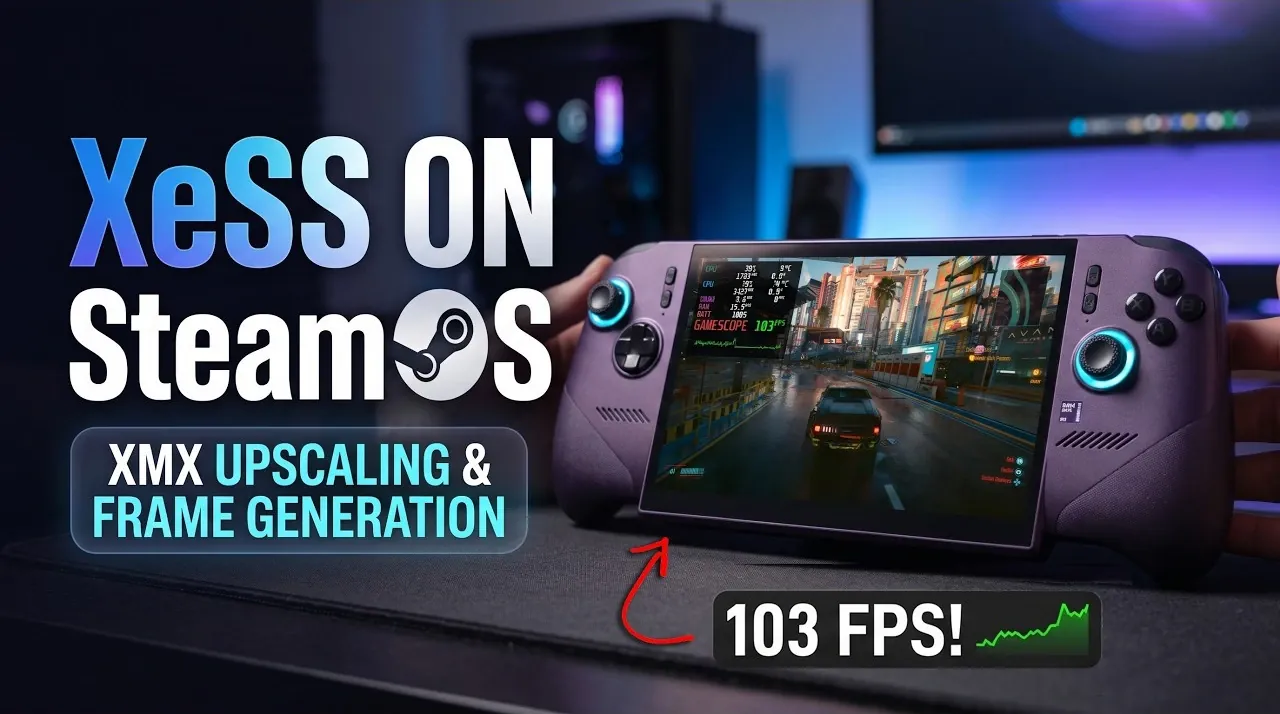
Intel’s XeSS technology has made a significant leap by using XMX engines on SteamOS, offering substantial performance improvements for Intel Arc-powered handheld devices. Previously dependent on DP4A mode, which relied on GPU cores for upscaling tasks, XeSS now uses the AI acceleration capabilities of XMX engines. This shift allows GPU cores to focus entirely on rendering, resulting in smoother gameplay and improved efficiency. ETA Prime highlights how devices like the MSI Claw 8X, equipped with Intel Arc G3 Extreme GPUs, are already showcasing these advancements, with some games achieving nearly double the frame rates compared to earlier configurations.
Explore how this evolution impacts real-world gaming scenarios, including performance benchmarks in demanding titles like Cyberpunk 2077 and Hogwarts Legacy. Gain insight into how XeSS on XMX engines enhances frame generation, stabilizes frame rates and improves visual fidelity across a wide range of games. Additionally, discover the role of community-driven adaptations, such as Claw Deck modifications, in unlocking these features on SteamOS. This breakdown offers a detailed look at the technical and practical implications of this development for handheld gaming enthusiasts.
XeSS on XMX Engines: A Technological Evolution
TL;DR Key Takeaways :
- Intel’s XeSS technology now operates on XMX engines within SteamOS, significantly boosting gaming performance on Intel Arc-powered handheld devices by nearly doubling frame rates while optimizing power consumption.
- The transition from DP4A mode to XMX engines offloads upscaling tasks to AI acceleration hardware, freeing GPU cores for rendering and improving system efficiency.
- Real-world gaming tests on titles like Cyberpunk 2077, The Witcher 3, and Hogwarts Legacy showcase smoother gameplay, higher frame rates and enhanced visual quality compared to competing technologies like AMD’s FSR.
- Community-driven efforts, including custom software modifications and open source tools, have enabled XeSS functionality on SteamOS, allowing gamers to optimize performance settings and expand compatibility with various games.
- The successful implementation of XeSS on XMX engines highlights Intel’s potential to redefine handheld gaming with advanced upscaling, frame generation and improved efficiency, paving the way for broader adoption and future innovations.
The shift from DP4A mode to XMX engines represents a significant evolution in upscaling technology. DP4A mode, while functional, relied heavily on GPU cores for upscaling tasks, often limiting the resources available for rendering complex graphics. By using XMX engines, dedicated AI acceleration hardware integrated into Intel Arc GPUs, XeSS offloads these upscaling tasks, allowing GPU cores to focus entirely on rendering and graphical fidelity. This optimization delivers several key benefits:
- Smoother gameplay with higher and more consistent frame rates.
- Improved stability across a wide range of games, including demanding AAA titles.
- Enhanced visual quality and responsiveness, particularly in graphically intensive scenarios.
Frame generation, a feature that creates additional frames to improve smoothness, also benefits from this transition. With XMX engines managing both upscaling and frame generation, gamers experience a noticeable boost in performance, even in the most graphically demanding situations. This combination of advanced upscaling and frame generation ensures a seamless and immersive gaming experience.
Real-World Performance Gains and Comparisons
The practical benefits of XeSS on XMX engines are evident in real-world gaming scenarios. Popular titles such as Cyberpunk 2077 and Forza Horizon 6 demonstrate significantly higher and more stable frame rates when compared to previous configurations. In The Witcher 3, the integration of XeSS upscaling and frame generation delivers a smoother and more immersive experience, even during graphically intense sequences. Similarly, Hogwarts Legacy achieves over 100 FPS at X3 settings, showcasing the potential for high-performance gaming on handheld devices.
Even graphically demanding games like Spider-Man 2 benefit from XeSS enhancements, with noticeable improvements in both performance and stability. When compared to competing upscaling technologies such as AMD’s FSR (FidelityFX Super Resolution), XeSS on XMX engines offers superior visual clarity and frame rate consistency. This positions Intel’s solution as a strong competitor in the upscaling space, particularly for devices running SteamOS.

Become an expert in SteamOS with the help of our in-depth articles and helpful guides.
- Valve Restructures SteamOS with Distinct X86 and ARM Builds
- ONEXPLAYER X2 Mini Pro Runs SteamOS with Ryzen AI Max Plus 388
- SteamOS Beta Update Fixes CPU Degradation and Wi-Fi Bugs
- Valve’s Free SteamOS Runs Arch Linux for Daily Desktop Use
- ROG Ally X20 SteamOS Gaming Benchmarks and Battery Performance Tested
- Install Armada OS on Android Handhelds to Create a Steam Deck in Under 5 Minutes
- SteamOS Update Adds Big Art Mode to the Game Library
- SteamOS Update Adds Seamless Account Switching During Gameplay
- Valve Adds Initial NVIDIA GPU Driver Support to SteamOS
- Droid Deck Brings SteamOS to Android Phones Without a Root
Community Contributions and Technical Adaptations
Although XeSS on XMX engines is not yet officially supported in SteamOS, the gaming community has played a pivotal role in allowing this functionality. Through custom software solutions like Claw Deck modifications and open source resources available on platforms such as GitHub, users have unlocked these capabilities. These community-driven efforts allow gamers to fine-tune performance settings, including wattage limits and VRR (Variable Refresh Rate) adjustments, to optimize their gaming experience.
The integration of XeSS 2.0 and advanced frame generation features further enhances compatibility with an ever-expanding library of games. This adaptability highlights the potential for future improvements as Intel continues to refine its technology and expand support for Linux-based operating systems like SteamOS. The collaborative efforts between Intel and the gaming community underscore the importance of innovation and flexibility in advancing handheld gaming technology.
The Future of Handheld Gaming with XeSS
The successful implementation of XeSS on XMX engines signals a promising future for Intel Arc-powered handheld devices. As the gaming community anticipates official support for SteamOS and broader Linux compatibility, the potential for widespread adoption of this technology becomes increasingly evident.
With its ability to deliver significant performance gains, enhanced efficiency and improved visual fidelity, XeSS on XMX engines positions Intel Arc GPUs as a competitive option for handheld gaming. Looking ahead, the combination of advanced upscaling, frame generation and community-driven innovation could redefine the landscape of portable gaming. As Intel continues to push the boundaries of GPU technology, gamers can expect even greater advancements in performance and immersive experiences in the years to come.
Media Credit: ETA PRIME
Disclosure: Some of our articles include affiliate links. If you buy something through one of these links, Geeky Gadgets may earn an affiliate commission. Learn about our Disclosure Policy.
