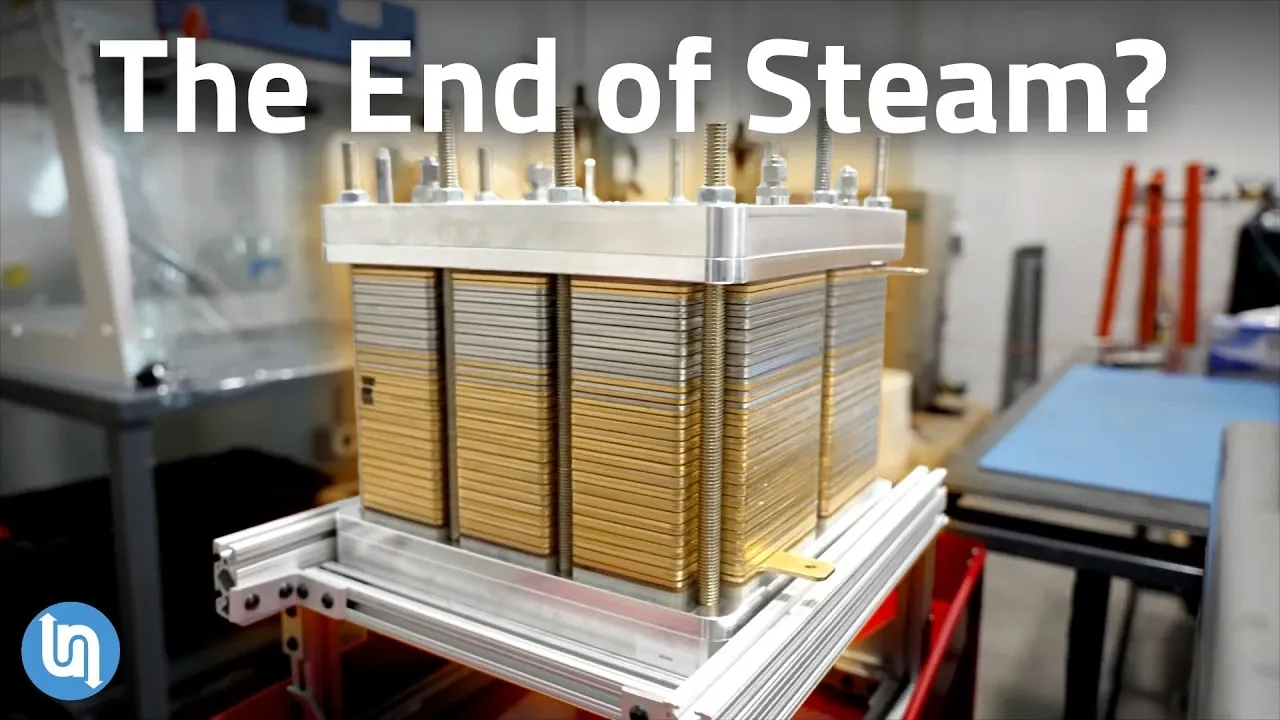
Dr. Lonnie Johnson, best known as the inventor of the Super Soaker, has applied his engineering expertise to tackle one of the energy sector’s most persistent challenges: converting waste heat into usable electricity. His creation, the Johnson Thermoelectric Chemical Converter (JTEC), is a heat engine that operates without moving parts, relying instead on hydrogen gas and a proton exchange membrane to achieve remarkable efficiency. As highlighted by Undecided with Matt Ferrell, the JTEC has demonstrated a thermal efficiency of 17.1% at 200°C, a significant milestone for low-grade heat conversion technologies. This design not only reduces mechanical wear but also opens up new possibilities for harnessing energy from sources like factory exhaust and geothermal reservoirs.
Explore how the JTEC’s compact, maintenance-friendly design could reshape energy recovery systems, particularly in industrial and renewable contexts. You’ll gain insight into its dual functionality, which allows it to generate electricity or operate as a refrigeration system, offering versatility for energy-intensive industries. Additionally, this overview examines the challenges of scaling up the technology, such as the production of cost-effective proton exchange membranes and discusses its potential to become a cost-competitive solution within the next decade.
Unlocking the Potential of Waste Heat
TL;DR Key Takeaways :
- Dr. Lonnie Johnson, inventor of the Super Soaker, developed the Johnson Thermoelectric Chemical Converter (JTEC) to efficiently convert low-grade waste heat into electricity, addressing a critical energy challenge.
- The JTEC operates without moving parts, using hydrogen gas and a proton exchange membrane (PEM) to achieve high efficiency, reliability and reduced maintenance costs.
- In laboratory tests, the JTEC achieved a thermal efficiency of 17.1% at 200°C, surpassing many existing technologies and aiming to reach two-thirds of Carnot efficiency in the future.
- The JTEC offers dual functionality, serving as both a power generator and a refrigeration system, making it versatile for industries like manufacturing and data centers.
- Challenges such as cost-effective PEM production and waste heat integration must be addressed, but commercialization efforts are underway, with the first industrial unit in development and projections for cost-competitiveness within five years.
Every year, vast amounts of energy are lost as waste heat from industrial processes, geothermal sources and even abandoned oil wells. This heat, often in the range of 100–200°C, is typically classified as low-grade and is considered too inefficient to convert into usable energy with existing technologies. As a result, a significant energy resource remains untapped, contributing to inefficiencies in energy systems worldwide.
The JTEC directly addresses this challenge by converting low-temperature heat into electricity with remarkable efficiency. By targeting heat sources such as factory exhaust, geothermal reservoirs and other previously uneconomical sources, the JTEC opens up new possibilities for energy recovery. Its ability to harness waste heat could significantly reduce energy loss, making industrial and renewable energy systems more efficient and sustainable.
What Makes the JTEC Unique?
The JTEC stands apart from traditional heat engines due to its innovative design and operational principles. Unlike conventional systems that rely on turbines, pistons, or other mechanical components, the JTEC operates without any moving parts. This design eliminates mechanical wear and tear, reduces maintenance costs and enhances overall reliability, making it a highly durable and cost-effective solution.
At the core of the JTEC is the use of hydrogen gas and a proton exchange membrane (PEM). The hydrogen gas cycles continuously within the system, while the PEM facilitates the direct conversion of thermal energy into electrical energy. This streamlined process bypasses the need for complex mechanical components, allowing the JTEC to achieve high efficiency while maintaining a compact and sustainable design. The absence of moving parts also makes it quieter and more adaptable to various environments, further broadening its potential applications.

Browse through more resources below from our in-depth content covering more areas on energy.
- The Island is Shrinking: iPhone 18 Pro Max Leaks Confirm Apple’s Cleanest Display Ever
- Solar Energy S 40,000 mAh retractable solar panel and power bank
- The Best Camera Ever: Why the iPhone 18 Pro’s Variable Aperture is the Real Star of 2026
- Ultimate Apple Watch Accessory: EnergyLink Charging Watch Band
- Why NASA’s Mechanical Battery Could Be the Future of Energy Storage
- iPhone 18 Pro: What Apple Isn’t Telling You Yet
- Best Phone Battery Life 2025: OnePlus 15, vivo X300 Pro, & iPhone 17 Pro Max
- The Battery BATTLE ROYALE – iPhone, Pixel, Galaxy, Xiaomi – Who Wins the Drain Test
- Airnergy Havester Battery Charges From Thin Air
- iOS 27 Leaks Reveal the End of an Era: Apple’s New Priorities Confirmed
Impressive Thermal Efficiency
The JTEC has demonstrated remarkable thermal efficiency in laboratory tests. At a temperature of 200°C, it achieved an efficiency of 17.1%, which is nearly half of the theoretical maximum efficiency defined by Carnot’s principle. This performance is a significant milestone, as it surpasses the capabilities of many existing low-temperature heat-to-electricity technologies.
With ongoing research and development, the JTEC aims to achieve two-thirds of Carnot efficiency, a level that would set a new benchmark for low-grade heat conversion. Such advancements could make the JTEC an essential tool for industries seeking to optimize energy use, reduce waste and enhance sustainability. By capturing energy that would otherwise be lost, the JTEC has the potential to transform energy recovery in industrial and renewable energy systems.
Dual Functionality: Power Generation and Cooling
Beyond its ability to convert waste heat into electricity, the JTEC offers an additional advantage: it can operate in reverse as a refrigeration system. This dual functionality makes it a versatile solution for industries that require both power generation and cooling. For example, manufacturing facilities, data centers and other energy-intensive operations could benefit from the JTEC’s adaptability, using it to meet multiple energy needs simultaneously.
This capability further enhances the JTEC’s appeal, as it provides a cost-effective and efficient way to address diverse energy demands. By integrating power generation and cooling into a single system, the JTEC could help industries streamline their energy infrastructure and reduce operational costs.
Challenges on the Road to Adoption
Despite its promise, the JTEC faces several challenges that must be addressed before it can achieve widespread adoption. One of the primary obstacles is the production of cost-effective and durable proton exchange membranes, which are critical to the system’s operation. Developing scalable manufacturing processes for these membranes will require significant investment and innovation.
Additionally, logistical challenges related to capturing and transporting waste heat from industrial sites must be overcome. Efficiently integrating the JTEC into existing energy systems will require careful planning and collaboration between industries, researchers and policymakers. Addressing these challenges will be essential to unlocking the full potential of the JTEC in commercial and industrial settings.
Commercialization and Future Prospects
Efforts to bring the JTEC to market are already underway. Dr. Johnson’s team is currently developing 250 kW units designed for industrial applications, where waste heat recovery can provide immediate benefits. The first commercial unit is under construction for a major utility company, signaling growing interest and confidence in the technology.
Projections indicate that the JTEC could become cost-competitive within five years. Within the next decade, it has the potential to emerge as one of the most affordable and efficient energy systems available. If successful, the JTEC could play a pivotal role in reducing energy waste and advancing global sustainability efforts. Its scalability and adaptability make it a promising solution for industries and utilities seeking to improve energy efficiency and reduce their environmental impact.
The Visionary Behind the Innovation
Dr. Lonnie Johnson’s journey from toy inventor to energy innovator is a testament to his creativity and determination. A mechanical and nuclear engineer by training, Johnson has worked with NASA and other leading research institutions, contributing to advancements in science and technology. The financial success of the Super Soaker allowed him to fund the development of the JTEC, demonstrating his commitment to addressing global energy challenges.
Johnson’s work exemplifies how ingenuity and engineering can intersect to drive meaningful innovation. His vision for the JTEC reflects a broader commitment to sustainability and energy efficiency, offering a glimpse into a future where waste heat becomes a valuable resource rather than a lost opportunity.
Redefining Energy Recovery
The Johnson Thermoelectric Chemical Converter represents a significant advancement in energy efficiency and sustainability. By converting waste heat into electricity without moving parts, the JTEC offers a cost-effective and reliable solution to one of the energy sector’s most persistent inefficiencies. Its ability to harness low-grade heat sources, combined with its scalability and dual functionality, positions it as a fantastic technology for industrial and renewable energy applications.
As development progresses, the JTEC could redefine how industries and utilities approach energy recovery. By turning waste heat into a valuable resource, it has the potential to contribute meaningfully to a more sustainable and efficient energy future. The JTEC is not just an innovation; it is a step toward a world where energy is used more wisely and waste is minimized.
Media Credit: Undecided with Matt Ferrell
Disclosure: Some of our articles include affiliate links. If you buy something through one of these links, Geeky Gadgets may earn an affiliate commission. Learn about our Disclosure Policy.
