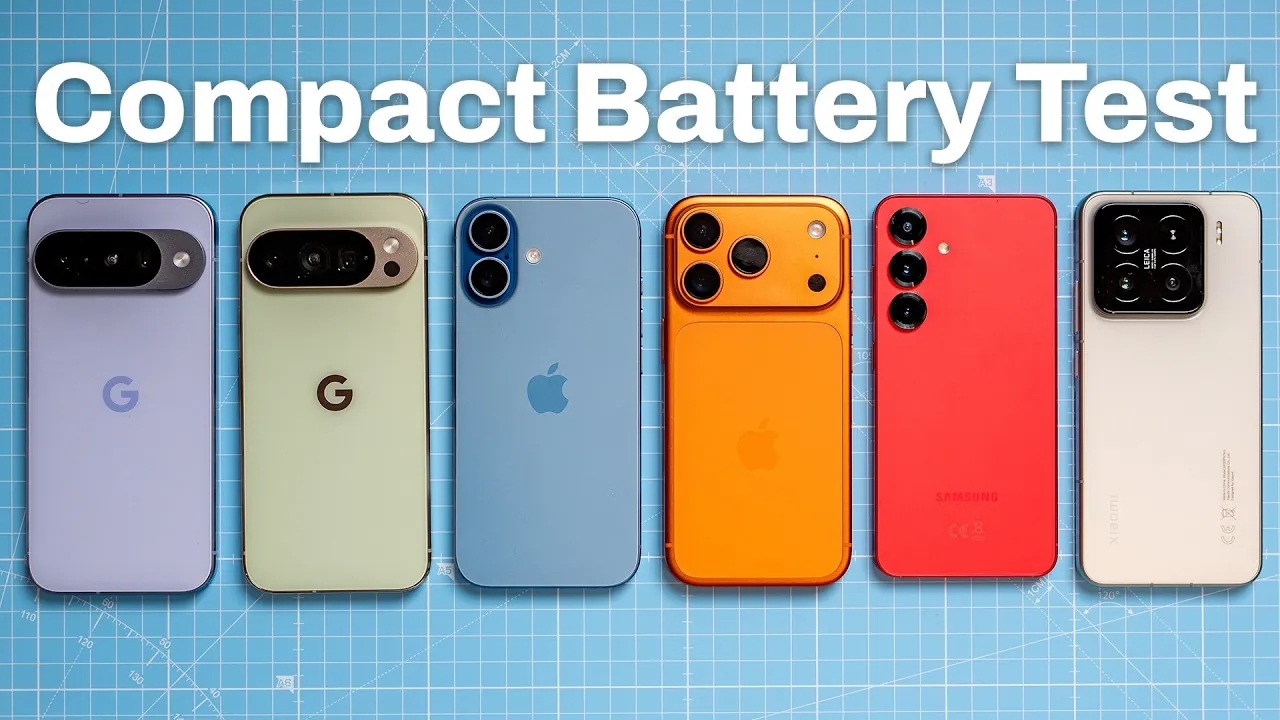
Battery life remains one of the most critical factors when selecting a flagship smartphone. To identify the device with the best endurance, a detailed battery drain test was conducted by Techmo on six leading models: Pixel 10 Pro, Pixel 10, iPhone 17, iPhone 17 Pro, Galaxy S25, and Xiaomi 15. Each smartphone underwent identical testing conditions designed to simulate real-world usage patterns. The results revealed significant differences in performance, with the Pixel 10 emerging as the top contender. The video below gives us more details on how the tests went and who the winner was.

Battery Capacities: Does Bigger Always Mean Better?
The smartphones tested represent the latest advancements in mobile technology, featuring varying battery capacities:
- Pixel 10 and Xiaomi 15: Equipped with larger batteries, each boasting approximately 5,000 mAh.
- iPhone 17, iPhone 17 Pro, and Galaxy S25: Featuring smaller batteries, ranging between 3,600 mAh and 4,000 mAh.
However, the results demonstrated that battery size alone does not determine endurance. Factors such as software optimization and how efficiently each device handles specific tasks played equally critical roles in shaping overall performance.
Software Optimization: The Hidden Power Player
Each smartphone operates on a unique software platform, which significantly influences power efficiency and battery performance:
- Pixel 10 and Pixel 10 Pro: Running on Android 16 Material Expressive, these devices use advanced adaptive battery management to extend usage time effectively.
- iPhone 17 and iPhone 17 Pro: Powered by iOS 26 Liquid Glass, these models excel in optimizing background tasks, minimizing unnecessary power consumption.
- Galaxy S25: Operating on OneUI 8, it offers a balanced approach to performance and energy efficiency but falls short of the optimization levels achieved by its competitors.
The operating systems played a pivotal role in determining how well each device managed power-intensive tasks, highlighting the importance of software in battery performance.
Testing Methodology: Real-World Scenarios
To ensure a fair and comprehensive evaluation, the battery drain test was designed to replicate real-world usage. Five common scenarios were included to assess performance under varying conditions:
- Video Streaming: Streaming YouTube content under both light and heavy usage conditions to measure power consumption during media playback.
- 4K Video Recording: Recording 4K video at 30 frames per second, a task known for its high energy demands.
- Graphics Rendering: Running the WebGL Aquarium benchmark to simulate graphics-intensive workloads and assess GPU efficiency.
- Video Conferencing: Conducting Google Meet sessions to evaluate power usage during real-time communication.
- Standby Time: Leaving devices idle with background tasks running to measure efficiency during periods of inactivity.
These scenarios provided a balanced mix of light, moderate, and heavy usage, offering a comprehensive view of each smartphone’s battery performance.
Results: The Winners and Losers
The Pixel 10 emerged as the clear winner, lasting an impressive 8 hours and 11 minutes before shutting down. Its combination of a large battery and highly efficient software optimization proved to be a winning formula. The iPhone 17 Pro followed closely, delivering 8 hours and 6 minutes of usage, thanks to iOS 26 Liquid Glass’s superior power management capabilities. The Xiaomi 15 secured third place with 7 hours and 58 minutes, benefiting from its high-capacity battery and well-tuned software.
On the other hand, the Galaxy S25 recorded the shortest battery life, lasting only 7 hours and 25 minutes. Despite its compact design and advanced features, its smaller battery and less aggressive optimization limited its endurance compared to its competitors.
Key Takeaways: What Affects Battery Life?
The test results highlighted several critical factors that influence smartphone battery performance:
- Task Intensity Matters: Power consumption varied significantly depending on the task. For example, 4K video recording drained batteries faster than video streaming or standby time.
- Battery Size Isn’t Everything: While larger batteries generally provided longer usage times, software optimization played an equally vital role in extending battery life.
- Connectivity Impacts Performance: Wi-Fi connections consumed less power than cellular networks, particularly during video streaming and conferencing tasks.
- Environmental Factors Play a Role: External conditions, such as screen brightness and ambient temperature, also influenced battery performance.
These findings underscore the importance of evaluating both hardware and software when assessing a smartphone’s battery life.
Choosing the Right Smartphone for Your Needs
The Pixel 10 demonstrated the best overall battery performance, excelling across a variety of real-world scenarios. Its combination of a large battery and efficient software optimization made it the top choice for users seeking maximum endurance. The iPhone 17 Pro and Xiaomi 15 also delivered strong results, making them excellent options for individuals with demanding usage patterns.
Meanwhile, the Galaxy S25, despite its advanced features and compact design, lagged behind in battery endurance. This highlights the importance of aligning your smartphone choice with your specific needs. Whether you prioritize video recording, streaming, or standby time, understanding how each device performs under different conditions can help you make an informed decision.
Master Battery drain test with the help of our in-depth articles and helpful guides.
- iOS 17.4 Battery Drain Tested (Video)
- Battery Test: Galaxy S25 Edge vs iPhone 16 Pro Max
- iOS 18.0.1: Release Date, Battery Drain Fix, and More
- Battery Life Showdown: Galaxy S25 Ultra vs. iPhone 16 Pro Max
- Samsung Galaxy Battery Test: Best and Worst Models Compared
Source & Image Credit: Techmo
Disclosure: Some of our articles include affiliate links. If you buy something through one of these links, Geeky Gadgets may earn an affiliate commission. Learn about our Disclosure Policy.
