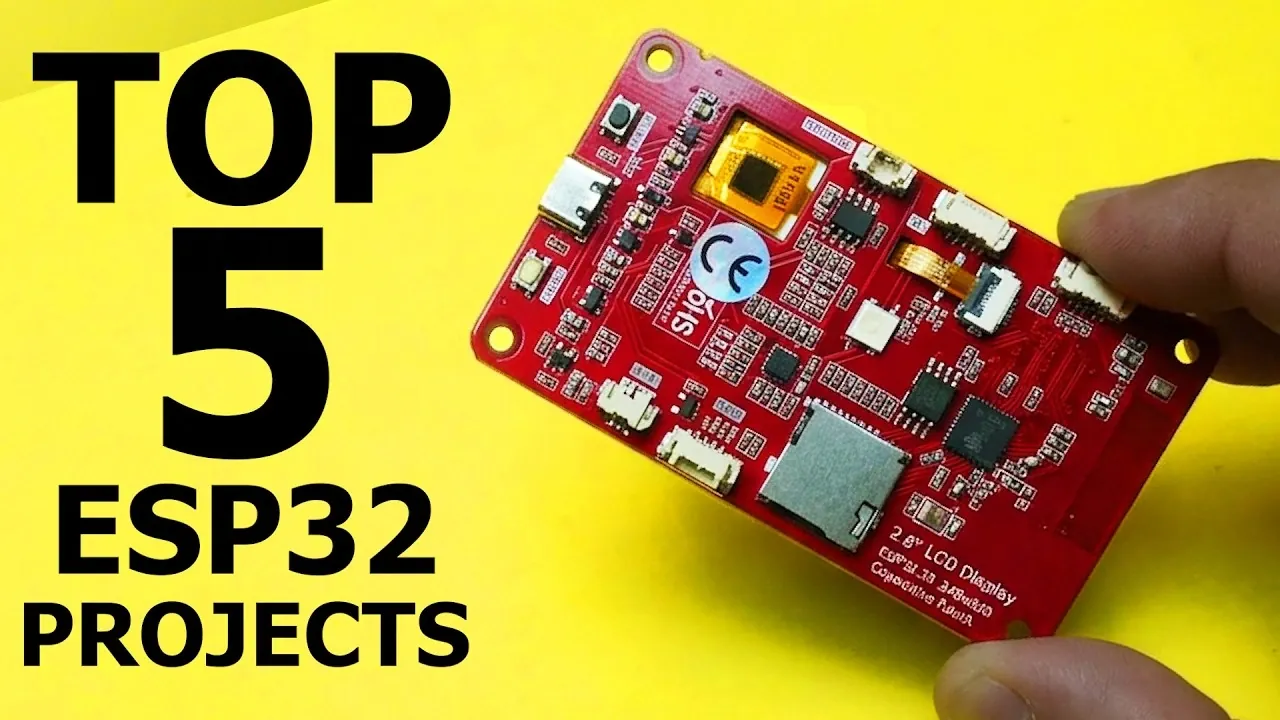
The ESP32 development board has become a popular choice for electronics enthusiasts and developers alike, thanks to its combination of wireless connectivity, sensor compatibility and AI integration. In this overview, Hacktuber highlights five standout projects that showcase the board’s versatility, including an AI-powered chatbot capable of voice interaction. By using frameworks like ESP-IDF and pairing the board with external components such as speakers, these projects illustrate how the ESP32 bridges the gap between hardware and software for practical, real-world applications.
Explore how to build a portable environmental monitoring device using sensors like the AHT20 and BMP280, or learn to create a customizable digital clock that connects to online time servers for accurate updates. You’ll also gain insight into designing intelligent robots with AI integration and discover the potential of wireless communication for real-time monitoring systems. Each project demonstrates the ESP32’s ability to combine functionality with creativity, offering valuable takeaways for hobbyists and developers at any skill level.
Top ESP32 Project Ideas
TL;DR Key Takeaways :
- The ESP32 development board is a versatile platform combining wireless communication, AI integration and sensor compatibility, making it ideal for DIY electronics and innovative projects.
- It can be used to create AI-powered voice-interactive chatbots for smart home applications, allowing tasks like device control, personal assistance and real-time audio feedback.
- The ESP32 can be transformed into a portable environmental monitoring device by integrating sensors and a TFT display, offering real-time data collection for outdoor enthusiasts, researchers and everyday users.
- Its wireless capabilities and processing power allow for customizable projects like digital clocks, robotics with AI integration and real-time monitoring systems with smartphone connectivity.
- By combining hardware enhancements (e.g., lithium batteries, displays, sensors) with advanced software tools (e.g., ESP-IDF, Visual Studio), the ESP32 enables users to tackle real-world challenges with creativity and precision.
1. AI Chatbot with Voice Interaction
The ESP32’s capability to integrate artificial intelligence makes it an excellent choice for creating voice-interactive chatbots. By using frameworks such as Sahyog AI and development tools like Visual Studio and the ESP-IDF (Espressif IoT Development Framework), you can program the ESP32 to process voice commands and deliver real-time audio feedback.
This project is particularly well-suited for smart home environments, where the chatbot can perform tasks such as:
- Controlling connected devices, including lights, fans, or thermostats.
- Providing contextual answers to user queries.
- Acting as a personal assistant for reminders, schedules and daily tasks.
By integrating built-in or external speakers, this voice-interactive assistant becomes a practical and engaging tool for enhancing modern living. Its ability to seamlessly interact with users makes it both functional and user-friendly.
2. Portable Environmental Monitoring Device
Transforming the ESP32 into a portable environmental monitoring device is a straightforward yet impactful project. By pairing the board with sensors such as the AHT20 (for temperature and humidity) and BMP280 (for pressure and altitude), you can collect real-time environmental data. A compact TFT screen can be added to display the data in an accessible format.
To enhance portability, integrating a rechargeable lithium battery creates a standalone device ideal for various applications, including:
- Outdoor enthusiasts tracking weather conditions during hikes or camping trips.
- Researchers monitoring environmental changes in remote or urban locations.
- Everyday users interested in understanding local climate conditions.
This project highlights the ESP32’s ability to combine sensor data with user-friendly visualization, offering a practical solution for environmental awareness and data collection.
Below are more guides on ESP32 from our extensive range of articles.
- $5 ESP32-S3 Super Mini Packs Wi-Fi and Bluetooth
- How an $8 ESP32 S3 Microcontroller Runs a 28.9M Parameter Local LLM
- $4 ESP32 Module Brings Wi-Fi and Bluetooth to IoT Projects
- ESP32-S3 Super Mini Brings 240 MHz Dual-Core Power For $4
- ESP32 S31 Devkit Hands-on: 320 MHz RISC-V Chip Adds Wi-Fi 6
- $4 ESP32-S3 Super Mini Packs a 0.96-Inch IPS TFT Screen
- Build a DIY Open-Source Flipper Zero Using a ESP32-DIV
- $9 CYD ESP32 Module Includes a 2.88-Inch LCD Screen
- ESP32-S3 Automation System Packs 16 Relays for Smart Homes
- ESP32 Minimalist AI Note Taker Features OpenAI Whisper for Text Dictation
3. Customizable Digital Clock
The ESP32’s wireless connectivity and processing capabilities make it an excellent foundation for building a customizable digital clock. By connecting to online time servers via Wi-Fi, the clock ensures precise and accurate timekeeping. Its functionality can be further expanded with features such as:
- Displaying weather updates and forecasts in real time.
- Integrating a calendar for event reminders and notifications.
- Adding mini-games like Dino Jump for entertainment purposes.
A visually appealing TFT display serves as the interface, while programmable buttons allow users to personalize settings according to their preferences. This project combines utility with interactivity, making it a practical addition to homes, offices, or workspaces.
4. DIY Robotics with AI Integration
For robotics enthusiasts, the ESP32 offers a robust platform for developing intelligent and interactive robots. By using its wireless capabilities and AI frameworks, you can design robots that:
- Respond to voice commands, allowing hands-free operation.
- Navigate autonomously using sensors and mapping algorithms.
- Interact with their surroundings through programmed behaviors and responses.
The ESP32’s hardware flexibility, including support for infrared LEDs, pin headers and additional sensors, allows for further customization. Remote control functionality can also be added for enhanced user interaction. This project is particularly valuable for educational purposes, providing a hands-on way to explore programming, electronics and artificial intelligence while fostering creativity.
5. Wireless Communication and Real-Time Monitoring
The ESP32 excels in wireless communication, supporting both Wi-Fi and Bluetooth, making it ideal for real-time monitoring and control systems. For example, you can design a smartphone-connected device that remotely tracks sensor data. Potential applications include:
- Monitoring environmental conditions such as temperature, humidity, or air quality in real time.
- Controlling smart home devices, such as lights or appliances, through a mobile app.
- Managing DIY projects with seamless connectivity and remote access.
By incorporating advanced firmware like Bruce or Sasquatch, you can enhance the system with features such as advanced scanning, messaging, or data logging. This project underscores the ESP32’s role as a reliable bridge between devices and users, allowing efficient communication and control.
The ESP32 development board continues to stand out as a versatile and powerful tool for creating innovative projects. From AI-powered chatbots and portable monitoring devices to customizable clocks and intelligent robots, its applications are as diverse as they are practical. By combining hardware enhancements like lithium batteries, TFT displays and external sensors with advanced software tools such as ESP-IDF and Visual Studio, the ESP32 unlocks endless opportunities for innovation. Whether you are exploring wireless communication, integrating sensors, or experimenting with artificial intelligence, this platform enables you to tackle real-world challenges with creativity and precision.
Media Credit: Hacktuber
Disclosure: Some of our articles include affiliate links. If you buy something through one of these links, Geeky Gadgets may earn an affiliate commission. Learn about our Disclosure Policy.
