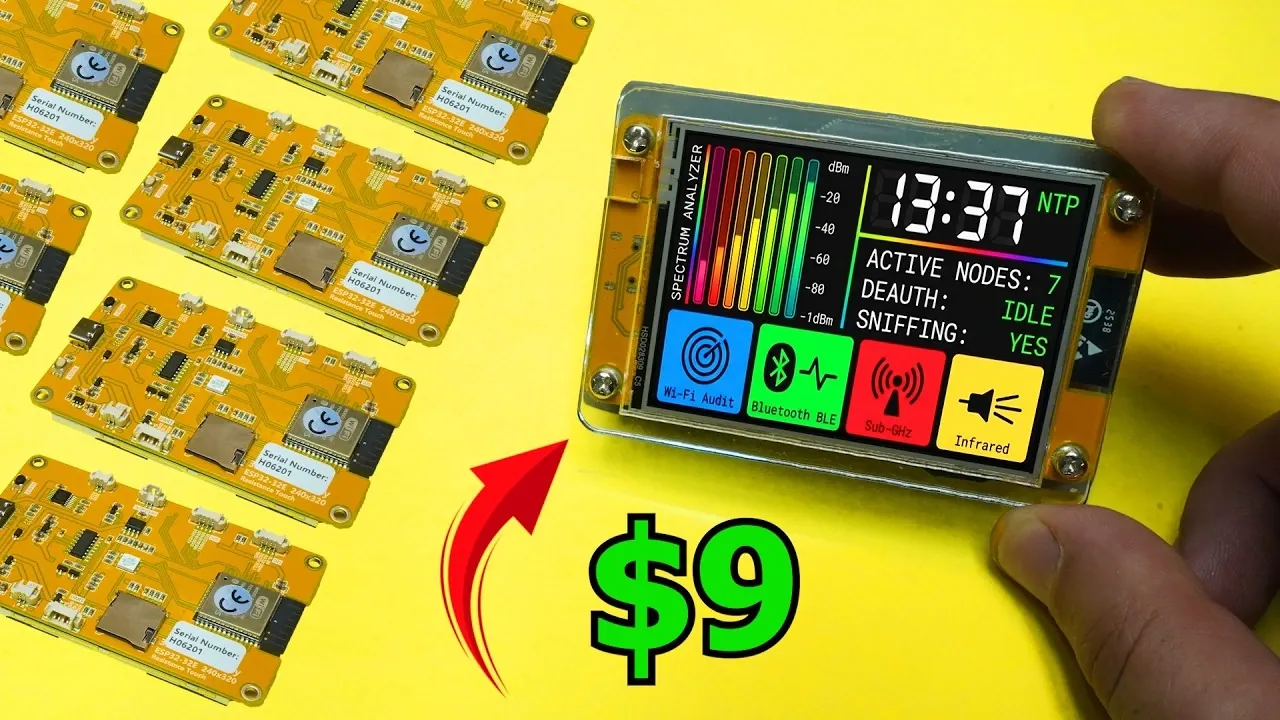
The CYD ESP32 module, as highlighted by Hacktuber, is a $9 microcontroller platform equipped with a 2.88-inch TFT LCD touchscreen, integrated Wi-Fi and Bluetooth and a microSD card slot. Its open source firmware, created by Ankush Pandit, enables features such as interactive games, quizzes and educational applications, making it a versatile option for various projects. The module also supports a browser-based flashing process, which simplifies initial setup and lowers the barrier for those new to microcontroller programming.
Explore how the CYD ESP32 module integrates with peripherals like speakers and power switches, as well as its compatibility with rechargeable lithium batteries for portable use. Learn about the “Bro” firmware’s customizable themes, multi-user profiles and Wi-Fi-enabled functionalities for remote control and monitoring. Gain insight into practical ways to apply this module in both educational and development-focused contexts.
Comprehensive Hardware Features
TL;DR Key Takeaways :
- The CYD ESP32 module is an affordable ($9) and versatile microcontroller featuring a 2.88-inch TFT LCD touchscreen, Wi-Fi and Bluetooth connectivity, a microSD card slot and support for rechargeable lithium batteries.
- Its open source firmware, “Bro,” transforms the module into an educational console with 31 built-in games, interactive tools like a periodic table and state maps, customizable settings and multi-user profiles.
- The module supports a streamlined browser-based flashing process, eliminating the need for specialized software and making it accessible to users with varying technical expertise.
- Advanced features include Wi-Fi-enabled remote control, real-time system information display and expandable educational content, making it suitable for IoT, education and remote monitoring applications.
- With open source project details hosted on GitHub, the CYD ESP32 module fosters community collaboration, innovation and accessibility for developers, educators and hobbyists worldwide.
The CYD ESP32 module is built around the ESP32 microcontroller, renowned for its robust processing capabilities and wireless connectivity. Its hardware design supports a wide range of applications, making it suitable for both beginners and experienced developers. Key features include:
- 2.88-inch TFT LCD resistive touchscreen: Ideal for interactive projects, educational tools and user-friendly interfaces.
- Integrated Wi-Fi and Bluetooth: Enables seamless connectivity for remote operation and IoT applications.
- MicroSD card slot: Provides expandable storage for additional content, custom files, or project data.
- Rechargeable lithium battery support: Paired with an integrated charger circuit for efficient and portable power management.
- Compatibility with add-ons: Supports peripherals like speakers and power switches to enhance functionality.
These features make the CYD ESP32 module a versatile choice for a variety of projects, ranging from Internet of Things (IoT) devices to portable educational tools. Its compact design and robust capabilities ensure it can adapt to diverse use cases.
Open source Firmware: “Bro”
The CYD ESP32 module’s potential is significantly amplified by its open source firmware, aptly named “Bro.” This firmware transforms the hardware into a multi-functional educational console, offering a wide array of features that cater to learners and developers. Highlights of the firmware include:
- 31 built-in games: Includes math puzzles, state capitals quizzes and other engaging activities for learners of all ages.
- Educational tools: Features like a periodic table, US state maps and flags provide an interactive and enriching learning experience.
- Customizable settings: Users can personalize themes, menu orientation and power management options to suit their preferences.
- Multi-user profiles: Offers password-protected profiles, making sure secure and individualized access for multiple users.
This firmware showcases the power of open source development in creating accessible, customizable and engaging learning platforms. It bridges the gap between technology and education, making advanced tools available to a broader audience.
Here are additional guides from our expansive article library that you may find useful on ESP32.
- $5 ESP32-S3 Super Mini Packs Wi-Fi and Bluetooth
- How an $8 ESP32 S3 Microcontroller Runs a 28.9M Parameter Local LLM
- $4 ESP32 Module Brings Wi-Fi and Bluetooth to IoT Projects
- Build a DIY Open-Source Flipper Zero Using a ESP32-DIV
- ESP32-S3 Automation System Packs 16 Relays for Smart Homes
- $5 ESP32 S3 Board Packs a 240 MHz Dual-Core Chip
- Optimize ESP32 Battery Life Using 10 Lesser-Known Features
- Espressif Solved Expensive IoT Wi-Fi with the Dual-Core ESP32
- ESP32 Lineup Compared: S3 Handles AI While C6 Tackles Matter
- Build a Sonos Rival with the $30 AUD Louder ESP32 Board
Effortless Browser-Based Flashing
One of the standout features of the CYD ESP32 module is its streamlined browser-based flashing process. Unlike traditional methods that require specialized software such as the Arduino IDE, this approach simplifies firmware installation. Users can flash the firmware directly from their browser, making the process accessible even to those with limited technical expertise.
The firmware is compatible with CYD ESP32 boards equipped with the 9341 driver, making sure reliable performance across supported devices. This compatibility broadens the module’s appeal, making it suitable for a diverse audience ranging from beginners to seasoned developers. By eliminating the need for complex setup procedures, the CYD ESP32 module lowers the barrier to entry for those new to microcontroller projects.
Advanced Features and Practical Applications
The CYD ESP32 module goes beyond basic educational tools, offering advanced features that enhance its functionality and expand its potential applications. These include:
- Wi-Fi-enabled remote control: Allows users to operate the module through a dedicated app, allowing remote monitoring and control.
- Real-time system information display: Provides data on CPU performance, battery status and memory usage for better system management.
- Expandable educational content: Includes resources like US state maps, flags and periodic table elements, enriching the learning experience.
These advanced features make the CYD ESP32 module a practical choice for a variety of scenarios, from education to remote monitoring and control applications. Its ability to combine educational tools with real-world functionality sets it apart as a versatile microcontroller.
Community Support and Accessibility
The CYD ESP32 module embraces an open source philosophy, with its firmware and project details hosted on GitHub. This approach ensures easy access for users worldwide and fosters collaboration within the developer community. By inviting contributions and customizations, the project encourages innovation and continuous improvement.
Whether you are an educator seeking an interactive teaching tool, a hobbyist exploring microcontroller projects, or a developer looking for a cost-effective platform, the CYD ESP32 module offers a compelling solution. Its affordability, accessibility and versatility make it a valuable resource for anyone interested in using microcontrollers for education, experimentation and beyond.
Media Credit: Hacktuber
Disclosure: Some of our articles include affiliate links. If you buy something through one of these links, Geeky Gadgets may earn an affiliate commission. Learn about our Disclosure Policy.
