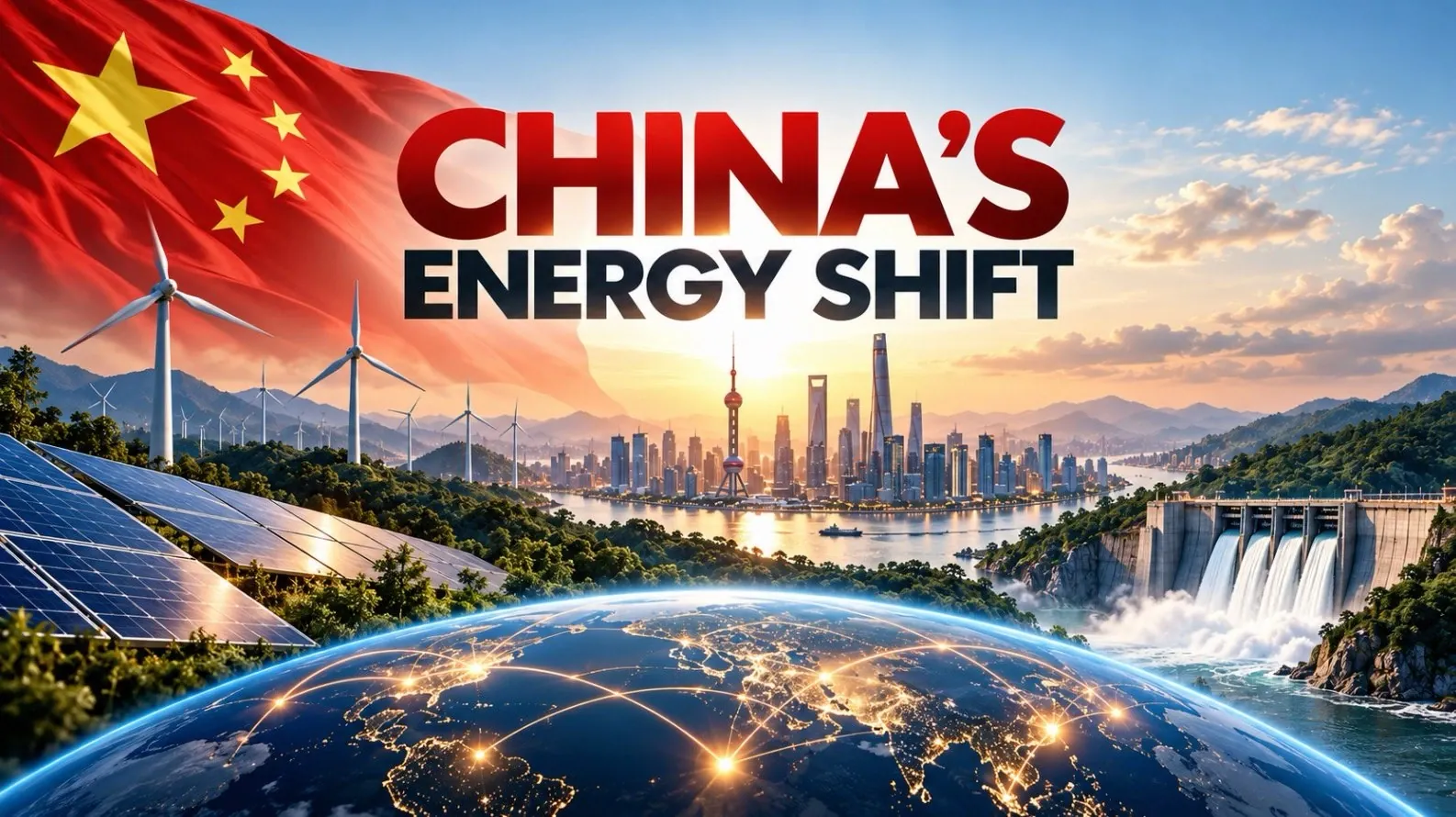
China’s recently unveiled 15th Five-Year Plan outlines an ambitious roadmap to reshape its energy sector, with profound implications for global energy systems. Central to this strategy is the goal of achieving 3,500 GW of renewable energy capacity by 2030, a dramatic increase that underscores the scale of the country’s commitment to sustainability. Just Have a Think examines how this plan prioritizes advanced technologies such as ultra-high-voltage (UHV) transmission lines to connect remote renewable energy hubs like Inner Mongolia to industrial centers. These initiatives aim to address critical challenges, including the intermittency of renewable energy sources and the need to reduce reliance on coal.
Explore how China’s energy transition hinges on investments in scalable storage solutions, the integration of circular economy principles and the balancing act of maintaining coal as a transitional energy source. Gain insight into the nation’s efforts to recycle materials from retired wind turbines and solar panels, making sure resource efficiency while minimizing waste. Additionally, learn how these domestic strategies align with China’s broader ambitions to lead global energy governance and innovation. This pivotal period will define not only China’s energy future but also its role in shaping a sustainable global energy landscape.
China’s Ambitious Renewable Energy Goals
TL;DR Key Takeaways :
- China’s 15th Five-Year Plan targets 3,500 GW of renewable energy capacity by 2030, with electricity generation from renewables rising to 6,000 TWh by the decade’s end.
- Key infrastructure investments include ultra-high-voltage (UHV) transmission lines and scalable energy storage solutions to address renewable energy intermittency and efficiency.
- The plan integrates circular economy principles, aiming to recycle 510 million tonnes of secondary resources annually and improve resource productivity by 16% by 2030.
- Coal will play a transitional role, with consumption peaking between 2026 and 2030, as China balances energy security with its renewable energy goals.
- China’s energy strategy aims to enhance its global leadership in clean energy innovation, influencing global energy governance and sustainability efforts.
China is setting unparalleled targets to solidify its leadership in renewable energy. By 2030, the nation aims to install an impressive 3,500 GW of renewable energy capacity, marking a significant leap from current levels. Electricity generation from renewables is expected to rise from 4,000 TWh in 2025 to 6,000 TWh by the end of the decade, underscoring the scale of this transformation.
Key priorities include the rapid expansion of wind, solar and hydropower capacity, alongside efforts to enhance grid reliability. Regions rich in renewable resources, such as Inner Mongolia and Xinjiang, will be connected to industrial hubs through advanced ultra-high-voltage (UHV) transmission lines. These initiatives are designed to address the intermittency of renewable energy sources while reducing reliance on coal and other fossil fuels. By focusing on these areas, China aims to create a more resilient and sustainable energy system.
Addressing Challenges in the Energy Transition
While China’s renewable energy goals are ambitious, they come with significant challenges that must be addressed to ensure success. One of the most pressing issues is the development of infrastructure. Many renewable energy projects are located in remote areas, far from urban centers where energy demand is highest. Investments in UHV transmission lines are critical to efficiently transport energy across vast distances and integrate it into the national grid.
Energy storage is another key area of focus. Scalable and cost-effective battery technologies, along with other storage solutions, are essential to manage the variability of wind and solar power. Without adequate storage, the risk of energy waste or curtailment increases, undermining the efficiency of renewable energy systems. Additionally, the establishment of flexible electricity markets will be crucial for balancing supply and demand, making sure that renewable energy is utilized effectively and consistently.

Become an expert in energy with the help of our in-depth articles and helpful guides.
- Proxima Fusion Plans the Alpha Stellarator for the Early 2030S
- Google Project Suncatcher Uses Space Solar Panels for AI
- MIT Says Energy-Storing Concrete Improves 10-fold by Switching to Organic Electrolyte
- Bloom Energy Server – Bloom Box Fuel Cell Gets Official
- Sun-Ways Installs 18 kW Removable Solar Panels on Train Tracks
- CATL Targets Lithium-Air Batteries for 1,000-Mile EV Range
- Apple Silicon AI Performance: Local Al on Apple Silicon Uses 7X Less RAM
- Apple Watch Ultra 4 Leak Reveals Redesign and Health Features
- Apple Announces the Apple Home Collection Smart Accessories
- Recent iPhone 18 Leaks Detail the Release Date and $899 Price
Embedding Circular Economy Principles in Energy Strategy
China’s energy transformation is closely linked to its broader circular economy objectives, which prioritize resource efficiency and waste reduction. By 2030, the country aims to recycle 510 million tonnes of secondary resources annually and improve resource productivity by 16%. These goals reflect a commitment to minimizing environmental impact while maximizing the value of resources.
A significant aspect of this strategy involves upstream recycling, where products are designed to assist the recovery of materials at the end of their lifecycle. For example, recycling retired wind turbine blades and solar panels will not only reduce waste but also recover valuable materials for reuse. These efforts align with global sustainability goals and position China as a leader in resource-efficient manufacturing. By integrating circular economy principles into its energy strategy, China is setting a precedent for sustainable development on a global scale.
The Role of Coal in a Transitional Energy Landscape
Despite its aggressive push for renewable energy, China acknowledges the transitional role of coal in maintaining energy security. Coal consumption is projected to peak between 2026 and 2030, providing a stable energy supply as renewable capacity scales up. This pragmatic approach reflects the complexity of balancing economic growth, energy security and environmental sustainability.
The 15th Five-Year Plan also sets ambitious targets for non-fossil energy sources, aiming for them to account for 50% of electricity generation and 25% of total energy consumption by 2030. This dual strategy highlights the challenges of transitioning to a low-carbon economy while making sure that energy demands are met without compromising economic stability.
Global Implications of China’s Energy Strategy
China’s renewable energy strategy is not confined to domestic priorities; it also serves as a cornerstone of its global leadership ambitions. By advancing clean energy technologies and infrastructure, China seeks to enhance its influence in global energy governance and establish itself as a leader in the transition to sustainable energy. Additionally, reducing reliance on imported fossil fuels will bolster energy security and resilience against external disruptions.
However, balancing domestic policies with international commitments presents challenges. For instance, reconciling continued coal use with climate goals will require careful coordination to maintain credibility on the global stage. The success of China’s energy strategy will depend on its ability to navigate these complexities while fostering international collaboration and innovation.
The Next Five Years: A Defining Period for Global Energy
China’s energy transition is poised to redefine global energy dynamics. If the country achieves its renewable energy targets, it could solidify its position as a global leader in clean energy innovation and governance. However, the shift from capacity building to creating an integrated and efficient energy system remains a critical challenge.
The next five years will be pivotal in determining whether China can overcome obstacles such as infrastructure development, energy storage and balancing coal use with climate commitments. Success in these areas will not only advance China’s domestic energy goals but also set a new global benchmark for sustainable energy development.
- Renewable Energy Expansion: China aims to install 3,500 GW of renewable energy capacity by 2030, with a focus on wind, solar and hydropower.
- Infrastructure and Storage: Investments in UHV transmission lines and scalable energy storage solutions are critical to overcoming challenges in the energy transition.
- Circular Economy Integration: Recycling initiatives and resource-efficient manufacturing will play a key role in reducing waste and enhancing sustainability.
- Global Leadership: China’s strategy positions it as a leader in clean energy innovation, with significant implications for global energy markets and governance.
Media Credit: Just Have a Think
Disclosure: Some of our articles include affiliate links. If you buy something through one of these links, Geeky Gadgets may earn an affiliate commission. Learn about our Disclosure Policy.
