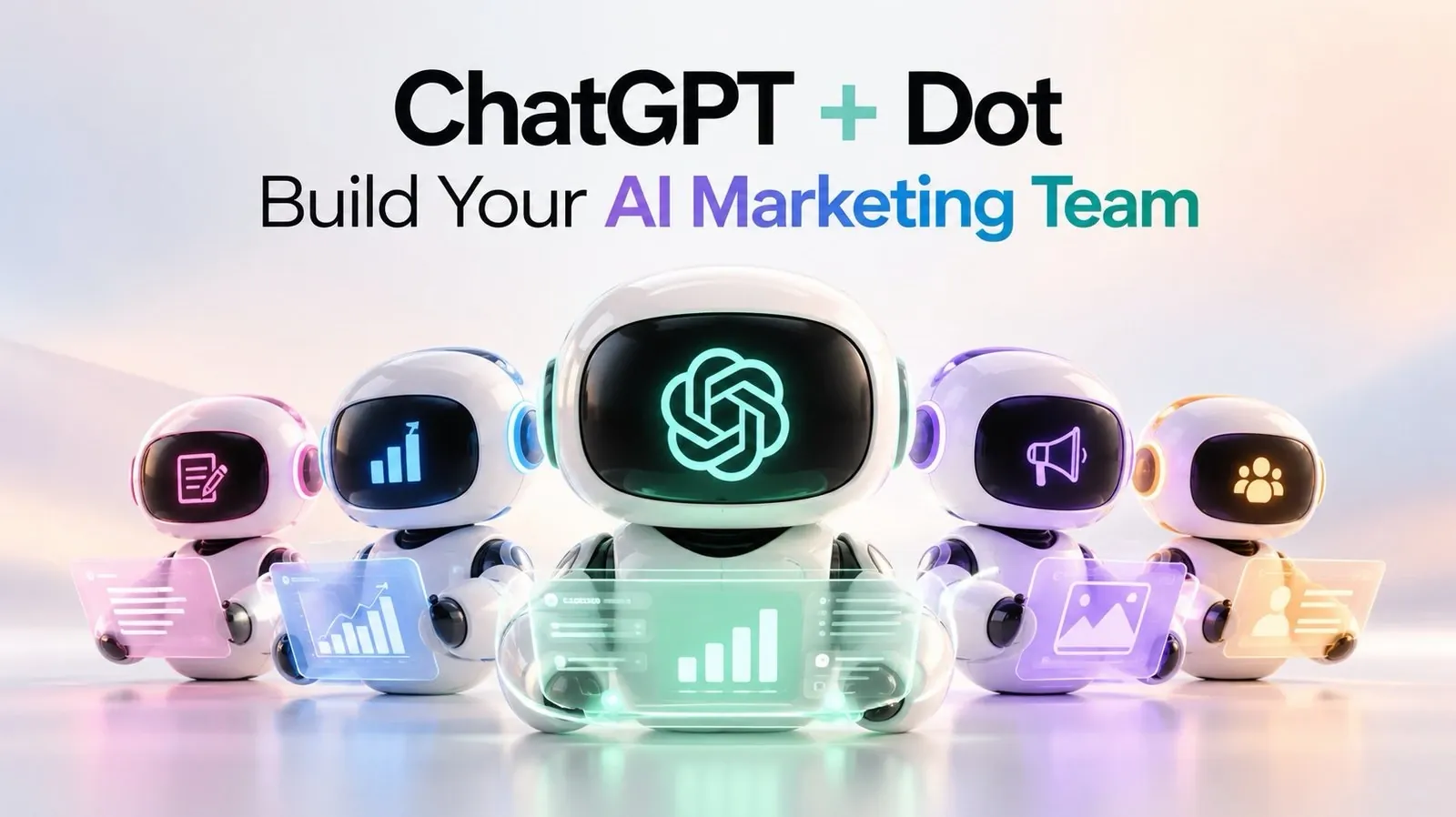
Artificial intelligence is playing an increasingly significant role in marketing, allowing businesses to allocate resources more effectively and focus on strategic priorities. Grace Leung examines how ChatGPT’s ecosystem, including ChatGPT Work and Docs (Dot)—can support the creation of an AI-driven marketing team. Central to this approach is the use of agents and skills, where agents handle decision-making and coordination, while skills execute predefined, repeatable tasks. For example, a campaign manager agent might oversee marketing strategy, while skills automate processes like drafting email templates or generating analytics reports, creating a structured yet adaptable workflow.
Explore how to assign specific roles, such as a campaign strategist agent or a content manager, to streamline your team’s operations. Learn how Docs (Dot) can assist with task management and communication, acting as a central hub for collaboration. Additionally, gain insight into designing reusable skills that handle tasks like audience segmentation or performance tracking, making sure consistency and efficiency in your marketing initiatives.
TL;DR Key Takeaways :
- ChatGPT’s tools, Work, Codex and Docs, enable businesses to automate tasks, streamline workflows and enhance marketing efficiency through AI-powered solutions.
- Building an AI marketing team involves assigning a lead agent for coordination, supported by specialized agents for roles like growth strategy, content creation and website design.
- Effective project organization includes creating folders for brand guidelines, audience profiles and reusable skills to ensure consistency and efficiency across tasks.
- Understanding the distinction between agents (dynamic, strategic tasks) and skills (predefined, repeatable tasks) is key to optimizing team performance and balancing automation with oversight.
- ChatGPT tools enhance scalability, reduce manual effort and improve collaboration, making them valuable for automating marketing tasks like ad creation, campaign management and tool integration.
Understanding ChatGPT’s Core Tools
ChatGPT offers three core tools, each designed to address specific business needs and challenges:
- ChatGPT Work: A versatile tool for managing multi-step tasks such as conducting research, creating presentations and building websites.
- ChatGPT Codex: A developer-focused assistant that supports coding, repository management and solving technical challenges.
- Docs (Dot): A named assistant that acts as an executive coordinator, facilitating task delegation, project management and integration with external platforms.
Together, these tools form a cohesive system that combines automation with strategic oversight, allowing businesses to create a marketing team that is both efficient and adaptable.
How to Build an AI Marketing Team
Creating an AI-driven marketing team requires careful planning and role allocation. Start by assigning a lead agent to oversee operations. This lead agent acts as the central coordinator, making sure that all tasks align with your marketing objectives and are executed efficiently.
Under the lead agent, deploy specialized agents to handle specific roles, such as:
- Growth Strategy: Focused on identifying opportunities, analyzing data and optimizing campaigns for better performance.
- Content Creation: Responsible for generating blog posts, social media content, email campaigns and ad copy tailored to your audience.
- Website Design: Tasked with building and maintaining campaign-specific landing pages or websites to support marketing initiatives.
Docs (Dot) can serve as your executive assistant, making sure seamless communication and task delegation across the team. This structure allows for a clear division of responsibilities while maintaining alignment with overarching goals.

Expand your understanding of ChatGPT Work with additional resources from our extensive library of articles.
- New ChatGPT 5.6 Work Prompts to Improve Your Daily Productivity
- ChatGPT Work Beats Gemini Spark in Top Professional AI Tests
- ChatGPT Work Mode Links Projects to Local Desktop Folders
- Quickly Master ChatGPT Work Basics by Automating Daily Tasks
- New ChatGPT for Work Automates Daily Tasks, Reports and Marketing
- OpenAI Pauses ChatGPT 6 Over Hugging Face Safety Concerns
- How to Use ChatGPT for Beginners : Writing, File Analysis, Plans and More
- OpenAI ChatGPT Work Beats Gemini Spark in Professional Tests
- 10 Awesome Things You Can Do with the ChatGPT Mobile App
- ChatGPT Finally Automates Your Daily Workflow While You Sleep
Organizing Projects and Skills
Effective project organization is critical to the success of your AI marketing team. Begin by creating project folders that include essential resources such as:
- Brand Guidelines: To maintain consistency in tone, style and messaging across all marketing materials.
- Target Audience Profiles: To ensure that messaging is tailored to the needs and preferences of your audience.
- Style Preferences: To provide clear direction for visual and written content, making sure uniformity across deliverables.
Next, develop reusable skills for tasks that require consistent output. Examples of reusable skills include:
- Designing advertisements with predefined templates and brand elements.
- Scheduling social media posts based on optimal engagement times.
- Building landing pages with consistent layouts and messaging.
By automating these repetitive tasks, you can save time and ensure uniformity across projects. Additionally, integrating workflows with external tools can further enhance efficiency and reduce manual intervention.
Agents vs Skills: Key Differences
Understanding the distinction between agents and skills is essential for optimizing your AI marketing team:
- Skills: These are predefined, repeatable tasks that follow specific parameters. For example, generating a series of social media posts or designing a landing page can be handled by skills programmed for consistency and efficiency.
- Agents: These are dynamic entities capable of handling tasks that require judgment, strategy and decision-making. An agent might oversee an entire campaign, making sure that all components align with your marketing goals and adapt to changing circumstances.
By combining agents and skills, you can strike a balance between automation and strategic oversight, allowing your team to handle both routine tasks and complex projects effectively.
Practical Applications of ChatGPT Tools
The versatility of ChatGPT’s tools allows them to be applied to a wide range of marketing tasks, including:
- Ad Creation: Automate the design of advertisements that align with your brand’s visual identity and messaging.
- Website Development: Use ChatGPT Work to create and deploy campaign-specific websites or landing pages tailored to your objectives.
- Campaign Management: Coordinate multi-agent collaboration for tasks such as lead magnet creation, content scheduling and performance tracking.
- Tool Integration: Integrate Docs with platforms like Slack, Notion, or Trello to streamline communication and task management.
These applications demonstrate how ChatGPT can manage both creative and operational aspects of marketing, making it a valuable asset for businesses of all sizes.
Boosting Efficiency and Scalability
One of the most significant advantages of using ChatGPT in marketing is its ability to enhance efficiency and scalability. By building a library of reusable skills and deploying specialized agents, you can:
- Streamline workflows and reduce the time spent on repetitive tasks.
- Host and deploy projects directly using ChatGPT’s built-in tools, eliminating the need for additional software.
- Scale operations seamlessly as your business grows, without compromising on quality or efficiency.
This approach allows you to focus on strategic initiatives while maintaining operational excellence, making sure that your marketing efforts remain effective and adaptable.
Steps for Successful Implementation
To fully realize the potential of your AI marketing team, follow these steps:
- Optimize Project Instructions: Update and refine instructions to ensure that agents and skills are routed effectively for each task.
- Test Multi-Agent Collaboration: Conduct trials for complex tasks to identify and address potential bottlenecks or inefficiencies.
- Start Small and Scale Gradually: Begin with a small team of agents and expand as your needs evolve, making sure that your system remains manageable and effective.
This phased approach ensures a robust and scalable system that aligns with your business objectives and adapts to changing demands.
Key Benefits of ChatGPT in Marketing
Integrating ChatGPT tools into your marketing workflows offers several tangible benefits:
- Reduced Manual Effort: Automate repetitive tasks, freeing up time for strategic planning and creative work.
- Enhanced Collaboration: Improve coordination between agents and external tools, making sure seamless execution of projects.
- Faster Turnaround Times: Accelerate project completion without compromising on quality or consistency.
These benefits make ChatGPT an indispensable tool for businesses looking to modernize their marketing strategies and achieve greater efficiency.
By using ChatGPT’s tools, Work, Codex and Docs, you can build a marketing team that is not only efficient but also adaptable to the ever-changing demands of the digital landscape. With thoughtful planning and implementation, you can harness the power of AI to elevate your marketing efforts and achieve your business goals.
Media Credit: Grace Leung
Disclosure: Some of our articles include affiliate links. If you buy something through one of these links, Geeky Gadgets may earn an affiliate commission. Learn about our Disclosure Policy.
