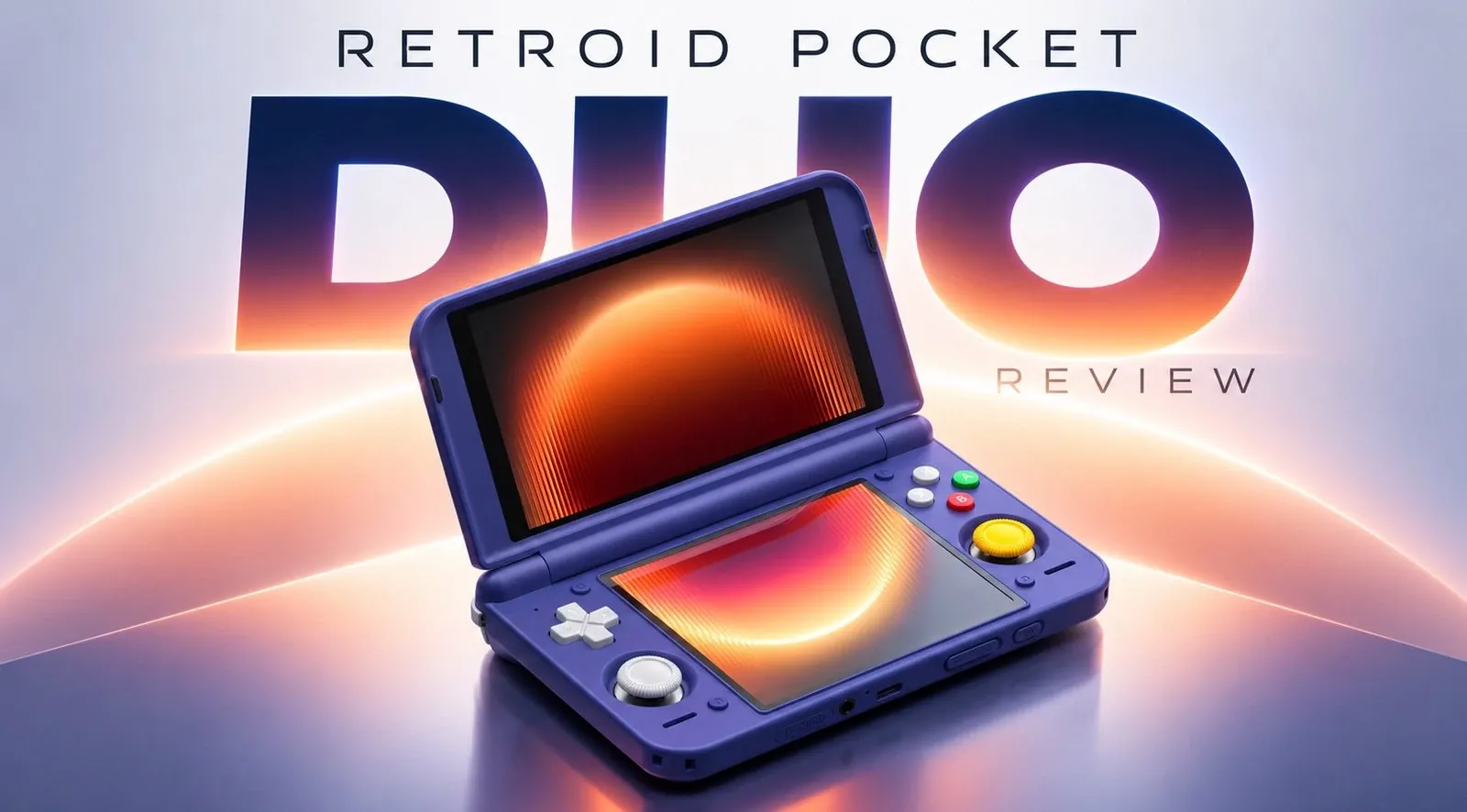
The Retroid Pocket Duo is a handheld gaming device aimed at retro gaming enthusiasts, featuring dual-screen functionality similar to systems like the Nintendo DS and 3DS. Retro Game Corps provides a detailed assessment, highlighting the dual OLED displays—a 5.5-inch, 1080p top screen and a 4.5-inch, 4:3 bottom screen. While these screens deliver vibrant visuals and a 120Hz refresh rate, the device’s mid-tier chipset struggles with demanding platforms such as the PS2 and Nintendo Switch. Its bulky design and stacked shoulder triggers may also present ergonomic challenges for certain users.
Discover how the Retroid Pocket Duo handles retro emulation across platforms like the PS1, Dreamcast and Sega Saturn, while also addressing its limitations with GameCube and Wii titles. Gain insight into its touchscreen capabilities, multitasking options and the trade-offs in its physical design. This assessment also covers practical considerations, including battery performance during extended gaming sessions and the variety of emulator support available.
Retroid Pocket Duo Handheld Games Console
TL;DR Key Takeaways :
- The Retroid Pocket Duo features dual OLED screens (5.5-inch 1080p top screen and 4.5-inch 4:3 bottom screen) with a 120Hz refresh rate, optimized for retro and dual-screen gaming.
- It excels in emulating retro systems like PS1, Dreamcast and N64, but struggles with higher-end systems like PS2, Wii U and Nintendo Switch.
- Battery life ranges from 16 hours for lightweight retro gaming to 3-4 hours for demanding tasks like PS2 or 3DS gaming at higher resolutions.
- The ergonomic design includes a precise D-pad and soft buttons, but the stacked shoulder triggers and analog stick placement may feel awkward for extended use.
- While its Android-based software supports a wide range of emulators and multitasking, it lacks advanced customization options like per-game emulator settings for 3DS titles.
Design and Build Quality
The Retroid Pocket Duo features a retro-inspired aesthetic with a sturdy hinge and ergonomic layout. Its standout feature is the dual OLED screens, which include:
- A 5.5-inch, 1080p top screen for vibrant visuals.
- A 4.5-inch, 4:3 bottom screen optimized for retro and dual-screen gaming.
Both screens support a 120Hz refresh rate, making sure smooth gameplay for both retro and modern titles. The device feels comfortable to hold, with a precise D-pad and soft rubber membrane buttons that enhance the experience, particularly for classic games.
However, the stacked shoulder triggers are less refined, feeling bulky and awkward during extended sessions. Additionally, while the overall build quality is solid, the device’s slightly bulky design may not appeal to users who prioritize portability or prefer slimmer handhelds.
Performance and Gaming Capabilities
The Retroid Pocket Duo is powered by a mid-tier chipset, making it ideal for retro gaming but less suited for modern systems. Its performance can be summarized as follows:
- Handles retro systems like PS1, Dreamcast, N64 and Sega Saturn effortlessly.
- Supports GameCube and Wii emulation at 2x resolution, though performance varies depending on the game.
- Struggles with higher-end systems like PS2, Wii U and Nintendo Switch, with noticeable slowdowns.
For Android gaming, lightweight titles run smoothly, but more demanding games experience performance issues. While it is not designed for PC gaming, the device supports cloud-based game streaming services, offering a workaround for modern gaming enthusiasts. This makes it a versatile option for retro gamers while providing limited access to newer titles.

Deep dive into the latest in Retroid by exploring our other resources and articles.
- Retroid Pocket Nova Packs 120Hz OLED and QC S8550 For $229
- $219 Retroid Pocket Duo Lite Plus Fixes Base Model Flaws
- Retroid Pocket Nova Plays PS2 Games on a 4.5-Inch AMOLED
- $270 Retroid Pocket Duo Brings Dual OLEDs to Retro Games
- Retroid Pocket Nova vs Pocket 6 for Retro Gaming Needs
- Retroid Pocket Duo Lite Costs $149 with 4GB RAM and Android 15
- Retroid Pocket 5: Game Emulation Performance and Features Tested
- Retroid Pocket Flip 2 – Plays XBOX & PS3 Games Using ROCKNIX OS
- Install Armada OS on Android Handhelds to Create a Steam Deck in Under 5 Minutes
- Retroid Pocket Nova Guide: Optimizing Android for Retro Gamers
Dual-Screen Functionality
The dual-screen setup is the defining feature of the Retroid Pocket Duo, making it an excellent choice for fans of Nintendo DS and 3DS games. Key highlights of this functionality include:
- Touchscreen responsiveness that is highly accurate, with minimal input latency.
- Support for 3DS games at up to 2x resolution, delivering crisp visuals without significant performance issues.
However, attempting to push resolutions beyond 2x can result in stuttering, particularly in graphically demanding titles. The multitasking feature further enhances the device’s appeal, allowing users to run games alongside media apps simultaneously. This is particularly useful for gamers who enjoy multitasking, such as watching videos or browsing while gaming.
Battery Life and Usage
Battery performance varies significantly based on usage, with the following estimates:
- Up to 16 hours for lightweight retro gaming on a single screen.
- Approximately 6.5 hours for dual-screen DS gaming.
- 3-4 hours for demanding tasks like PS2 or 3DS gaming at higher resolutions.
While these figures are respectable, they may not satisfy users seeking extended play sessions for more intensive gaming. The battery life is sufficient for casual retro gaming but falls short for prolonged use with modern or resource-intensive games.
Controls and Ergonomics
The controls on the Retroid Pocket Duo are a mixed experience. The analog sticks, modeled after those on the Nintendo Switch, feel cramped due to their placement. This can be particularly challenging for games requiring precise movements. Optional replacement stick caps are available to improve grip and range of motion, but the left analog stick’s position below the D-pad may feel awkward for certain games.
On the other hand, the D-pad is a standout feature, offering precision and responsiveness that retro gaming fans will appreciate. The stacked shoulder triggers, while functional, can feel cumbersome during extended play sessions, detracting from the overall comfort of the device.
Software and Features
Running on Android, the Retroid Pocket Duo is enhanced by Retroid’s custom software, which provides convenient options for brightness, volume and screen focus adjustments. Key software features include:
- Support for a wide range of emulators, making it a versatile choice for retro gaming.
- Compatibility with polished frontends like Emulation Station and Cocoon for an organized gaming experience.
- Multitasking capabilities and support for game streaming services.
However, the software lacks advanced features such as per-game emulator settings for 3DS titles, which could have improved the experience for more advanced users. While the software is functional, it leaves room for improvement in terms of customization and optimization.
Comparisons and Market Position
The Retroid Pocket Duo stands out in the handheld gaming market due to its dual-screen functionality and OLED displays. Here’s how it compares to other devices:
- Outperforms budget alternatives like the Ambernic RGDS Plus in terms of screen quality and responsiveness.
- Falls short of premium options like the AYANEO Thor in raw power, making it less suitable for modern gaming.
- Faces competition from upcoming devices like the Ambernic RG DDS, which may offer better 3DS performance but at a higher price.
For users who prioritize dual-screen gaming and retro emulation, the Retroid Pocket Duo remains a compelling option despite its limitations.
Limitations to Consider
While the Retroid Pocket Duo offers several strengths, it also comes with notable drawbacks:
- A high price point of $270 before shipping, which may deter budget-conscious buyers.
- Limited performance for modern systems and demanding games, restricting its versatility.
- A bulky design with stacked triggers and suboptimal analog stick placement, impacting ergonomics.
- The absence of per-game emulator settings for 3DS titles, limiting customization for advanced users.
These limitations may make it less appealing to users seeking broader emulation capabilities or a more portable design.
Final Thoughts
The Retroid Pocket Duo is a thoughtfully designed handheld that excels in retro and dual-screen gaming. Its OLED displays, responsive controls and multitasking capabilities make it an attractive choice for enthusiasts, particularly those focused on DS and 3DS emulation. However, its price, performance constraints and design quirks may deter users looking for a more versatile or modern gaming experience. For those who value dual-screen functionality and retro gaming above all else, the Retroid Pocket Duo offers a unique and capable solution.
Media Credit: Retro Game Corps
Disclosure: Some of our articles include affiliate links. If you buy something through one of these links, Geeky Gadgets may earn an affiliate commission. Learn about our Disclosure Policy.
