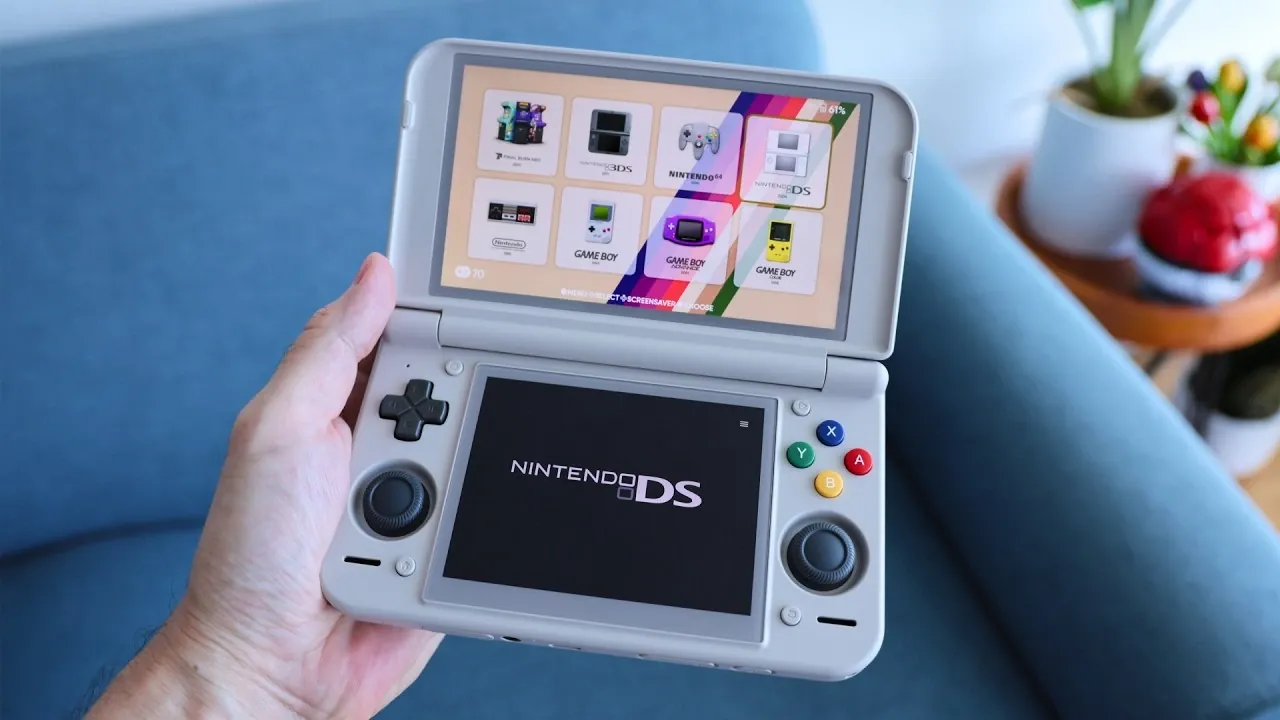
The Retroid Pocket Duo Lite is a compact handheld device tailored for retro gaming enthusiasts, combining affordability with a nostalgic design. Featuring a clamshell build, it includes a Qualcomm QCS6125 chipset and runs on Android 15 OS, supporting various emulation options. According to Retro Game Corps, its dual-screen setup, a 5.5-inch 16:9 LCD paired with a 4.2-inch 4:3 LCD, offers versatility but also reveals certain limitations. While the Hall effect joysticks and responsive D-pad aim to enhance precision, performance issues, particularly with DS and 3DS emulation, may affect the overall experience.
Dive into how the Duo Lite’s hardware stacks up against alternatives like the Amberick RGDS Plus and AYN Thor and examine the trade-offs between its sturdy construction and the audible cooling fan. This overview also unpacks the release of the upgraded Duo Lite Plus, which addresses several shortcomings of the original model.
A Retro Aesthetic with Modern Touches
TL;DR Key Takeaways :
- The Retroid Pocket Duo Lite is a $150 dual-screen handheld gaming device with a nostalgic clamshell design, aimed at retro gaming enthusiasts on a budget.
- Key features include a Qualcomm QCS6125 chipset, Android 15 OS, Hall effect joysticks, dual LCD screens and a 6,000mAh battery, but real-world performance is inconsistent, especially for DS and 3DS emulation.
- While the device offers solid build quality, responsive controls and vibrant screens, it suffers from underwhelming performance, noisy cooling fans and subpar analog sticks.
- Competitors like the Amberick RGDS Plus and AYN Thor provide better performance, making them more appealing options despite higher price points.
- The release of the upgraded Duo Lite Plus shortly after the original model has caused controversy, as it addresses many performance issues but comes at a higher price of $219.
Design and Build
The Duo Lite’s clamshell design is a deliberate homage to classic handheld consoles, making it a visually appealing choice for retro gaming enthusiasts. Its compact form factor, inline shoulder buttons and sturdy plastic construction provide a balance of durability and comfort, even during extended gaming sessions. The device’s slightly larger size compared to competitors, however, may hinder portability for some users. For collectors or fans of vintage gaming, the nostalgic aesthetic is undoubtedly a standout feature, blending retro charm with modern practicality.
Specifications: Balancing Features and Affordability
The Retroid Pocket Duo Lite offers a respectable set of hardware features for its price range. Key specifications include:
- Qualcomm QCS6125 chipset: Comparable to Snapdragon 7 Gen 4, offering mid-range processing power.
- Two configurations: 4GB RAM with 64GB storage or 6GB RAM with 128GB storage, catering to different user needs.
- Dual screens: A 5.5-inch 1920×1080 (16:9) LCD and a 4.2-inch 1280×960 (4:3) LCD for versatile gaming experiences.
- 6,000mAh battery: Providing decent battery life for extended play sessions.
- Android 15 OS: Making sure compatibility with modern apps and games.
- Hall effect joysticks: Reducing drift and improving precision for a smoother gaming experience.
While these features appear promising on paper, their real-world performance reveals a more nuanced picture, particularly for gamers with higher expectations.

Here is a selection of other guides from our extensive library of content you may find of interest on handhelds.
- Valve Confirms Steam Deck 2 with Unreal Engine 5 Support
- Sony’s PlayStation 6 Details Leaks: First Look at the Next-Gen Console
- RG56 Pro Max First Look & Performance Guide: What Runs Well & What Struggles
- ASUS Releases Ally X Driver 26.6.1 for Forza Horizon 6
- Pricing for Acer Predator Atlas 8 Starts at £999 in the UK
- Intel Panther Lake Handheld PCs Expected at $599 To $799
- Ambernick Win600 Delivers X86 Handheld Gaming for Just $99
- MSI Claw 8EX Ai+ Costs $1800 but Hits 70 FPS in Cyberpunk 2077
- KONKR Pocket Advance Hands-on: $89.99 Retro Android 12 Handheld
- PSPi Mod Fits Raspberry Pi Compute Module 4 in PSP 1000
Performance: A Mixed Bag
Despite its hardware potential, the Duo Lite struggles to deliver consistent performance across various gaming scenarios. Emulation for DS and 3DS games is uneven, with frequent frame drops and stuttering that disrupt gameplay. Input and touch latency are particularly noticeable in fast-paced genres such as action or rhythm games, where precision is crucial. Multitasking capabilities are also limited, as the device struggles to handle multiple apps simultaneously without performance degradation. While PSP emulation is functional, it is capped at 3x resolution for most games, highlighting the device’s limitations when handling more demanding tasks.
Audio and Cooling: A Trade-Off
The Duo Lite features stereo speakers that deliver decent audio quality for its price point, enhancing the overall gaming experience. However, the active cooling fan, while effective in managing heat, produces a high-pitched noise that can be distracting during gameplay. This trade-off between thermal management and user experience may frustrate some users, particularly during longer gaming sessions where the fan noise becomes more noticeable.
How It Stacks Up Against Competitors
In the competitive landscape of budget handheld gaming devices, the Retroid Pocket Duo Lite faces significant challenges. Notable alternatives include:
- Amberick RGDS Plus: Offers smoother DS emulation and better overall performance, making it a strong contender for retro gaming enthusiasts.
- AYN Thor: Provides superior hardware and gaming capabilities, albeit at a higher price point, appealing to those willing to invest more for enhanced performance.
For gamers prioritizing performance and reliability, these alternatives may offer better value despite their higher costs.
Controversy and the Duo Lite Plus
Retroid’s release strategy has sparked controversy among early adopters. Shortly after the Duo Lite’s launch, the company announced the Duo Lite Plus, an upgraded model featuring a more powerful chipset, 8GB of RAM and 128GB of storage for $219. This move left some customers feeling blindsided, as the improved version addressed many of the performance issues found in the original model. For those willing to spend extra, the Duo Lite Plus represents a more capable and appealing option, though it raises questions about the timing and transparency of Retroid’s product releases.
Strengths and Weaknesses
The Retroid Pocket Duo Lite offers several strengths that make it an attractive option for certain users:
- Solid build quality: Durable construction ensures longevity and reliability.
- Responsive D-pad and buttons: Providing a satisfying tactile experience for retro gaming.
- Bright, vibrant LCD screens: Enhancing visual clarity and immersion during gameplay.
However, its weaknesses are equally significant and may limit its appeal:
- Underwhelming performance: Struggles with DS and 3DS emulation, leading to inconsistent gameplay.
- Subpar analog sticks: Falling short of the precision offered by competitors.
- Noisy cooling fan: Detracting from the overall gaming experience, especially during extended sessions.
These shortcomings make the Duo Lite less suitable for gamers seeking smooth emulation or high-performance gaming.
Future Potential: Room for Improvement
The Duo Lite holds potential for improvement through software updates or enhanced compatibility with alternative operating systems like Linux, which could unlock additional gaming capabilities. However, as it stands, the device is not ideal for DS or 3DS gaming enthusiasts. For those willing to wait, future updates or alternative models may provide a more satisfying experience, particularly if Retroid addresses the current performance limitations.
A Budget Option with Caveats
The Retroid Pocket Duo Lite is a budget-friendly handheld that combines nostalgic design with promising hardware. However, its performance limitations and stiff competition from better-performing alternatives make it a less compelling choice for serious gamers. While casual gamers or those on a tight budget may find it appealing, options like the Amberick RGDS Plus or the upgraded Duo Lite Plus offer better performance and value. For those seeking a smoother and more reliable gaming experience, exploring these alternatives may prove worthwhile.
Media Credit: Retro Game Corps
Disclosure: Some of our articles include affiliate links. If you buy something through one of these links, Geeky Gadgets may earn an affiliate commission. Learn about our Disclosure Policy.
