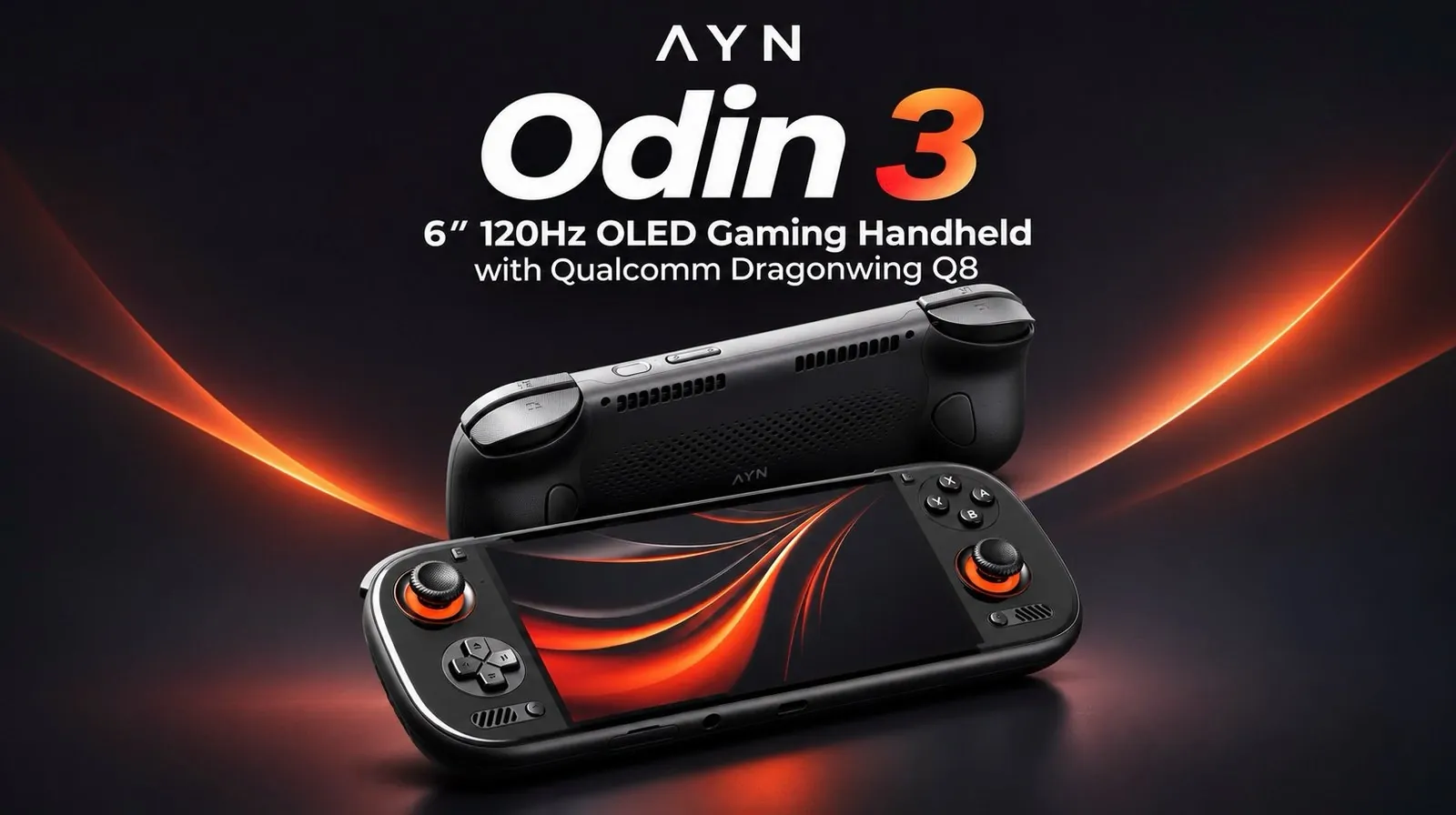
The AYN Odin 3 Portal stands out with its 6-inch OLED screen, offering a 1080p resolution and a smooth 120 Hz refresh rate. This upgrade from the previous model’s 6-inch display enhances both retro and modern gaming experiences. Features like black frame insertion improve motion clarity, particularly for games running at 60 fps, while the 16×9 aspect ratio minimizes distractions. These capabilities were explored in detail by NerdNest.
Dive into this guide to uncover how the Dragon Wing Q8 processor and Adreno 830 GPU handle demanding tasks like PlayStation 2 emulation and Nintendo Switch gameplay at 60 fps. You’ll also explore the benefits of customizable controls, the practicality of charge separation mode, and the thoughtful design details that prioritize comfort during extended sessions. Whether you’re into retro titles or modern games, there’s plenty to learn about this device’s potential.
TL;DR Key Takeaways :
- The AYN Odin 3 Portal features a 6-inch OLED screen with 1080p resolution and a 120 Hz refresh rate, enhancing the gaming experience for modern and retro titles, though dual-screen games like Nintendo DS or 3DS are less suited to the device.
- Powered by the Dragon Wing Q8 processor and Adreno 830 GPU, the device supports demanding tasks such as Nintendo Switch emulation at 60 fps, PlayStation 2 emulation, and PC games like Bioshock Remastered, with active cooling ensuring stability during high-performance gaming.
- The Odin 3 Portal offers a lightweight design at 450 grams, Hall effect sticks, customizable back buttons, and membrane-based face buttons, providing a comfortable and versatile gaming experience.
- Running a clean Android setup, the device includes features like USB 3.1 Type-C with DisplayPort out, Wi-Fi 7, Bluetooth 6, and high-quality speakers, avoiding pre-installed apps or ROMs for a clutter-free user experience.
- Pricing starts at $400 for the base model (12 GB RAM, 128 GB storage), with Pro and Max versions offering up to 16 GB RAM and 1 TB storage, though the Max version’s pricing remains unclear.
A Bigger Screen for Better Gaming
The AYN Odin 3 Portal features a 6-inch OLED screen with a 1080p resolution and a 120 Hz refresh rate, a notable upgrade from the Odin 3’s smaller 6-inch display. This larger screen enhances the gaming experience, particularly for users who prefer a more expansive display.
The increased size reduces the prominence of pillar boxing or letter boxing in retro games, while the screen’s brightness offsets the dimming effect of black frame insertion. This feature, designed to mimic CRT motion clarity, requires the screen to run at double the game’s frame rate, for instance, 120 Hz for 60 fps games.
With its 16×9 aspect ratio, the screen is ideal for most modern games, though retro titles may still experience pillar or letter boxing depending on the system.
The display delivers vibrant colors and smooth performance for modern gaming but is less suited for Nintendo DS or 3DS games, where dual-screen devices like the AYN Thor or Retroid Pocket Duo perform better. Despite this limitation, the 6-inch screen effectively minimizes visual distractions in retro games, making it a strong choice for fans of older titles.
Performance and Hardware
The Odin 3 Portal is powered by the Dragon Wing Q8 processor and Adreno 830 GPU, offering performance that surpasses the Snapdragon 8 Gen 2 chip. This hardware supports demanding tasks, including Nintendo Switch emulation at 60 fps, PlayStation 2 emulation, and PC games like Bioshock Remastered. In testing, God of War II ran smoothly via PlayStation 2 emulation. The device includes three performance modes, standard, performance, and high performance, with the latter recommended for intensive gaming.
Active cooling maintains stability during high-performance tasks. While the fan is audible, it produces a low, whooshing sound rather than a high-pitched noise. The 9,000 mAh battery provides approximately 6 hours of gameplay for lighter titles and around 2 hours for more demanding games. Charging supports up to 45 watts, a significant improvement over the original Odin 3’s 27-watt limit.
Additionally, the charge separation mode allows the device to draw power directly from the wall during plugged-in sessions, preserving battery life during extended gaming.

Here are more guides from our previous articles and guides related to AYN Odin handhelds that you may find helpful.
- AYN Odin 3 Hands-On Review : OLED Handheld Built for 120 FPS Android Play
- Retroid Pocket 6 vs AYN Odin 3 vs Anbernic RG556 Handheld Consoles Compared
- How to Turn the Odin 3 Into an ARM-Based Steam Deck Alternative
- AYN Odin 2 Portal 7 inch OLED Handheld Games Console Outshining the Competition
- Android Handhelds Become Viable Budget Steam Deck Alternatives
Design and Build
Weighing 450 grams, the Odin 3 Portal is lighter than a Steam Deck and features a compact design with a curved back for comfortable handling. The white version’s front is smooth and soft to the touch, while the textured back with bumpy curves provides a secure grip during long sessions. The device is available in three colors: black, white, and gray.
The controls are well-designed. The Hall effect sticks with textured caps feel premium, and the D-pad performs reliably in both fighting and platforming games, rejecting false diagonals for precision-based gameplay. The membrane-based face buttons feel clicky and are described as 90% as tactile as mechanical buttons.
The triggers offer a good pivot and substantial throw, while the bumpers, though thin, activate well unless pressed near the screen. However, the bumpers may not suit users who play with middle fingers on triggers and index fingers on bumpers.
Customizable buttons add versatility. The back buttons can be assigned to actions like reloading or jumping, keeping the thumb on the right stick during gameplay. The M buttons on the back are configurable via Android settings, and the home and back buttons on the front can also be customized. For example, one back button can be mapped to the A button and the other to the X button, depending on user preference.
Software and Usability
The Odin 3 Portal runs a clean Android setup, free from pre-installed apps or ROMs. This avoids the clutter of low-quality apps and ROM sets often found on similar devices, giving users the freedom to install their preferred software. Android settings are used for controls, eliminating the need for proprietary apps.
The device includes a USB 3.1 Type-C port with DisplayPort out, a 3.5 mm headphone jack, Wi-Fi 7, and Bluetooth 6 for connectivity. The speakers are described as “awesome,” delivering high-quality audio that enhances the gaming experience.
Pricing and Models
The Odin 3 Portal starts at $400 for the base model, which includes 12 GB of RAM and 128 GB of storage. The Pro model, priced at $479, upgrades the storage to 256 GB. For users needing more capacity, the 16 GB RAM model with 1 TB of storage is available for $670. A Max version with 16 GB of RAM and around 512 GB of storage is reportedly priced at $549, though this figure remains unclear.
The AYN Odin 3 Portal is a strong option for gamers seeking a portable device with a large, high-refresh-rate screen and solid performance. Its 6-inch OLED display, Dragon Wing Q8 processor, and customizable controls make it suitable for both retro and modern gaming. However, its suitability depends on gaming preferences. While it excels at emulating systems like the Nintendo Switch and PlayStation 2, it is less ideal for dual-screen gaming. Battery life varies, with heavier games draining it faster, but the charge separation mode offers a practical solution for extended plugged-in play. For those prioritizing screen size and performance, this device is a compelling choice.
Media Credit: NerdNest
Disclosure: Some of our articles include affiliate links. If you buy something through one of these links, Geeky Gadgets may earn an affiliate commission. Learn about our Disclosure Policy.
