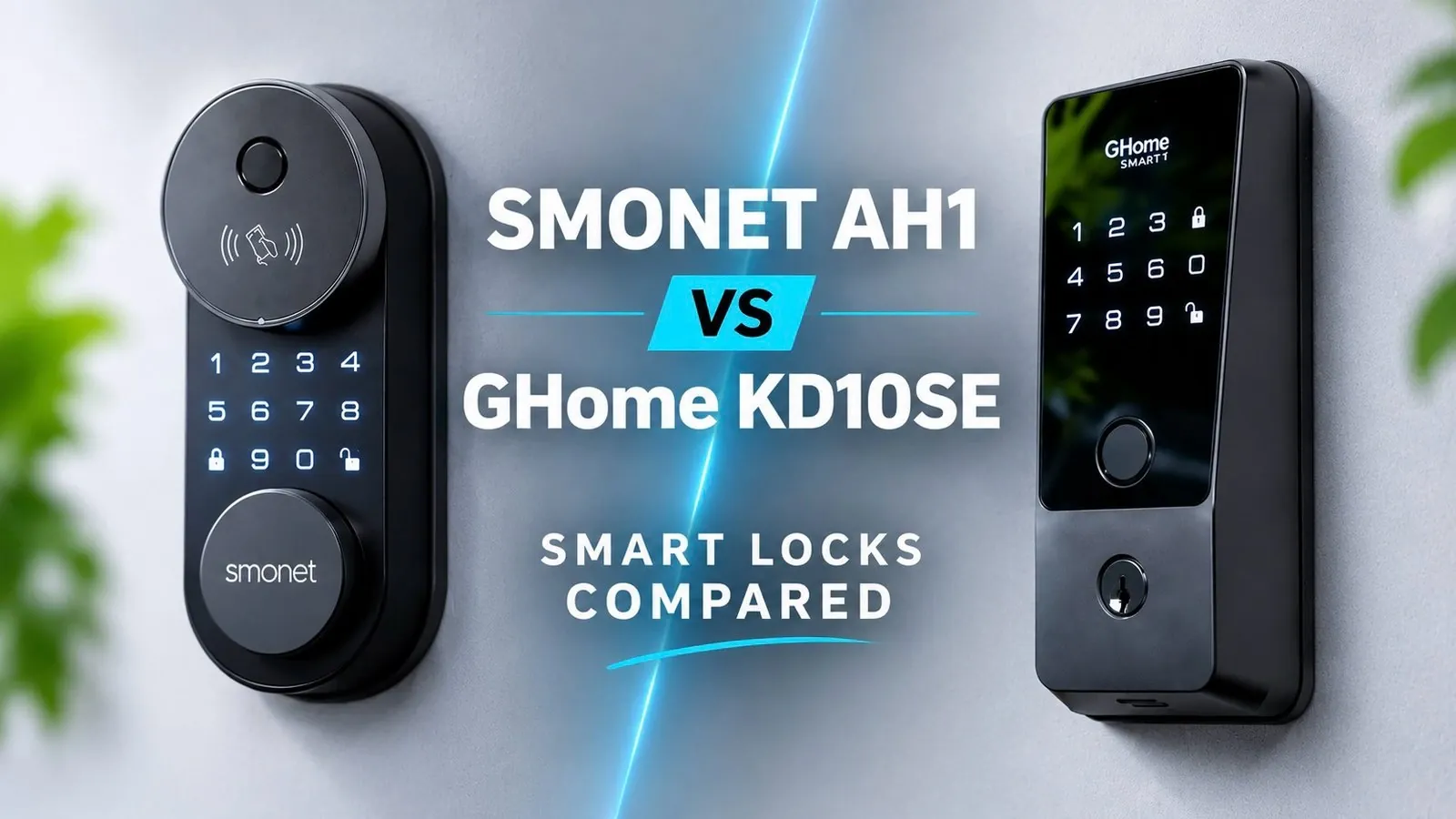
Smart locks like the Smonet AH1 and GHome KD10SE2 offer compelling features at the competitive price of $119, but their differences cater to distinct user preferences. The Smonet AH1 emphasizes versatility with access options like fingerprint, keypad, proximity key cards, and Apple Home Key, making it especially appealing for Apple users. Meanwhile, the GHome KD10SE2 focuses on practicality, featuring a rechargeable 10,000 mAh battery and easy installation, according to Smart Home 101.
Explore how these locks compare in key areas, from build quality and security features to smart integrations and maintenance. You’ll gain insight into the Smonet AH1’s premium design and multi-app setup, as well as the GHome KD10SE2’s robust app functionality and anti-peep keypad. This breakdown will help you decide which smart lock aligns best with your priorities and daily needs.
Comparing the Smonet AH1 and GHome KD10SE2 Smart Locks
TL;DR Key Takeaways :
- The Smonet AH1 features a premium zinc alloy build, has passed a 72-hour salt spray test, and was tested for 400,000 cycles, but it only supports single-cylinder doors and lacks compatibility with mortise locks.
- The GHome KD10SE2 offers a practical design with a rechargeable 10,000 mAh battery, USB-C charging, and easy installation without additional drilling, but its design is less aesthetic compared to the Smonet AH1.
- The Smonet AH1 supports Apple Home Key, allowing unlocking with an iPhone or Apple Watch, but its functionality is split between two apps, which may require adaptation and has untested long-term reliability for Home Key.
- The GHome KD10SE2 lacks Apple Home Key but provides a robust app with features like access history logs, temporary passcode generation, and power-saving mode, making it ideal for users prioritizing monitoring and customization.
- The Smonet AH1 uses replaceable batteries with a Type-C emergency charging port, while the GHome KD10SE2’s rechargeable battery lasts up to 10 months, reducing maintenance and waste.
If you’re considering a smart lock with a budget of $119, the Smonet AH1 and GHome KD10SE2 are two notable options. Both include fingerprint scanners, keypads, built-in Wi-Fi, and physical key backups, but they cater to different priorities. Here’s a detailed comparison to help you decide which lock suits your needs.
Design and Build Quality
The Smonet AH1 stands out with its premium zinc alloy construction. It has passed a rigorous 72-hour salt spray test and was tested for 400,000 cycles, according to the manufacturer. Its modern design earned the American Good Design Award in 2025. However, it is only compatible with single-cylinder doors between 1 and 3/8 to 2 and 1/8 inches thick and does not support mortise locks.
The GHome KD10SE2 focuses on practicality. It fits standard door cutouts without requiring additional drilling, simplifying installation. While its design is less aesthetic, it offers functional advantages, such as a removable 10,000 mAh battery rechargeable via USB-C without detaching the lock. The package includes a key fob, screws, keys, and a deadbolt, covering all setup and usage needs.

Check out more relevant guides from our extensive collection on smart home technology you might find useful.
- Apple’s Leaked Home Hub Looks Ready to Rival the Echo Show
- IKEA Fixes BILRESA Battery Life with Quiet Hardware Revisions
- Apple Event Confirmed for October 13: New Smart Display, Apple TV 4K, and More
- Inside Apple’s Massive, Secretive Smart Home Takeover
- Apple’s Smart Home Revolution Is Finally Here: Here’s What’s Changing
Access Options
The Smonet AH1 offers the most access methods: fingerprint, keypad, proximity key cards, mechanical keys, and Apple Home Key. Proximity key cards allow unlocking with a single tap. During testing, the fingerprint setup required a second attempt initially but worked smoothly afterward. The auto-lock feature is present but may need user adjustments, as it did not relock immediately during testing.
The GHome KD10SE2 provides access via fingerprint, passcode, app, and physical key. Its fingerprint reader is responsive, unlocking in about a second, and the backlit keypad ensures usability in low light. However, the keypad’s tight spacing caused occasional input errors during testing. Unlike the Smonet, it lacks key cards, which could be inconvenient for users with guests or children.
Smart Features and Ecosystem Integration
The Smonet AH1 is particularly appealing to Apple users due to its Apple Home Key integration, allowing the lock to open when an iPhone or Apple Watch is nearby, even with a depleted battery. It also supports Apple Home, Alexa, and Google Assistant, though remote control requires a HomePod or Apple TV. Siri can unlock the door but requires Face ID, Touch ID, or a passcode for security.
However, its functionality is split between two apps: Apple Home for Home Key and Siri, and Smonet Security for fingerprint management and alerts. This dual-app setup may take time to adapt to, and the long-term reliability of Home Key remains untested with extended daily use.
The GHome KD10SE2 lacks Apple Home Key but compensates with a robust app offering detailed control. Features include charging and lock status, access history logs, temporary passcode generation, scheduling, auto-lock delay, and a power-saving mode. These features make it a strong choice for users prioritizing monitoring and customization.
Battery and Maintenance
Battery life and maintenance differ significantly between these locks. The Smonet AH1 uses eight replaceable batteries and includes a Type-C emergency charging port as a backup. While functional, this setup may lead to more frequent battery replacements.
The GHome KD10SE2 features a rechargeable 10,000 mAh battery rated for up to 10 months of use. Low battery alerts appear on both the lock and the app, and the battery can be recharged without removing the lock. This design reduces maintenance and waste, offering a more convenient solution for users who prefer to avoid frequent battery changes.
Security Features
Both locks emphasize security but take different approaches. The Smonet AH1 features a durable build with 2,000 Newtons of pressure resistance. It also comes with a 30-day return policy, a 12-month warranty, and lifetime support.
The GHome KD10SE2 enhances security with anti-pry protection, a temporary lockout after repeated incorrect code entries, and an anti-peep code function. The anti-peep feature allows entering random digits before or after the actual code, preventing onlookers from deducing the correct combination. This feature proved practical during testing.
Which Lock Should You Choose?
Your choice between the Smonet AH1 and GHome KD10SE2 depends on your priorities. The Smonet AH1 is an excellent option for Apple users, offering integration with Apple Home Key and multiple access methods. However, its reliance on replaceable batteries and the need to manage two apps may be less convenient for some.
The GHome KD10SE2 is better suited for those valuing reliability and low maintenance. Its rechargeable battery, detailed app functionality, and practical security features make it a strong contender for everyday use. While it lacks Apple Home Key support, this may not matter to users outside the Apple ecosystem.
Both locks offer excellent value at the same price, but their distinct features cater to different needs. Apple users may prefer the Smonet AH1, while those seeking a hassle-free, reliable solution are likely to favor the GHome KD10SE2.
Media Credit: Smart Home 101
Disclosure: Some of our articles include affiliate links. If you buy something through one of these links, Geeky Gadgets may earn an affiliate commission. Learn about our Disclosure Policy.
