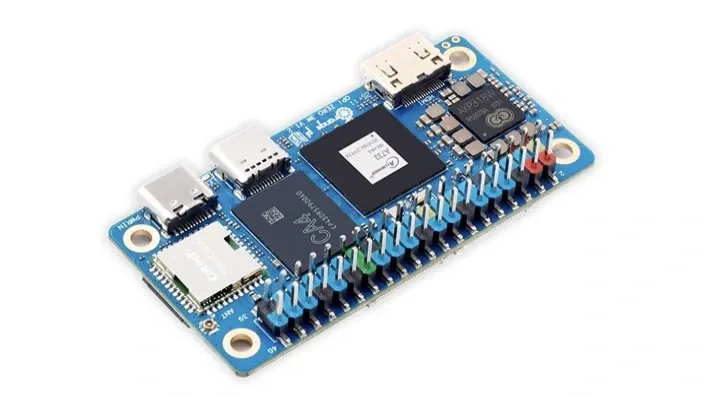
The Orange Pi Zero 3W stands out as a compact single-board computer (SBC) designed for makers and developers who prioritize performance in a small form factor. Powered by the Allwinner A733 SoC, it combines two ARM Cortex-A76 cores for demanding tasks with six ARM Cortex-A55 cores for energy-efficient operations. This octa-core architecture is complemented by a PowerVR BXM464 GPU, allowing 4K video playback and hardware acceleration for specific workloads. As highlighted by Explaining Computers, the board’s hardware capabilities are further enhanced by its active cooling system, which ensures stable performance during intensive use. However, its software ecosystem, including limited GPU hardware acceleration and less polished operating systems, presents challenges that may require additional effort from users.
Explore how the Orange Pi Zero 3W compares to alternatives like the Raspberry Pi Zero and QB A7S, particularly in areas such as thermal management, connectivity and storage options. Gain insight into its wireless capabilities, including Wi-Fi 6 and Bluetooth 5.4 and its support for PCIe NVMe SSDs and GPIO expansion. You’ll also learn about its practical applications, from IoT development to lightweight computing and the trade-offs involved in navigating its software limitations. This analysis provides a balanced look at the board’s strengths and constraints, helping you determine if it’s the right fit for your next project.
Key Features and Hardware Highlights
TL;DR Key Takeaways :
- The Orange Pi Zero 3W is a compact, octa-core ARM-based SBC featuring the Allwinner A733 SoC, with a mix of high-performance and energy-efficient cores and a PowerVR BXM464 GPU for 4K video playback.
- It offers versatile connectivity options, including Wi-Fi 6, Bluetooth 5.4, USB Type-C, Mini HDMI, PCIe for NVMe SSDs and a 40-pin GPIO header, making it suitable for IoT, media playback and lightweight computing.
- Thermal management is a key strength, with an active cooling system making sure stable performance under load, while power consumption ranges from 3.1 W (idle) to 6.6 W (full load).
- Despite its robust hardware, the board’s software ecosystem is less polished, with limited GPU hardware acceleration, less comprehensive documentation and operating systems that lag behind competitors like Raspberry Pi.
- Pricing and availability are affected by DDR5 supply chain issues, but the board remains a strong contender for developers and makers willing to navigate its software challenges.
At the heart of the Orange Pi Zero 3W lies the Allwinner A733 SoC, a processor designed to balance performance and efficiency. The SoC integrates:
- Two ARM Cortex-A76 cores clocked at up to 2 GHz for high-performance tasks.
- Six ARM Cortex-A55 cores running at up to 1.8 GHz for energy-efficient operations.
This configuration ensures the board is capable of handling a wide range of applications, from IoT projects to lightweight desktop computing. Complementing the main processor is an Alibaba RISC-V Zante E902 microcontroller, which manages low-power tasks and system operations.
For graphics, the PowerVR BXM464 GPU supports 4K video playback and hardware acceleration for specific workloads, making it suitable for multimedia applications. The board is available in three DDR5 RAM configurations—4 GB, 6 GB and 12 GB, though higher-capacity models (8 GB and 16 GB) remain unavailable due to ongoing DDR5 supply constraints.
Connectivity: Versatility for Diverse Applications
The Orange Pi Zero 3W is equipped with a wide array of connectivity options, making it adaptable for various projects and use cases:
- Wireless: Wi-Fi 6 and Bluetooth 5.4 provide fast and reliable wireless communication, ideal for IoT and smart home applications.
- Wired: USB Type-C ports support power delivery, data transfer and DisplayPort output at up to 4K 60 Hz. Additionally, a Mini HDMI port offers another 4K 60 Hz display option.
- Storage: The board supports multiple storage options, including a PCIe 3.0 single-lane interface for NVMe SSDs, a MicroSD card slot (up to 128 GB), and pads for UFS or eMMC storage modules.
- Expansion: A 40-pin GPIO header enables interfacing with sensors, peripherals and other hardware. Two MIPI CSI connectors and one MIPI DSI connector further enhance its compatibility with cameras and displays.
These features make the board a versatile choice for tasks such as IoT development, media playback and lightweight computing.
Advance your skills in Orange Pi by reading more of our detailed content.
- Orange Pi 5 Pro vs Raspberry Pi 5 mini PCs compared
- Raspberry Pi Zero vs Radxa Zero vs Orange Pi Zero SBC mini PCs compared
- Orange Pi 3B M.2 ARM single board computer hands-on
- New Orange Pi 5 Pro ARM mini PC with 32GB
- Why the Raspberry Pi 6 is Delayed Until 2028 and What It Means for You
- Orange Pi 6 Plus eGPU Setup Runs Blender to Cyberpunk Smoothly
- Raspberry Pi 5 vs Orange Pi 5 Pro vs Radxa Rock 5C : The Ultimate SBC Showdown
- $19 Orange Pi Zero 2W mini PC features and specifications explored
- Orange Pi 5 mini PC hand on review
- Orange Pi 5 Max Single Board Computer (SBC) from $95
Cooling and Power Efficiency
Thermal management is a standout feature of the Orange Pi Zero 3W. The board includes an active cooling system comprising a heat sink and fan, making sure stable performance even during demanding workloads. Power consumption ranges from 3.1 W at idle to 6.6 W under full load, with temperatures remaining around 50°C during stress tests. This efficient cooling system minimizes thermal throttling, allowing the board to maintain consistent performance under heavy use.
Performance: A Strong Contender
The Orange Pi Zero 3W delivers competitive performance, rivaling SBCs like the Raspberry Pi 4 and QB A7S. Its octa-core CPU efficiently handles intensive tasks, while the active cooling system ensures sustained performance without overheating. Storage performance is also impressive, with NVMe SSDs achieving speeds of up to 581 MB/s via the PCIe interface.
However, the board’s potential is somewhat limited by its software ecosystem. While it supports Ubuntu 22.04 (XFCE desktop) and Debian 11 (Bullseye), GPU hardware acceleration is not fully implemented. This limitation can impact graphics-heavy applications, making it less suitable for workloads requiring advanced graphical performance.
Software and Usability: A Mixed Experience
The Orange Pi Zero 3W is designed to function as a compact desktop computer, complete with pre-installed applications and configuration tools. However, its software support lags behind more established SBCs, presenting challenges for users. Key issues include:
- Operating systems that are less polished and updated compared to competitors.
- A lack of comprehensive documentation, which can complicate setup and troubleshooting for less experienced users.
Despite these drawbacks, the board remains a viable option for developers and makers who are comfortable navigating software constraints. Its robust hardware capabilities make it suitable for a variety of applications, including IoT development, media playback and lightweight computing.
How It Stacks Up Against Alternatives
When compared to its competitors, the Orange Pi Zero 3W offers a mix of strengths and weaknesses:
- Raspberry Pi Zero: While slightly larger (65×32 mm vs. 65×30 mm), the Orange Pi Zero 3W delivers significantly better performance, enhanced cooling and more versatile connectivity options.
- QB A7S: The Orange Pi Zero 3W outperforms the QB A7S in CPU performance and thermal management. However, the absence of Ethernet connectivity may be a drawback for users requiring wired network access.
These comparisons highlight the board’s strengths in performance and cooling while also emphasizing its limitations in connectivity and software support.
Pricing and Availability
The Orange Pi Zero 3W is available in multiple RAM configurations, with pricing varying depending on the retailer. However, supply chain issues, particularly with DDR5 memory, have impacted the availability of higher-capacity models. Prospective buyers may need to explore multiple sources to find the configuration that best suits their needs.
A Compact and Capable SBC with Trade-Offs
The Orange Pi Zero 3W is a compelling choice for those seeking a compact, high-performance SBC. Its octa-core ARM architecture, versatile connectivity options and effective cooling system make it a strong contender in the zero-form-factor SBC market. However, its limited software support and documentation may pose challenges, particularly for less experienced users.
For developers and makers willing to invest time in overcoming its software limitations, the Orange Pi Zero 3W offers impressive hardware capabilities in a compact package. Whether you’re building IoT devices, experimenting with media playback, or exploring lightweight computing, this board provides a versatile platform for a wide range of applications.
Media Credit: ExplainingComputers
Disclosure: Some of our articles include affiliate links. If you buy something through one of these links, Geeky Gadgets may earn an affiliate commission. Learn about our Disclosure Policy.
