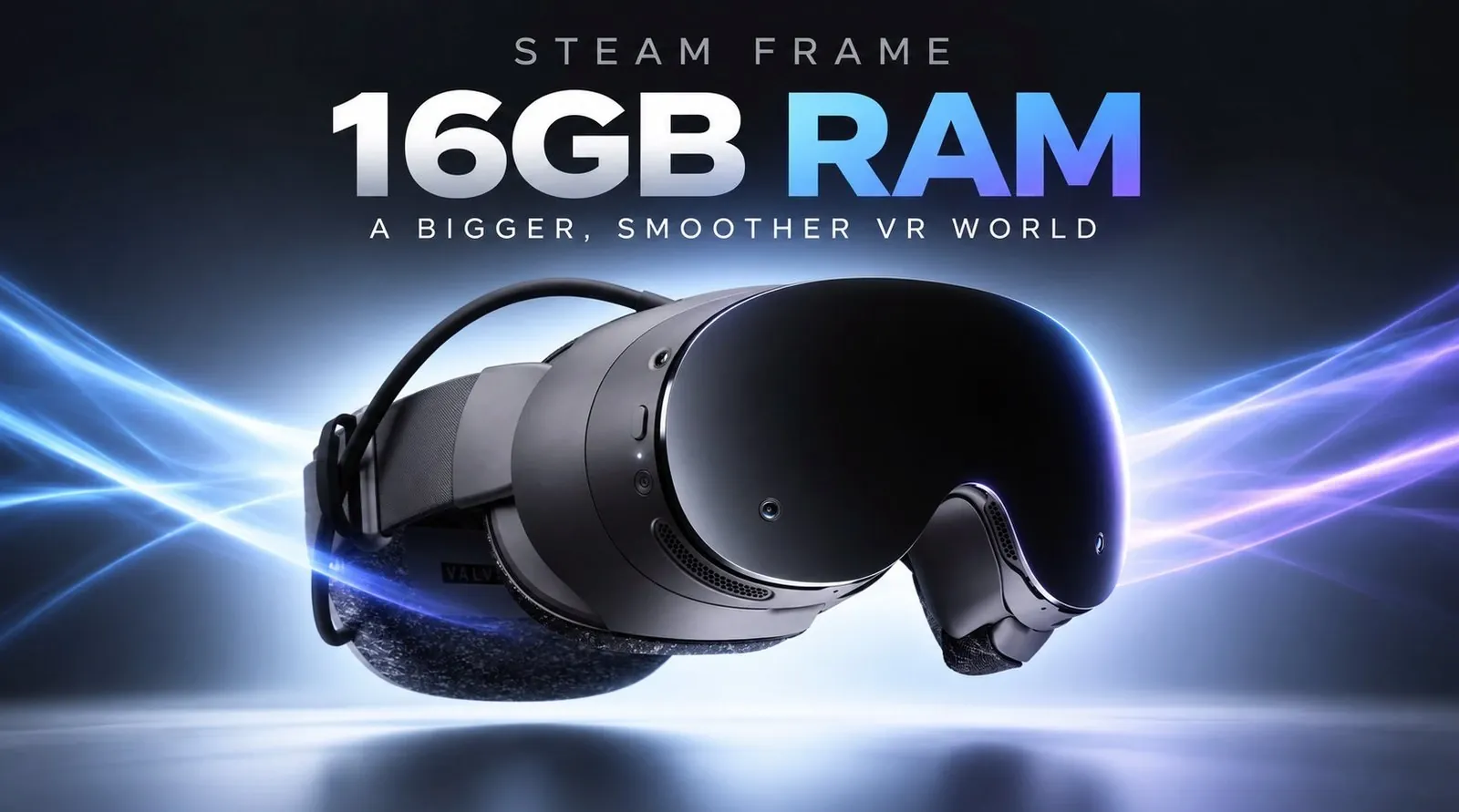
Valve’s decision to equip the Steam Frame VR headset with 16GB of RAM has sparked debate, with some questioning whether this amount of memory is excessive for a VR device. However, as Joshua Keith explains, this design choice is far from arbitrary. The substantial RAM allocation enhances multitasking capabilities, such as running multiple applications simultaneously and supports advanced features like wireless PCVR gaming. Coupled with a Linux-based operating system, the Steam Frame is positioned to handle both current VR demands and future advancements, making it a versatile platform for developers and power users alike.
In this breakdown, you’ll explore how the Steam Frame’s memory capacity enables smoother multitasking, such as streaming gameplay while browsing or watching videos. You’ll also gain insight into its balance between standalone and PCVR functionality, as well as the benefits of its Linux-based operating system for customization and development. Whether you’re curious about its performance trade-offs or its potential for future-proofing, this guide offers a comprehensive look at what sets the Steam Frame apart.
Why 16GB RAM is Essential for the Steam Frame
TL;DR Key Takeaways :
- The Steam Frame VR headset includes 16GB of RAM, allowing advanced multitasking, high-quality streaming and future-proofing for evolving VR applications.
- It operates on a Linux-based OS, offering extensive customization, developer tools and compatibility with diverse software ecosystems.
- Designed primarily as a wireless PCVR device, the Steam Frame balances standalone functionality with superior PCVR performance, catering to versatile gaming needs.
- Challenges like limited battery life are being addressed with innovations such as a hot-swappable battery strap and ongoing software updates to enhance usability.
- Valve’s strategic focus on versatility, multitasking and adaptability positions the Steam Frame as a forward-looking platform for next-generation VR experiences.
The Steam Frame’s 16GB of RAM is not merely about achieving impressive technical specifications, it’s about unlocking new possibilities for users. This memory capacity allows you to perform demanding tasks that go beyond basic VR gaming. For instance, you can seamlessly run multiple applications, such as streaming gameplay while browsing the web or watching videos on platforms like YouTube. This multitasking capability ensures a smoother and more efficient experience compared to devices with lower memory capacities, such as the Meta Quest 3.
Additionally, the extra RAM supports higher-quality audio and video streaming, which is particularly important for users who prioritize wireless PCVR gaming. By allowing these advanced functionalities, the Steam Frame delivers a premium experience that justifies its higher price point. The inclusion of 16GB RAM ensures that the device is not only capable of handling today’s VR demands but is also prepared to accommodate more complex applications in the future.
Standalone Gaming vs Streaming: Finding the Right Balance
A central point of discussion surrounding the Steam Frame is its balance between standalone gaming and streaming capabilities. Critics argue that its standalone gaming experience does not match the optimization seen in devices like the Quest series, which are designed primarily for standalone use. However, Valve’s design philosophy is clear: the Steam Frame is primarily a wireless PCVR headset, with standalone functionality serving as a secondary feature.
This approach provides you with the flexibility to enjoy both standalone and PCVR gaming. While the standalone library may be more limited compared to competitors, the device’s ability to stream high-quality PC games wirelessly ensures it remains a strong contender in the VR market. Essentially, the Steam Frame offers a versatile experience that caters to users who value the ability to switch between standalone and PCVR gaming seamlessly.

Find more information on Steam Frame by browsing our extensive range of articles, guides and tutorials.
- 10 Reasons You Should Buy the Valve Steam Frame VR Headset at Launch
- Valve Confirms Steam Deck 2 with Unreal Engine 5 Support
- Steam Frame VR Unboxing Reveals PC Wireless Streaming Adapter
- Steam Frame Drops Frames Running Half-Life Alyx Without a PC
- Steam Frame VR Headset Costs $1,059 with 6GHz PC Streaming
- Valve Steam Frame VR Headset Costs $1,059 for PC Players
- Valve Steam Frame $1,060 VR Headset Hampered by 72 Games
- Pimax Crystal Pro vs Valve Steam Frame: New VR Headsets Compared
- SteamOS Beta Update Fixes CPU Degradation and Wi-Fi Bugs
- 10 Things to Do First with Your New Valve Stream Frame VR Headset
The Advantages of a Linux-Based Operating System
One of the Steam Frame’s most distinctive features is its full Linux-based operating system, which sets it apart from other VR headsets. This operating system significantly expands the device’s capabilities, allowing advanced multitasking and compatibility with a wide range of applications. For developers and tech-savvy users, tools like SSH, ADB and RDP are invaluable, allowing you to debug, develop and modify software directly on the headset.
The Linux-based OS also ensures compatibility with diverse software ecosystems, making the Steam Frame an attractive option for developers, content creators and power users. Whether you’re building applications, streaming content, or exploring creative projects, this operating system provides the flexibility and functionality needed to support a variety of use cases. Its open nature enables users to customize and optimize their experience in ways that are not possible with more closed systems.
How the Steam Frame Stands Out Among Competitors
When compared to other VR headsets, the Steam Frame occupies a unique position in the market. Unlike the Quest series, which emphasizes standalone gaming, the Steam Frame is designed as a wireless PCVR-first device. This focus makes it more powerful for streaming and multitasking, though it may not appeal to users seeking a standalone-first experience.
In standalone mode, the Steam Frame’s hardware outperforms the Quest series, offering better performance and higher-quality visuals. However, its software library and optimization for standalone gaming are less developed. This trade-off reflects Valve’s strategic decision to prioritize a high-quality PCVR experience while offering standalone functionality as a supplementary feature. For users who value versatility and performance, the Steam Frame provides a compelling alternative to other VR devices.
Addressing Challenges and Preparing for the Future
Despite its many strengths, the Steam Frame is not without its challenges. One notable limitation is its battery life, which may fall short for users engaging in extended gaming sessions. However, Valve is actively addressing this issue by developing a hot-swappable battery strap. This innovative feature will allow you to replace the battery mid-session without interrupting gameplay, making sure longer and more enjoyable gaming experiences.
Additionally, ongoing software updates are expected to enhance the device’s performance and usability over time. These updates will likely address some of the current limitations, making sure the Steam Frame remains competitive in the rapidly evolving VR landscape. By continuously improving the device through both hardware and software advancements, Valve is demonstrating its commitment to delivering a product that meets the needs of its users.
Future-Proofing Through Strategic Design
The inclusion of 16GB RAM and a Linux-based operating system positions the Steam Frame as a future-proof device. As VR technology continues to advance, these features will enable the headset to adapt to new applications and user demands. Whether it’s supporting more complex software, allowing advanced development tools, or enhancing streaming capabilities, the Steam Frame is designed to remain relevant for years to come.
By focusing on versatility, multitasking and wireless PCVR performance, Valve has created a device that appeals to a wide range of users. While it may not be the ideal choice for standalone gaming enthusiasts, its advanced features and potential for future improvements ensure it delivers exceptional value. The Steam Frame is not just a VR headset, it’s a platform built to evolve alongside the next generation of VR technology.
Media Credit: Joshua Keith
Disclosure: Some of our articles include affiliate links. If you buy something through one of these links, Geeky Gadgets may earn an affiliate commission. Learn about our Disclosure Policy.
