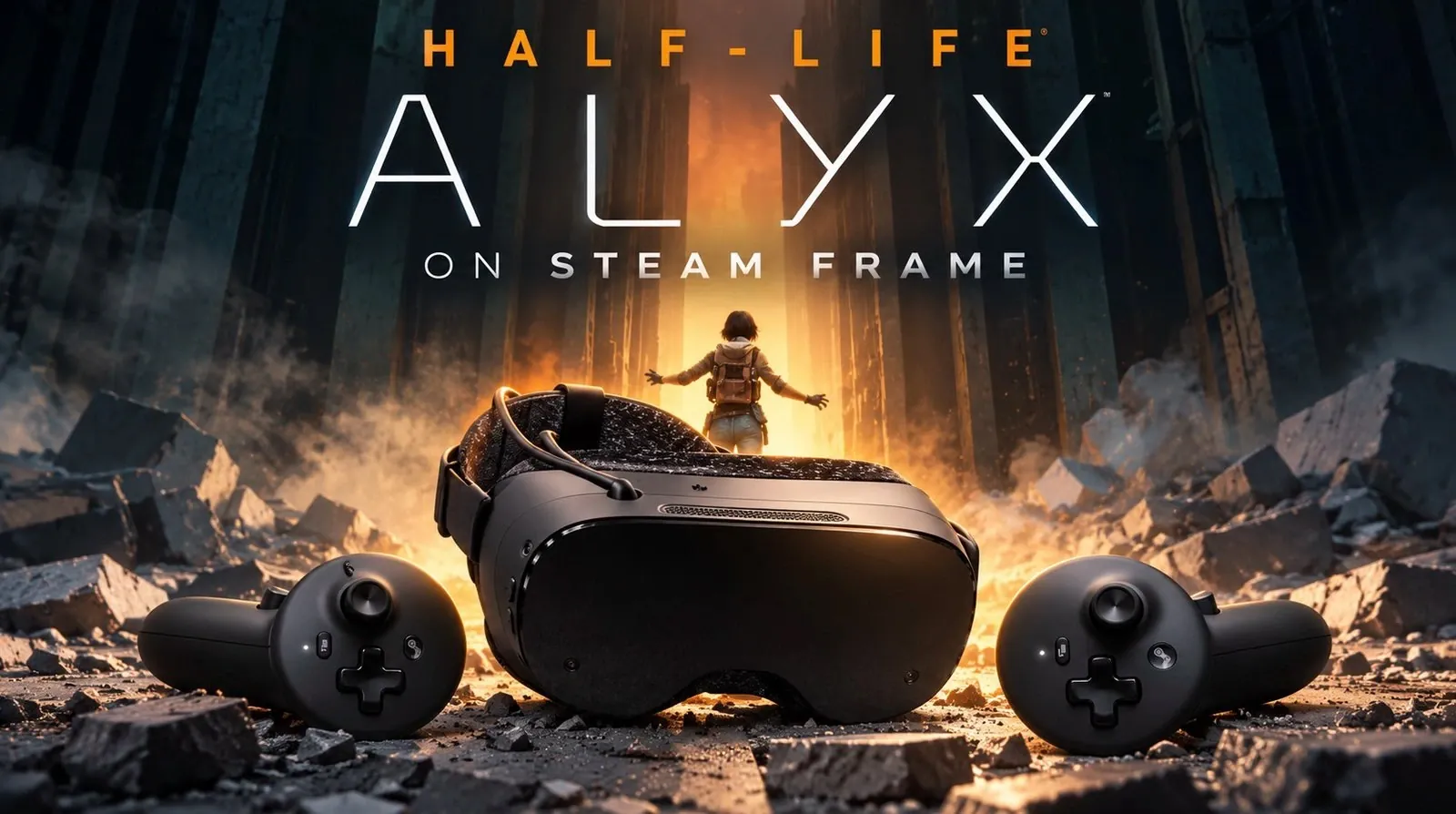
Cas and Chary XR have had hands-on experience playing Half-Life Alyx on a standalone Steam Frame VR headset without kit connected to a PC. There findings focus on the technical hurdles of running a PC-based VR game without a computer and their analysis revealed specific issues. Such as high latency, frame rate instability and audio synchronization problems, all of which affected both gameplay and streaming. These findings underscore the performance challenges faced by standalone hardware when attempting to support demanding VR titles.
Explore the compromises standalone devices make when running resource-heavy games like Half-Life Alyx. Gain insight into the compatibility issues that arise with portable VR hardware and how these limitations impact live streaming. This explainer also provide more insights into the broader considerations for players weighing portability against performance in virtual reality gaming.
Technical Hurdles in VR Live Streaming
TL;DR Key Takeaways :
- Standalone VR devices like the Steam Frame face significant performance challenges, including high latency, frame drops and audio desynchronization, when running high-end games like Half-Life Alyx.
- Standalone VR systems struggle to meet the computational demands of advanced VR games, highlighting a gap between their hardware capabilities and the requirements of PC-based systems.
- Compatibility issues arise because many VR games are optimized for PC hardware, leading to performance degradation when played on standalone devices.
- PC-free gaming offers convenience and portability but introduces trade-offs such as limited processing power, streaming difficulties and restricted game libraries.
- Future advancements in standalone VR technology are needed to improve processing power, compatibility and streaming capabilities, bridging the gap between accessibility and high-performance gaming.
Streaming VR games without a traditional PC setup introduces a unique set of challenges. In the live stream involving the Steam Frame, an attempt to run Half-Life Alyx revealed several performance issues that significantly impacted both gameplay and the broadcast quality. These included:
- High latency, which disrupted the responsiveness of gameplay and made interactions feel sluggish.
- Frequent frame drops, reducing the visual fluidity and causing noticeable stuttering.
- Audio desynchronization, breaking the immersive experience for both the player and the audience.
These issues stem from the demanding nature of high-end VR games. Titles like Half-Life Alyx require substantial processing power to deliver real-time rendering, smooth visuals and responsive controls. While the Steam Frame is designed as a standalone device, its hardware struggled to meet the computational demands of such a resource-intensive game. This highlights a critical gap between the capabilities of standalone VR systems and the requirements of advanced VR gaming.
Compatibility Challenges: Steam Frame vs PC-Based Systems
Standalone VR devices like the Steam Frame are designed to simplify gaming by removing the need for a PC. However, this convenience often comes at the expense of compatibility, particularly for games optimized for PC-based systems. Half-Life Alyx serves as a prime example of this issue. The game relies on precise rendering and real-time responsiveness, which the Steam Frame’s hardware was unable to fully support.
This limitation arises from the way VR games are developed. Many titles are tailored to specific hardware configurations to ensure optimal performance. When these games are run on alternative platforms, compatibility issues can emerge, leading to performance degradation. The Steam Frame’s inability to handle Half-Life Alyx effectively underscores the importance of hardware-software synergy in VR gaming. Without this alignment, standalone devices may struggle to deliver the seamless experiences that players expect.

Browse through more resources below from our in-depth content covering more areas on Steam Frame.
- 10 Reasons You Should Buy the Valve Steam Frame VR Headset at Launch
- Valve Confirms Steam Deck 2 with Unreal Engine 5 Support
- Steam Frame VR Unboxing Reveals PC Wireless Streaming Adapter
- Steam Frame VR Headset Costs $1,059 with 6GHz PC Streaming
- Valve Steam Frame $1,060 VR Headset Hampered by 72 Games
- Valve Hits 760,000 Yearly Steam Machine Sales Amid RAM Shortage
- Valve Revamps the Steam Machine UI with New Verification Metrics
- Steam Machine Performance Tested: FSR 3 Upscaling Smooths Demanding Gameplay
- SteamOS Beta Update Fixes CPU Degradation and Wi-Fi Bugs
- Thinking About Installing Windows on Your Steam Machine? Read This First
The Broader Implications of PC-Free Gaming
The concept of PC-free gaming is appealing due to its promise of accessibility and convenience. Standalone devices like the Steam Frame eliminate the need for bulky setups, offering portability and ease of use. However, this convenience introduces several trade-offs that can limit the overall experience:
- Performance limitations: Standalone devices must balance portability with processing power, which often restricts their ability to handle graphically intensive games.
- Streaming challenges: Live streaming VR content requires robust hardware, stable network connectivity and efficient encoding. These demands can overwhelm the capabilities of standalone systems.
- Game library restrictions: Many VR games are optimized for PC-based systems, reducing the selection of titles that can run smoothly on standalone devices.
The live stream of Half-Life Alyx on the Steam Frame highlighted these challenges. While the idea of PC-free gaming is promising, the current generation of standalone VR technology struggles to meet the demands of high-end gaming and live broadcasting. This underscores the need for further innovation to bridge the gap between convenience and performance.
The Path Forward for VR Gaming and Streaming
The technical difficulties encountered during the live stream illustrate the ongoing need for advancements in VR hardware and software. Standalone devices like the Steam Frame represent a significant step toward making VR gaming more accessible, but their limitations reveal the gap between current capabilities and the expectations of high-performance gaming.
For players and streamers, understanding the technical requirements of VR gaming is crucial. High-end games like Half-Life Alyx demand robust hardware to deliver the immersive experiences they promise. As the VR industry continues to evolve, future innovations in standalone technology could address these limitations, allowing a more seamless and engaging gaming experience. Improvements in processing power, compatibility and streaming capabilities will be essential to realizing the full potential of PC-free VR gaming.
Media Credit: Cas and Chary XR
Disclosure: Some of our articles include affiliate links. If you buy something through one of these links, Geeky Gadgets may earn an affiliate commission. Learn about our Disclosure Policy.
