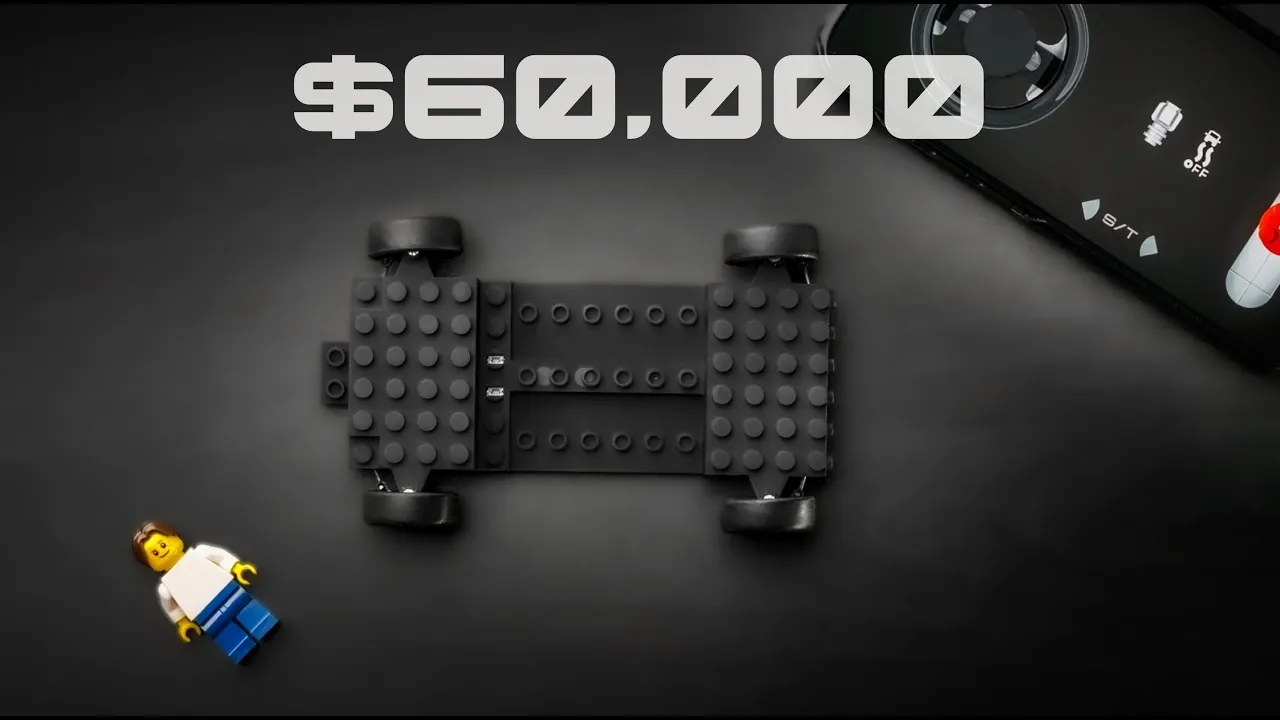
David Elisson, the creator behind the YouTube channel Bricks, Blocks And MOCs, spent five years and $60,000 designing a third-party LEGO-compatible RC car chassis. This chassis allows LEGO builders to create fully functional, minifigure-scale RC vehicles by integrating radio-controlled movement. One of the most significant challenges was designing a compact four-wheel-drive system that worked within LEGO’s structural constraints, requiring meticulous adjustments and innovative problem-solving.
Explore the modular design features of the chassis and how its smartphone-controlled functionality enhances usability. Learn about the challenges David faced during prototyping and funding, as well as the collaborative efforts that contributed to the project’s success. This guide offers a comprehensive look at the technical and creative processes involved in bringing the chassis to life.
From Childhood Fascination to a Bold Idea
TL;DR Key Takeaways :
- David Elisson spent five years and $60,000 developing a modular, LEGO-compatible RC car chassis, combining his passion for LEGO and RC cars.
- He overcame significant technical challenges, including designing a compact four-wheel-drive system and creating a smartphone-controlled app.
- David built a community and brand through his YouTube channel “Bricks, Blocks and MOCs,” which documented his journey and engaged LEGO enthusiasts.
- He made personal sacrifices, including leaving university and bootstrapping the project, to retain full control over his vision and product.
- David plans to reinvest profits into further innovation, aiming to inspire creativity and expand possibilities for LEGO enthusiasts worldwide.
David’s fascination with LEGO and RC cars began in his childhood, where he often experimented with combining the two. These early experiments planted the seeds of a lifelong passion. As he grew older, he became increasingly frustrated with the limitations of existing LEGO RC solutions, which lacked the performance, flexibility and customization options he desired. This frustration eventually led to a pivotal moment of inspiration when he built a simple RC drift car using a LEGO body. That experience sparked the idea of creating a dedicated chassis that could seamlessly integrate with LEGO bricks while delivering high performance.
His vision was ambitious: to design a product that would not only function as a high-quality RC chassis but also empower LEGO enthusiasts to bring their creations to life through radio-controlled movement. This idea represented a significant leap forward in merging the worlds of LEGO and RC cars, offering enthusiasts a new way to explore their creativity.
Prototyping During a Pandemic
David began prototyping his innovative chassis during the COVID-19 pandemic, a period when many people found themselves with extra time to dedicate to personal projects. The early versions of the chassis were rudimentary, but they provided critical insights into the technical challenges he needed to address. Each prototype brought him closer to understanding the complexities of integrating RC functionality into a LEGO-compatible design.
To achieve his vision, David had to acquire new skills, including coding and app development, to create a smartphone-controlled system for the chassis. One of the most significant technical hurdles was designing a compact four-wheel-drive system that fit within the constraints of a LEGO-compatible design. This required meticulous engineering and problem-solving. Collaboration with engineers and developers became essential and David relied on online tools to assist remote teamwork during the pandemic. These efforts laid the foundation for the innovative features of the final product.

Deep dive into the latest in LEGO by exploring our other resources and articles.
- LEGO Great Wave of Kanagawa scuplted using 50,000 LEGO pieces
- Largest LEGO Technic Set Ever is a Mercedes Unimog Model
- Worlds Most Expensive Lego Brick Sold For $14,500
- LEGO muscle Batmobile car kit $100
- James May Lego House
- LEGO Drone Kit Capable Of Carrying A GoPro Action Camera (video)
- Belkin And Lego Partner To Create Lego Smartphone Cases
- Awesome Instax Magic LEGO Camera (video)
- Lego And Google Launch Chrome Lego 3D Building App (video)
- Worlds Largest Lego Mario
Building a Community and a Brand
To fund his project and connect with like-minded enthusiasts, David launched the YouTube channel “Bricks, Blocks and MOCs.” Through this platform, he documented his progress, showcased prototypes and engaged with the LEGO community. The channel quickly became a cornerstone of his journey, serving as both a source of motivation and a way to generate income by selling LEGO instructions and kits.
Balancing content creation with product development was no small feat. David had to carefully manage his time to ensure both aspects received the attention they required. His transparency and passion resonated with viewers, helping him build a loyal following and a supportive community. The feedback and encouragement he received from his audience played a crucial role in keeping him motivated during challenging times.
Financial and Personal Sacrifices
Despite the growing popularity of his YouTube channel, funding the project remained a significant challenge. Income from selling instructions and kits was limited and David eventually made the difficult decision to leave university to focus entirely on the chassis. This choice brought financial strain, as he invested his savings into development and production. The decision to prioritize his passion over traditional education was a bold move, reflecting his unwavering commitment to his vision.
David’s determination was tested repeatedly, but he remained steadfast in his pursuit. To secure additional funding, he participated in a startup program that provided financial support and valuable industry connections. These resources proved instrumental in advancing his project, allowing him to refine the chassis design and move closer to bringing his product to market.
Breakthroughs and the Final Product
The startup program marked a turning point in David’s journey. With the funding and contacts he gained, he was able to refine the chassis design and develop a dedicated app for controlling it. The final product was a sleek, modular RC chassis that could be easily integrated with LEGO builds. This design offered enthusiasts a new level of creative freedom, allowing them to build functional, radio-controlled LEGO vehicles with ease.
Rather than seeking external investors, David chose to bootstrap the project to completion. This decision allowed him to retain full control over the product and its future direction, making sure it stayed true to his original vision. The result is a product that reflects not only technical ingenuity but also the passion and dedication of its creator.
What’s Next for David?
David plans to reinvest profits from sales into further production and development. His goal is to continue creating innovative LEGO-compatible products that inspire creativity and expand the possibilities for LEGO enthusiasts. He also aims to grow his YouTube channel, using it as a platform to share new ideas, connect with his community and showcase future projects. By staying true to his vision and engaging with his audience, David hopes to build a lasting legacy in the world of LEGO and RC cars.
A Story of Passion and Perseverance
David Elisson’s journey is a testament to creativity, resilience and the challenges of turning a passion project into a tangible product. Through his dedication, he has not only created a functional RC chassis but also inspired others to pursue their own creative ambitions. His story highlights the power of perseverance, the importance of community and the rewards of following a vision, no matter how ambitious it may seem.
- Five years of development and $60,000 invested.
- Overcame technical challenges, including compact four-wheel-drive design.
- Built a supportive community through his YouTube channel.
- Refused external investors to maintain control of his vision.
- Plans to continue innovating and inspiring LEGO enthusiasts worldwide.
Media Credit: Bricks, Blocks And MOCs
Disclosure: Some of our articles include affiliate links. If you buy something through one of these links, Geeky Gadgets may earn an affiliate commission. Learn about our Disclosure Policy.
