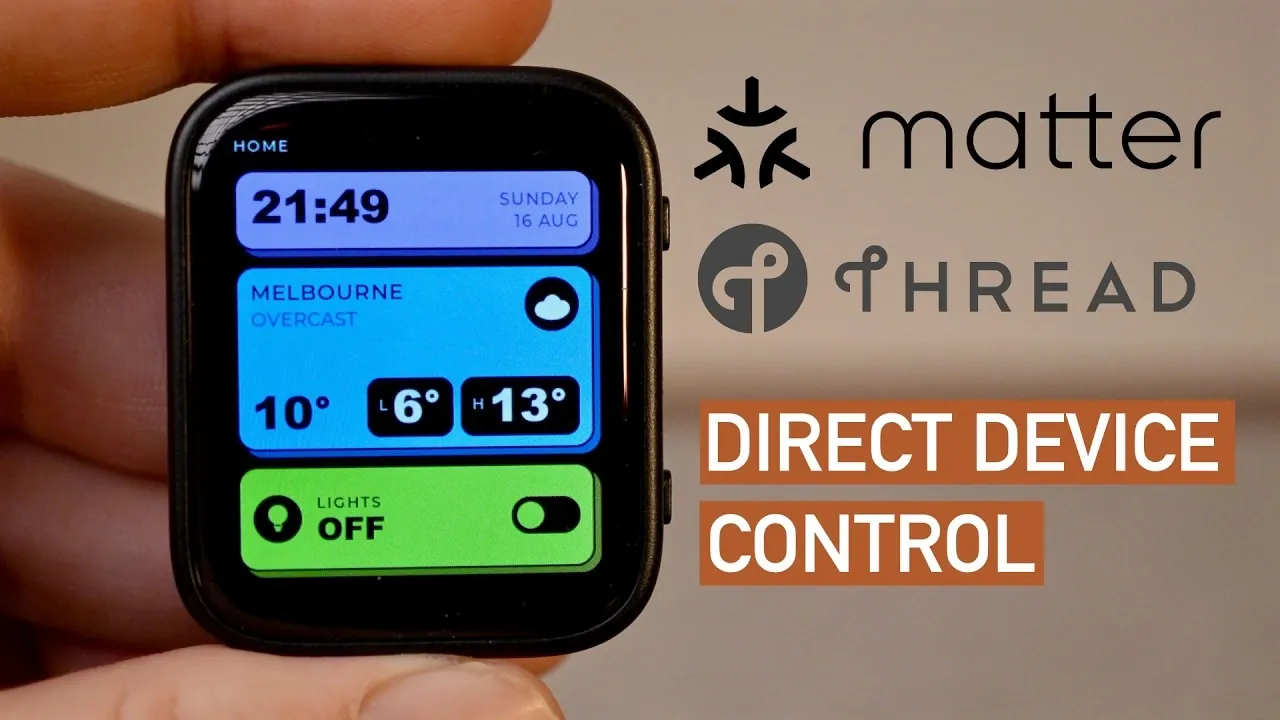
Matter-enabled smart home displays are currently missing from the market, leaving users without a clear way to manage devices in a decentralized manner. In response, Microamp Home developed a custom display using the Matter protocol, built around an ESP32C6 microcontroller and the ESP Matter SDK. This project incorporates features such as lighting controls, climate monitoring and weather updates, while addressing challenges like network stability and power efficiency. By prioritizing direct device communication over centralized hubs, the setup improves both reliability and privacy.
Explore how Thread border routers enhance network performance and how specific hardware choices optimize power usage. Learn about the display’s capabilities, including real-time climate data visualization and its integration with Matter-enabled devices. This explainer also breaks down the technical process behind creating a decentralized smart home system.
Why Build a Decentralized Smart Home Display?
TL;DR Key Takeaways :
- The project introduces a decentralized, Matter-enabled smart home display that prioritizes privacy, reliability and reduced latency by eliminating reliance on centralized hubs or cloud services.
- Key hardware components include an ESP32C6 microcontroller, ESP Matter SDK and LVGL graphics library, making sure seamless integration and compatibility with Matter-enabled devices.
- Core features include lighting controls, climate monitoring, sensor integration and localized weather updates, making it a versatile tool for smart home automation.
- Challenges such as network reliability, time synchronization and power consumption were addressed with targeted solutions, though limitations like device binding issues and high power demands remain.
- Future enhancements aim to expand device compatibility, improve Matter controller support and explore alternative power solutions to enhance portability and functionality.
The motivation behind this project was to create a smart home display that operates independently of cloud services or centralized hubs. By using the Matter protocol, the display communicates directly with devices, making sure a more secure, responsive and private system. Decentralization offers several distinct advantages:
- Enhanced Reliability: Eliminates single points of failure, making sure consistent performance.
- Lower Latency: Enables faster response times for device interactions.
- Improved Privacy: Reduces reliance on cloud-based services, minimizing data exposure.
The design focuses on simplicity, functionality and compatibility with existing Matter-enabled devices, making it a practical and forward-thinking solution for smart homes.
Hardware and Software: Building the Foundation
The display was constructed using a Wave Share development kit, featuring an ESP32C6 microcontroller and an AMOLED display. The combination of hardware and software components was carefully selected to ensure seamless integration and functionality. Key components include:
- ESP32C6 Microcontroller: Provides Thread network support, allowing smooth communication with Matter devices.
- ESP Matter SDK: Facilitates firmware development, making sure full compatibility with the Matter protocol.
- LVGL Graphics Library: Powers the user interface, offering an intuitive and responsive experience.
This setup allowed for a streamlined development process and a final product that is both efficient and reliable.

Uncover more insights about ESP32 in previous articles we have written.
- How an $8 ESP32 S3 Microcontroller Runs a 28.9M Parameter Local LLM
- ESP32-S3 Automation System Packs 16 Relays for Smart Homes
- Optimize ESP32 Battery Life Using 10 Lesser-Known Features
- Build a Sonos Rival with the $30 AUD Louder ESP32 Board
- Arduino Nano ESP32 handheld console with round color display
- T-Display AMOLED Touch ESP32 board binary converter project
- Super Tiny RP2040/ESP32 Board Display for IoT and DIY Projects
- Tiny Holo Cubic display features a 1.3-inch TFT IPS and ESP32 microcontroller
- LilyGo T Watch Keyboard C3 mini computer kit
- DIY $60 Quadruped Robot : Build a Custom Walker That Actually Feels Alive
Core Features and Capabilities
The display was designed to handle essential smart home tasks while remaining adaptable for future upgrades. Its core features include:
- Lighting Controls: Adjust brightness and color temperature for connected lights, providing customizable ambiance.
- Climate Monitoring: Displays real-time temperature and humidity data from compatible sensors.
- Sensor Integration: Monitors contact sensors and water leak detectors, providing timely alerts and notifications.
- Weather Updates: Custom Matter weather devices deliver localized weather information directly to the display.
These features make the display a valuable addition to any smart home, offering both convenience and functionality.
Overcoming Development Challenges
Creating a decentralized smart home display presented several technical challenges. Each was addressed with targeted solutions to ensure the display’s reliability and usability:
- Network Reliability: Thread border routers were deployed to stabilize the network, with tasks distributed across two ESP32 devices to prevent bottlenecks.
- Time Synchronization: A manual time-setting feature was implemented as a backup to address synchronization issues.
- Power Consumption: Optimization efforts reduced energy usage, but the display still requires hardwiring due to its high power demands.
These measures ensured the display remained functional and dependable, even in the face of technical hurdles.
Limitations to Consider
While the display performs effectively, it is not without its limitations. These include:
- Device Binding: Establishing connections can be inconsistent, often requiring multiple attempts or reboots.
- Device Limitations: Current firmware restricts binding to 20 devices, though Matter groups provide a scalable alternative.
- Weather Integration: Combining virtual Matter devices with physical ones can lead to reliability issues.
These limitations highlight areas for improvement and provide a roadmap for future development.
Performance and Usability
Once configured, the display delivers reliable performance with responsive controls and accurate data updates. Key insights into its usability include:
- User-Friendly Interface: The LVGL-powered interface ensures smooth navigation and interaction, making it accessible for all users.
- Power Constraints: Despite optimization, the display’s power demands make it unsuitable for long-term battery operation.
Overall, the display integrates seamlessly with Matter-enabled devices, offering a practical and efficient tool for smart home automation.
Future Enhancements
This project establishes a strong foundation for future development, with several potential enhancements on the horizon:
- Expanding compatibility to include additional devices such as smart locks, thermostats and cameras using the Matter protocol.
- Improving Matter controller support to address time synchronization and device binding challenges.
- Exploring alternative power solutions, such as battery operation, to enhance portability and flexibility.
These improvements could significantly expand the display’s functionality, making it an even more versatile and user-friendly solution for smart home automation.
Decentralized Smart Home Displays: A Step Forward
This project demonstrates the potential of decentralized, Matter-enabled smart home displays. By addressing key challenges and using advanced technologies, it offers a reliable and adaptable solution for modern smart homes. The detailed development process serves as a blueprint for others interested in creating their own displays, paving the way for more resilient and user-centric smart home systems. This innovation underscores the possibilities of decentralized technology, bringing greater control and efficiency to everyday life.
Media Credit: Microamp Home
Disclosure: Some of our articles include affiliate links. If you buy something through one of these links, Geeky Gadgets may earn an affiliate commission. Learn about our Disclosure Policy.
