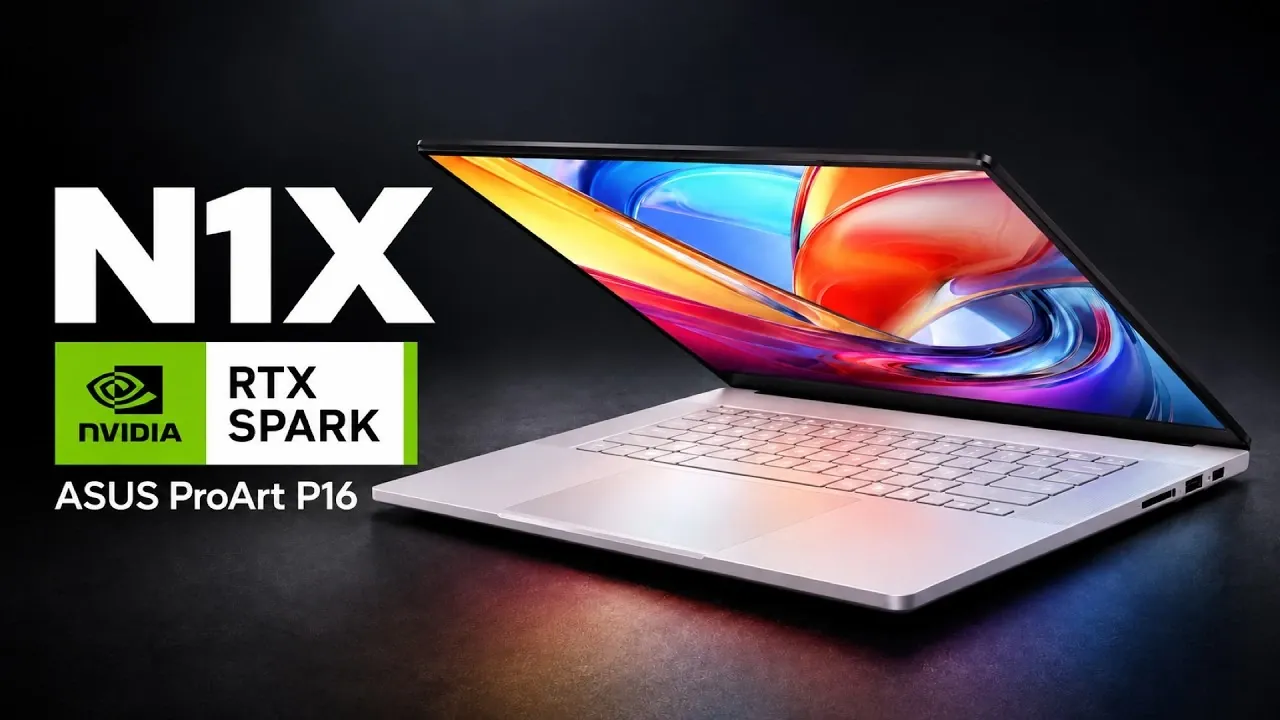
NVIDIA’s N1X Spark platform has made its debut in the ASUS ProArt P16, a laptop designed with creative professionals in mind. In this hands-on review, ETA Prime explores how this device combines a 20-core ARM-based CPU, the Blackwell RTX GPU and 128 GB of unified memory to handle demanding workflows like 3D modeling and AI-driven tasks. The 16-inch OLED touchscreen, with Pantone validation and a 120 Hz refresh rate, further enhances its suitability for precision-focused work such as video editing and graphic design. While the hardware delivers impressive performance, some early-stage software optimization challenges with Windows 11’s Prism translation layer are noted, particularly during gaming and multitasking.
Dive into this detailed breakdown to understand how the ProArt P16 balances portability and power with its lightweight aluminum chassis and robust connectivity options, including USB4 and HDMI 2.1. You’ll also gain insight into its real-world performance benchmarks, showcasing its capabilities in rendering and AI workflows, as well as its battery life and rapid charging features. Whether you’re evaluating its potential for professional use or considering its limitations, this review provides a comprehensive look at what the ProArt P16 has to offer.
ASUS Pro ART P16 Laptop
TL;DR Key Takeaways :
- The ASUS ProArt P16, powered by NVIDIA’s N1X Spark platform, offers innovative hardware with a 20-core ARM-based CPU, Blackwell RTX GPU, 128 GB unified memory and a 2 TB PCIe 4.0 SSD, making it ideal for creative professionals.
- Its 16-inch OLED touchscreen features Pantone validation, HDR support, 120 Hz refresh rate and 1600-nit brightness, making sure stunning visuals and accurate color reproduction for tasks like photo editing and graphic design.
- Comprehensive connectivity options include USB4, HDMI 2.1, Wi-Fi 7 and an SD Express 7.0 card reader, alongside a 99.9 Wh battery and 140-W GaN charger for extended portability and fast charging.
- Performance benchmarks highlight its capabilities in AI workflows, 3D modeling and gaming, though early software optimization challenges, such as CPU scheduling issues, may limit its full potential temporarily.
- ASUS plans to release a compact ProArt P14 variant and address software challenges through updates, further enhancing the ProArt P16’s appeal as a powerful and versatile tool for creators and professionals.
Features Tailored for Creators
The ProArt P16 is equipped with a host of features designed to meet the demanding needs of modern creators. Its standout specifications include:
- A 16-inch OLED touchscreen with Pantone validation, HDR support and a 120 Hz refresh rate for stunning visuals.
- NVIDIA’s N1X Spark platform, featuring a 20-core ARM-based CPU and Blackwell RTX GPU for unparalleled performance.
- 128 GB of unified memory and a 2 TB PCIe 4.0 SSD, making sure seamless multitasking and ample storage.
- Comprehensive connectivity options, including USB4, HDMI 2.1 and Wi-Fi 7 for enhanced versatility.
- Windows 11 compatibility via Microsoft’s Prism translation layer, making sure smooth operation on ARM architecture.
These features collectively position the ProArt P16 as a powerful tool for professionals working in fields such as video editing, 3D modeling and AI-driven workflows.
Display and Build: Precision Meets Portability
The ProArt P16 features a 16-inch OLED touchscreen with a resolution of 3840×2400 pixels, delivering exceptional clarity and detail. The Pantone-validated display ensures accurate color reproduction, making it ideal for tasks requiring precision, such as photo editing and graphic design. With HDR brightness levels reaching up to 1600 nits, the screen produces vibrant visuals, while G-Sync support ensures smooth playback for both videos and games.
Encased in a sleek aluminum chassis, the laptop balances durability with portability. Weighing just 3.9 lbs and measuring 15.9 mm in thickness, it is a practical choice for professionals who frequently work on the move. The build quality reflects ASUS’s commitment to creating a device that is both robust and lightweight, catering to the needs of mobile creators.

Unlock more potential in NVIDIA by reading previous articles we have written.
- Mac Studio M5 Ultra vs NVIDIA DGX Spark: Compared for Local AI
- Valve Adds Initial NVIDIA GPU Driver Support to SteamOS
- Dynamic Routing in NVIDIA Switchboard Boosts Speed By 50%
- Alibaba Panjiu AL128 Replaces NVIDIA with 128 Linked Chips
- NVIDIA NVFP4 Boosts Prompt Processing by 46% on Blackwell
- NVIDIA DGX Spark Price Hits $4,699 Amid Memory Shortages
- Thermaltake Element V NVIDIA Edition Unveiled
- Mac Studio Beats DGX Spark in local AI Tests with 1.2 TB/s Bandwidth
- NVIDIA RTX 4060 Runs Cyberpunk 2077 on Snapdragon X2 Elite
- Why Ilya Sutskever’s 2026 SSI Model Challenges Traditional AI
Core Hardware: Performance and Efficiency Redefined
At the heart of the ProArt P16 lies NVIDIA’s N1X Spark platform, which combines a 20-core ARM-based CPU co-developed with MediaTek and the Blackwell RTX GPU. This hardware configuration is designed to handle demanding creative workflows with ease. The CPU architecture includes:
- 10 high-performance Cortex-X925 cores for intensive tasks like rendering and video editing.
- 10 efficiency-focused Cortex-A725 cores for optimized energy consumption during lighter workloads.
The NVIDIA Blackwell RTX GPU, featuring 6,144 CUDA cores, ensures smooth rendering and AI-driven processing, making it a powerful tool for 3D modeling, video production and machine learning applications. The inclusion of 128 GB of unified memory allows users to allocate up to 96 GB for GPU-intensive tasks, making sure seamless performance even under heavy workloads. Additionally, the 2 TB PCIe 4.0 SSD provides ample storage with rapid read and write speeds, further enhancing productivity.
Connectivity and Usability
The ProArt P16 is equipped with a wide array of connectivity options to support modern workflows. These include:
- Three USB4 ports and one USB 3.2 Gen 2 port for versatile peripheral connections.
- An HDMI 2.1 output, allowing high-resolution external display support for multitasking or presentations.
- An SD Express 7.0 card reader for fast and efficient media transfers.
- Wi-Fi 7 and Bluetooth 5.4 for reliable and high-speed wireless connectivity.
The laptop is powered by a 99.9 Wh battery, which provides extended usage time, making it suitable for long work sessions. The included 140-W GaN charger ensures rapid and efficient charging, minimizing downtime and enhancing portability.
Performance Benchmarks and Real-World Applications
The ProArt P16 delivers impressive performance across a variety of tasks, as evidenced by its benchmark results:
- A Geekbench 7 single-core score of 2,657 and a multi-core score of 23,828, showcasing its processing power.
- A CUDA score of 187,601, placing it on par with laptops equipped with RTX 5070 GPUs.
- Strong 3DMark Time Spy results, highlighting its capabilities for gaming and rendering tasks.
In real-world applications, the ProArt P16 excels in AI workflows, such as image and video generation using tools like ComfyUI and Llama models. Gaming performance at 1440p is smooth, thanks to DLSS (Deep Learning Super Sampling), although some CPU scheduling issues were observed during intensive gaming sessions. These challenges are expected to be addressed in future software updates, further enhancing the device’s performance.
Software and User Experience
The ProArt P16 runs Windows 11 through Microsoft’s Prism translation layer, making sure compatibility with its ARM-based architecture. ASUS’s ProArt Creator Hub software provides a suite of tools designed to optimize the user experience, including:
- Performance tuning and fan control for customized operation.
- Workflow optimization features tailored for creative professionals.
The laptop also includes a silent, backlit chiclet keyboard and a large haptic trackpad, offering precise and comfortable input. Audio quality is another highlight, with a six-speaker Dolby Atmos system delivering immersive sound through two tweeters and four woofers.
Strengths, Challenges and Future Potential
The ProArt P16 stands out in several key areas:
- Exceptional performance for creative and AI-driven workflows.
- A vibrant OLED display with Pantone validation for accurate color reproduction.
- Robust connectivity options for seamless integration with peripherals and external devices.
However, early-stage software optimization presents some challenges. Issues with Windows translation layers and CPU scheduling during gaming may impact the overall user experience. These limitations, while notable, are expected to improve with future updates, unlocking the full potential of the N1X Spark platform.
Looking ahead, ASUS has announced plans to release a 14-inch ProArt P14 variant, offering similar capabilities in a more compact form factor. Additionally, ongoing software updates are anticipated to address current performance inconsistencies, further enhancing the ProArt P16’s appeal. With these improvements, the ProArt P16 is well-positioned to become a top choice for creators and professionals seeking a powerful, portable and versatile laptop.
Media Credit: ETA PRIME
Disclosure: Some of our articles include affiliate links. If you buy something through one of these links, Geeky Gadgets may earn an affiliate commission. Learn about our Disclosure Policy.
