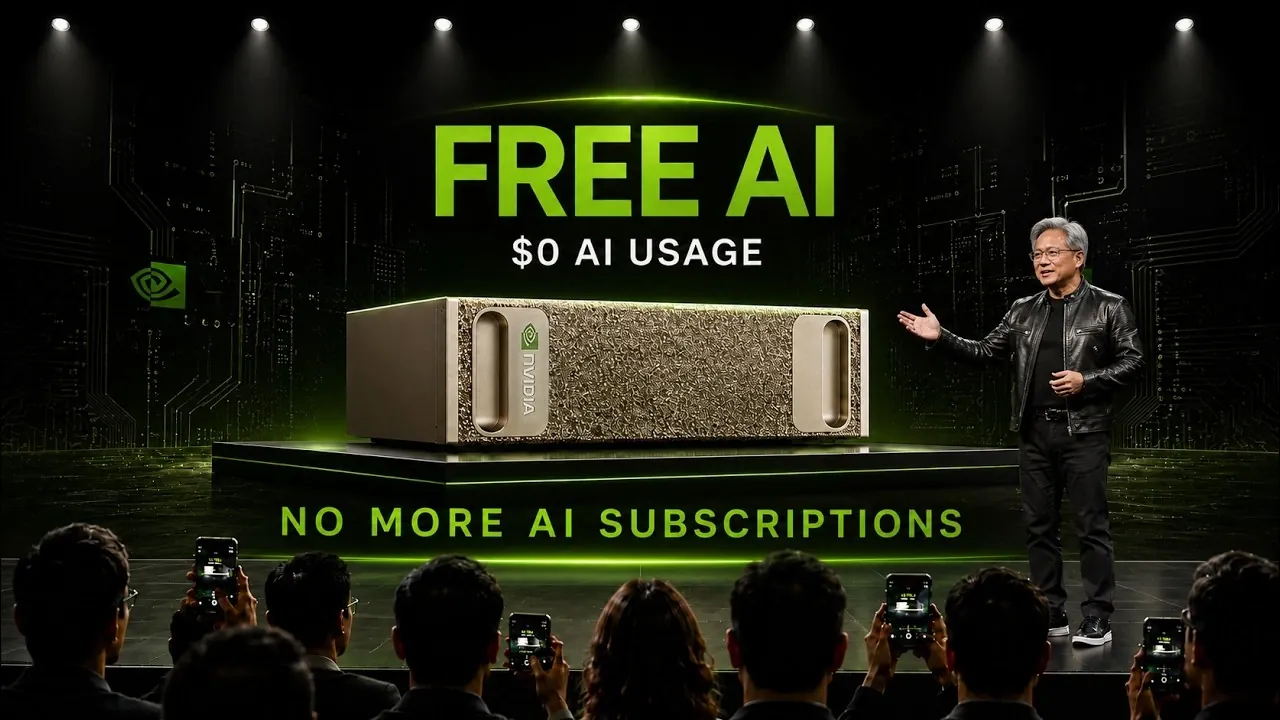
The NVIDIA DGX Spark has sparked considerable discussion in the AI development community since its release and for good reason. Marketed as a personal AI supercomputer, it aims to bring high-performance computing to individual developers and small teams. However, as AI Master explains, the DGX Spark’s appeal is limited by its high price point—now $4,699, and its lack of scalability for larger workloads. While it excels in specific tasks like CUDA-based development and prefill operations, its broader relevance is challenged by rising memory costs and competitive alternatives from AMD and Apple.
In this guide, you’ll gain insight into the DGX Spark’s strengths and limitations, including its standout prefill operation speed and its marginal 13% advantage in decode performance over competitors. Explore how its pricing strategy and scalability constraints compare to rival offerings like AMD’s Strix Halo and Apple’s M4 Pro Mini. Finally, understand what NVIDIA’s upcoming RTX Spark could mean for the future of personal AI computing and whether it might address the shortcomings of its predecessor.
Pricing Challenges
TL;DR Key Takeaways :
- The NVIDIA DGX Spark, launched in October 2025, is a personal AI supercomputer aimed at developers and small teams, but its high price and limited scalability have hindered its broader appeal.
- Initially priced at $3,999, the DGX Spark’s cost rose to $4,699 by February 2026 due to global memory supply constraints, making it less competitive in a price-sensitive market.
- While it excels in prefill operation speed (5x faster than competitors) and CUDA-based workflows, its marginal decode speed advantage (13%) and limited scalability restrict its utility for larger AI workloads.
- Competitors like AMD’s Strix Halo and Apple’s M4 Pro Mini offer comparable or superior performance at lower price points, challenging the DGX Spark’s market position.
- NVIDIA plans to release the RTX Spark in late 2026 as a more affordable and versatile successor, aiming to address the DGX Spark’s limitations and regain market traction.
The DGX Spark was first unveiled in January 2025 under the codename “Project Digits,” generating significant anticipation among AI developers. Officially launched in October 2025, it entered the market with a price tag of $3,999, which was already considered steep for many potential buyers. By February 2026, the price had risen to $4,699, driven by global memory supply constraints that have affected the entire tech industry.
NVIDIA also introduced a Founders Edition of the DGX Spark, marketed as a premium version with exclusive features. However, this edition has faced criticism for being overpriced compared to OEM alternatives that deliver similar performance at a lower cost. The rising price has made the DGX Spark less appealing, especially in a market where affordability and scalability are becoming critical factors for buyers.
Performance: Strengths and Weaknesses
The DGX Spark offers a mix of notable strengths and significant limitations in terms of performance. One of its standout features is its prefill operation speed, which is five times faster than competing devices. This capability is particularly valuable for AI workflows that rely on prompt reading and data preparation. However, its decode speed, which directly impacts response generation, is only 13% faster than alternatives, offering a marginal advantage in this area.
With a memory bandwidth of 273 GB/s, the DGX Spark matches the performance of Apple’s Mac Mini M4 Pro, but it fails to deliver a significant edge over its competitors. Additionally, its limited scalability in multi-node systems restricts its utility for larger AI workloads. This makes the DGX Spark more suitable for individual developers or small teams rather than organizations with extensive computational demands. For users requiring scalable solutions, the DGX Spark may fall short of expectations.

Below are more guides on NVIDIA DGX Spark from our extensive range of articles.
- Ryzen AI Halo vs NVIDIA DGX Spark: Which PC Wins for Local AI
- Inside NVIDIA’s Four New AI Announcements at GTC Taipei
- 128GB AMD Ryzen AI Halo Allocates 96GB VRAM for Local AI
- Jetson Thor vs DJX Spark vs Mac Mini M4 Pro : Local AI ML Showdown
- DGX Spark vs Radeon 960 XT vs M3 Ultra : One Million AI Tokens Performance Testing
- NVIDIA DGX Spark AI Mini Supercomputer : Unboxing and First Impressions
- NVIDIA DGX Spark AI Supercomputer : Local AI Model Performance Tests
Competitive Landscape
The AI hardware market in 2026 is defined by rising memory costs and the emergence of versatile, cost-effective alternatives. AMD’s Strix Halo and Apple’s M4 Pro Mini have gained traction by offering comparable or superior performance at significantly lower price points. These devices appeal to budget-conscious buyers who prioritize value without sacrificing performance.
Hybrid setups, such as pairing the DGX Spark with Apple devices, can provide optimized performance for specific workflows. However, these configurations often introduce additional complexity and cost, further diminishing the DGX Spark’s appeal. NVIDIA’s pricing strategy, combined with the DGX Spark’s limited scalability, has created opportunities for competitors to capture market share. As a result, NVIDIA faces increasing pressure to innovate and adapt to the evolving demands of AI developers and organizations.
Looking Ahead: What’s Next for NVIDIA?
NVIDIA has announced plans to release the RTX Spark in late 2026, positioning it as a more affordable and versatile successor to the DGX Spark. This upcoming product is expected to address some of the limitations of its predecessor, such as scalability and cost, while introducing new features to enhance its appeal.
Meanwhile, AMD’s upcoming Gorgon Halo and other advanced products are poised to challenge NVIDIA’s dominance in the personal AI computing space. As of now, NVIDIA has not confirmed plans for a DGX Spark 2, leaving the RTX Spark as its primary hope for regaining traction in this competitive market. The success of the RTX Spark will likely determine NVIDIA’s ability to maintain its position as a leader in AI hardware.
Who Should Consider the DGX Spark?
The DGX Spark is best suited for CUDA developers and small teams that require localized AI computing capabilities. Its strengths in prefill operations and CUDA-based workflows make it a valuable tool for niche applications, such as AI model development and testing. For these users, the DGX Spark can provide a reliable and efficient platform for achieving their goals.
However, for general consumers or larger organizations, the DGX Spark’s high cost and limited advantages over competitors reduce its overall appeal. Many users may find better value in alternatives like AMD’s Strix Halo or Apple’s M4 Pro Mini, which offer similar or superior performance at lower price points. For those considering NVIDIA’s offerings, waiting for the RTX Spark may be a more prudent choice, as it promises to deliver improved performance and affordability.
Final Verdict: A Niche Product with Limited Appeal
The NVIDIA DGX Spark is a capable machine that excels in specific areas, such as prefill operations and CUDA-based workflows. However, its high price, limited scalability and rising memory costs raise questions about its market positioning. In an increasingly competitive AI hardware landscape, alternatives like AMD’s Strix Halo and Apple’s M4 Pro Mini offer better value for most users.
For those who prioritize localized AI computing and are willing to invest in a premium product, the DGX Spark may still hold some appeal. However, for the majority of buyers, exploring more affordable options or waiting for the RTX Spark is likely a wiser decision. Ultimately, the DGX Spark caters to a niche audience and struggles to justify its price tag in a rapidly evolving market.
Media Credit: AI Master
Disclosure: Some of our articles include affiliate links. If you buy something through one of these links, Geeky Gadgets may earn an affiliate commission. Learn about our Disclosure Policy.
