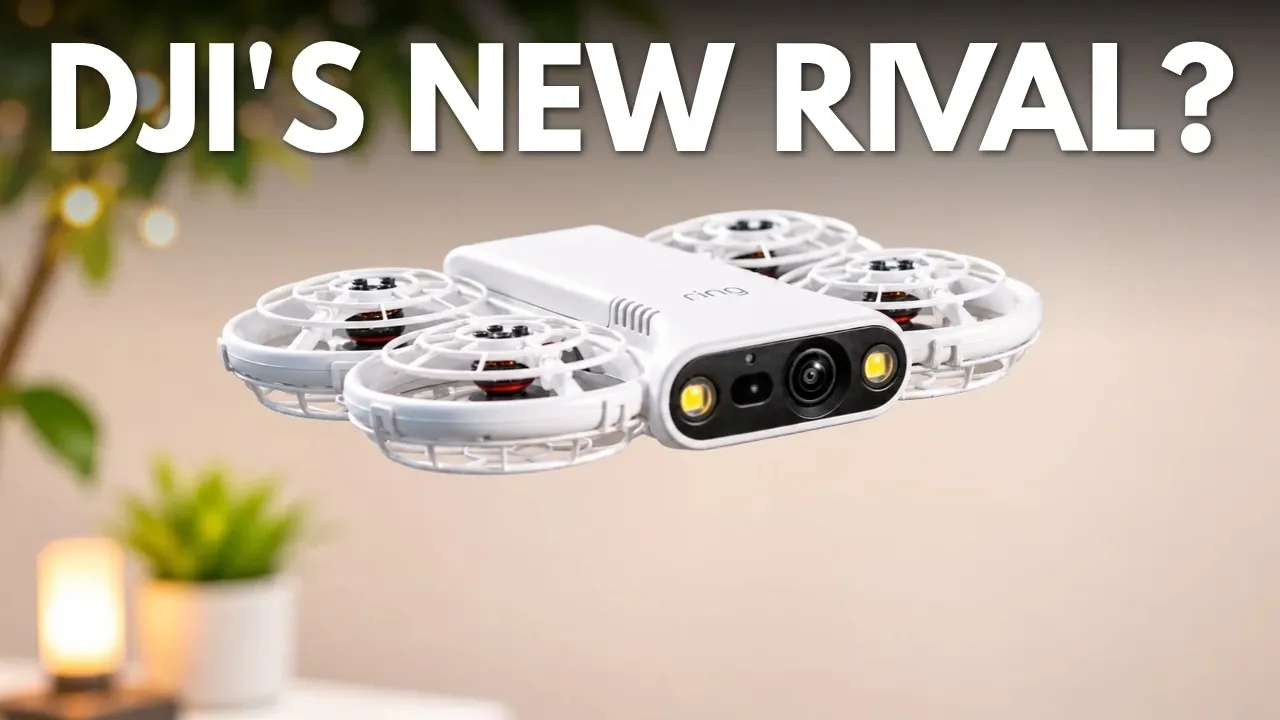
Amazon’s new Ring Drone Cam is a compact indoor security device that combines autonomous flight with smart home integration. Priced at $249.99 and weighing just 165 grams, it uses an AI Pilot system to map homes, define patrol routes, and stream live 2K video to users’ phones. While its battery life is limited to 5-8 minutes per patrol, the drone offers mobility and privacy features like a covered camera when docked, according to Tech Court.
Explore how this drone’s features could reshape home security, from its ability to navigate specific areas to its integration with Ring’s ecosystem of cameras and sensors. You’ll also gain insight into its practical limitations, such as reliance on Wi-Fi and cloud processing, and how it compares to outdoor drones like DJI’s Neo series. This breakdown highlights both its potential and the challenges it faces in real-world use.
Amazon’s Ring Drone Cam: A New Direction for Home Security
TL;DR Key Takeaways :
- Amazon has launched the Ring Drone Cam, a $249.99 indoor security drone with autonomous patrol capabilities, set to ship on January 27th, 2027, pending regulatory approval.
- The drone features 2K video recording, a 148° field of view, and LED spotlights, but lacks a microphone and speaker, focusing solely on mobile surveillance.
- Its battery lasts 5 to 8 minutes per patrol, and it relies on Wi-Fi and cloud processing, which can halt operations if the internet connection is lost.
- Privacy concerns persist due to the drone’s access to private spaces, though Amazon has implemented measures like a covered camera when docked and audible propellers during operation.
- The Ring Drone Cam reflects Amazon’s focus on indoor security and hints at potential future applications for autonomous drone technology, though no plans for outdoor consumer drones have been announced.
Amazon has launched the Ring Drone Cam, a compact indoor security drone priced at $249.99. Weighing just 165 g, it autonomously patrols homes, offering a novel approach to home security. Despite some limitations, the drone represents a significant step in autonomous drone technology and hints at broader future applications.
Key Features of the Ring Drone Cam
The Ring Drone Cam’s mobility sets it apart from stationary security cameras. It can leave its dock, navigate to specific areas, and stream live video to a user’s phone. During setup, the AI Pilot system maps the home as users guide the drone to create a floor plan, define rooms, and set patrol routes. It integrates with Ring’s ecosystem, responding to connected cameras, doorbells, and sensors.
Its camera records 2K video with a 148° field of view and includes LED spotlights for low-light conditions. However, it lacks a microphone and speaker, focusing solely on mobile surveillance. Privacy measures include a covered, inactive camera while docked, a recording indicator, and audible propellers to signal when it is operational.
Some features, like scheduled patrols and video search, require a Ring subscription plan, adding ongoing costs for users seeking full functionality.

Find more information on drones by browsing our extensive range of articles, guides and tutorials.
- DJI Mini 6 Pro Speculation Points to a September 2027 Debut
- 8+ Big drones capable of carrying large payloads and heavy equipment
- DJI Neo 3 vs Neo 2: Leaks Show a 64% Battery Increase
- DJI Neo auto-follow drone for effortless content creation $199
- DJI Neo 3 FlyMore Combo Unboxed: Includes 3 Drone Batteries
- Worlds First Flying Ball Drone Unveiled By Japan’s Ministry of Defence (video)
- Rumoured DJI Neo 3 Drone Targets a September 2026 Launch
- Leaked DJI Neo 3 May Feature a 1/1.3-Inch Sensor Upgrade
- DJI Neo 3 64% Larger Battery, 193g and 16-Minute Flight Time
- Why the RayNeo Air 4 Pro is the Perfect DJI Neo 2 Upgrade
Performance and Limitations
The Ring Drone Cam’s battery lasts up to 8 minutes under ideal conditions, with practical use ranging from 5 to 8 minutes. While short compared to outdoor drones, this is adequate for brief indoor patrols before returning to its dock. However, its reliance on Wi-Fi and cloud processing can be a drawback. If the internet connection is lost, the drone halts its patrol and lands.
Navigating real homes with obstacles and varying layouts can also challenge the drone. Additionally, it is strictly for indoor use, unlike DJI’s Neo series, which operates outdoors. This limitation reinforces its role as a specialized home security device rather than a general-purpose drone.
Privacy concerns remain a consideration. Despite Amazon’s efforts to address them, the drone’s access to private spaces, such as bedrooms, may cause discomfort for some users.
Amazon’s Second Attempt at a Flying Camera
This marks Amazon’s second attempt at a flying home security device. In 2020, the company announced the Always Home Cam, a similar concept that never reached the market. The Ring Drone Cam builds on that earlier effort with improved technology and a more focused design, bringing the concept to consumers.
How It Compares to DJI’s Drones
The Ring Drone Cam shares some features with DJI’s Neo series, such as compact size, protected propellers, and autonomous flight, but their purposes differ. DJI’s Neo is designed for outdoor photography, selfies, and tracking, while Amazon’s drone is dedicated to indoor security. The Ring Drone Cam’s short battery life, cloud dependency, and indoor-only focus further distinguish it from DJI’s offerings.
Amazon’s expertise in cameras, AI, and smart home devices gives it an edge in this niche. The Ring Drone Cam may attract customers who have never considered buying a drone, potentially expanding the market for small autonomous drones beyond traditional enthusiasts. However, it is not positioned as a competitor to DJI’s Neo series due to its limited capabilities and indoor focus.
The Bigger Picture
The Ring Drone Cam reflects a broader trend of drones evolving beyond photography to perform practical, autonomous tasks. While DJI dominates outdoor environments, Amazon’s focus on indoor security showcases a different application for autonomous flying technology. This divergence suggests the two companies could coexist in separate markets, each applying similar technologies for distinct purposes.
Amazon’s development of the Ring Drone Cam also lays the groundwork for future innovations. With expertise in compact flying hardware, autonomous navigation, and obstacle avoidance, the company could adapt this technology for other uses. For instance, Amazon might eventually develop a small consumer drone for outdoor use, automatic tracking, or everyday recording.
Although no plans have been announced to compete with DJI in the outdoor consumer drone market, the Ring Drone Cam provides a foundation for such an expansion. It could also serve as a starting point if Amazon decides to broaden its focus beyond home security.
The Ring Drone Cam is set to ship on January 27th, 2027, pending regulatory approval. While it faces challenges like limited battery life, cloud dependency, and privacy concerns, it represents a significant step forward in autonomous drone evolution.
Media Credit: Tech Court
Disclosure: Some of our articles include affiliate links. If you buy something through one of these links, Geeky Gadgets may earn an affiliate commission. Learn about our Disclosure Policy.
