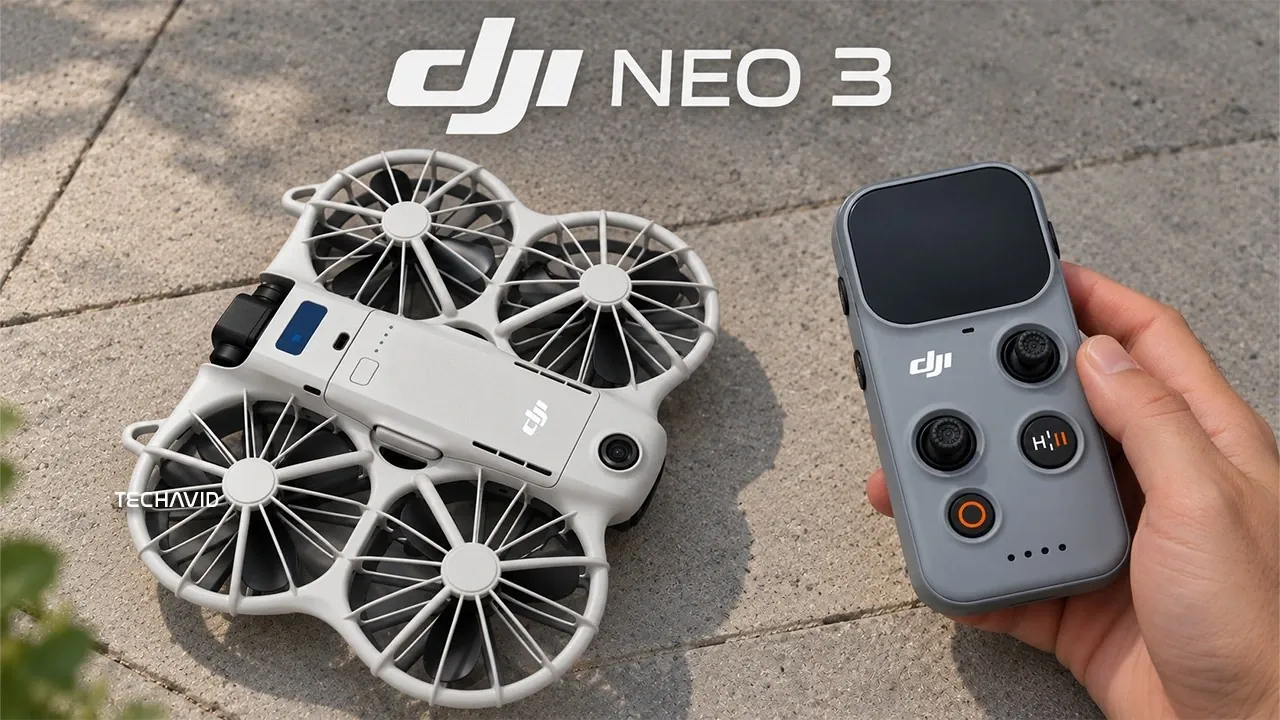
The DJI Neo 3 is a lightweight drone that brings notable updates to its design and functionality. According to TechAvid, one key improvement is the inclusion of a larger 1/1.1-inch image sensor in its camera system, which enhances image clarity and low-light performance. Another significant upgrade is the 1800 mAh battery, providing a 64% increase in energy storage compared to the previous model while adhering to sub-250g drone regulations.
Learn more about the Neo 3’s rumoured features, such as its native vertical shooting mode and the redesigned RC Mini controller with a built-in display. Learn how the upgraded battery and Fly More Combo package improve overall usability and discover design updates like enhanced propeller guards and faster file transfer capabilities.
DJI Neo 3 Camera Drone
TL;DR Key Takeaways :
- The DJI Neo 3 has not been officially announced yet, though extensive leaks point to a launch window sometime around late October or November 2026
- It introduces a new 1800 mAh battery with a 64% increase in energy storage, extending flight times while maintaining a sub-250g weight, though it is incompatible with Neo 2 batteries.
- Refined design updates include spoke-style propeller guards, enhanced cooling and potential integration of transmission hardware for improved durability and functionality.
- The DJI Neo 3 is expected to feature a larger 1/1.1-inch image sensor, offering improved image quality, native vertical shooting and 2x lossless zoom, ideal for content creators.
- The DJI RC Mini controller with a built-in display simplifies operation, eliminating the need for a smartphone and includes physical buttons for essential controls.
- Retained features like gesture-based controls, active track and obstacle sensing are enhanced, alongside faster file transfers and quicker startup times for improved usability.
Advanced Camera Capabilities
The camera system of the DJI Neo 3 stands out as one of its most compelling features. Equipped with a larger 1/1.1-inch image sensor, an upgrade from the Neo 2’s 1/2-inch sensor, the Neo 3 is designed to deliver exceptional image quality, particularly in low-light environments. This enhancement ensures sharper details, improved dynamic range and vibrant visuals, making it an excellent choice for aerial photography and videography enthusiasts. Key camera features include:
- Native vertical shooting, optimized for platforms like Instagram and TikTok.
- 2x lossless zoom, allowing detailed captures without compromising quality.
While these upgrades are promising, certain details remain unconfirmed, such as resolution, frame rates and internal storage capacity. These unknowns leave room for speculation about the Neo 3’s potential to meet the demands of professional-grade videography. Nonetheless, the camera system is expected to cater effectively to both casual users and content creators.
Improved Battery Performance and Compatibility
The Neo 3 introduces a new 1800 mAh battery, offering a 64% increase in energy storage compared to its predecessor. This upgrade is anticipated to significantly extend flight times, although exact figures have not yet been disclosed. Despite the larger battery capacity, the drone maintains its sub-250g weight, making sure compliance with lightweight drone regulations in various regions.
However, the redesigned battery features seven electrical contacts instead of five, rendering it incompatible with Neo 2 batteries. This change may inconvenience existing users who had hoped to reuse their current batteries. For those opting for the Fly More Combo, the package includes:
- Three batteries to maximize flight time.
- A charging hub for efficient recharging.
- Additional accessories to enhance usability and convenience.
This combination ensures that new users can fully use the Neo 3’s extended flight capabilities without additional purchases.

Check out more relevant guides from our extensive collection on DJI Neo 3 that you might find useful.
- Rumoured DJI Neo 3 Drone Targets a September 2026 Launch
- DJI Neo 3 64% Larger Battery, 193g and 16-Minute Flight Time
- Leaked DJI Neo 3 May Feature a 1/1.1-Inch Square Sensor
- DJI Neo 3 FlyMore Combo Unboxed: Includes 3 Drone Batteries
- DJI Neo 3 Unboxing Reveals a 1/1.1-Inch Camera Sensor
- DJI Neo 3 Leak Reveals a Likely Upward Obstacle Detection Sensor
- Leaked DJI Neo 3 May Feature a 1/1.3-Inch Sensor Upgrade
- Leaked DJI Neo 3 May Integrate Transceiver vs Neo 2 Module
- Expected DJI Neo 3 Drone Offers 2X Lossless Camera Zoom
- Unidentified Upward Sensor Clouds the DJI Neo 3 Box Leak
Refined Design and Enhanced Durability
The design of the DJI Neo 3 reflects a focus on practicality and reliability. Spoke-style propeller guards improve safety, particularly when flying in confined spaces, while additional ventilation openings enhance cooling during extended flights or in warmer climates. These design refinements aim to make the drone more user-friendly and durable under various conditions.
Weighing 192.7 grams, the Neo 3 is slightly heavier than its predecessor but remains highly portable. Another potential innovation is the integration of transmission hardware directly into the drone body, which could streamline its design and improve signal reliability. These thoughtful design updates ensure that the Neo 3 is both functional and aesthetically appealing.
Upgraded Controller and Ecosystem
The DJI RC Mini controller is a notable addition to the Neo 3 ecosystem. Featuring a built-in display, it eliminates the need for a smartphone to view live video feeds, simplifying the setup process and enhancing convenience. The controller also includes physical buttons for essential functions such as return-to-home and pause, offering intuitive operation for both beginners and experienced pilots.
For those purchasing the Fly More Combo, the package adds further value with:
- Spare propellers for emergencies.
- A carrying case for easy portability.
- Additional accessories to enhance the overall flying experience.
These inclusions make the Neo 3 ecosystem more versatile and user-friendly, catering to a wide range of needs and preferences.
Retained Features with Upgrades
The Neo 3 retains several popular features from the Neo 2 while introducing enhancements to improve functionality. Key retained features include:
- Gesture-based controls for hands-free operation.
- Palm take-off for quick and convenient launches.
- Active track for dynamic subject tracking.
- Obstacle sensing to ensure safer flights.
These features are expected to see improvements, particularly in active track functionality, which may offer smoother tracking and more precise camera movements. Additionally, the Neo 3 features faster file transfer speeds, reducing the time required to offload media and a quicker startup time, allowing users to get airborne more efficiently.
Key Questions and Market Positioning
Despite its promising features, several critical details about the Neo 3 remain unknown. These include:
- Camera specifications such as resolution and frame rates.
- Performance metrics like flight speed, wind resistance and stabilization capabilities.
The Neo 3 is expected to launch in October or November 2026, with pricing estimated between $270 and $450. This positions it as a mid-range option, appealing to a broad audience while offering advanced capabilities. Its combination of affordability and high-end features makes it an attractive choice for hobbyists and professionals alike.
Looking Ahead
The DJI Neo 3 is shaping up to be a versatile and feature-rich drone, designed to cater to a diverse range of users. Its camera enhancements, improved battery performance and user-friendly design make it a strong contender in the lightweight drone market. However, the lack of backward compatibility with Neo 2 batteries and the absence of confirmed specifications may pose challenges for some potential buyers.
As the release date approaches, the Neo 3 remains an exciting prospect for anyone seeking to elevate their aerial photography and videography. With its blend of innovation and practicality, the Neo 3 is well-positioned to meet the evolving needs of drone enthusiasts. Stay tuned for further updates as more details emerge.
Media Credit: TechAvid
Disclosure: Some of our articles include affiliate links. If you buy something through one of these links, Geeky Gadgets may earn an affiliate commission. Learn about our Disclosure Policy.
