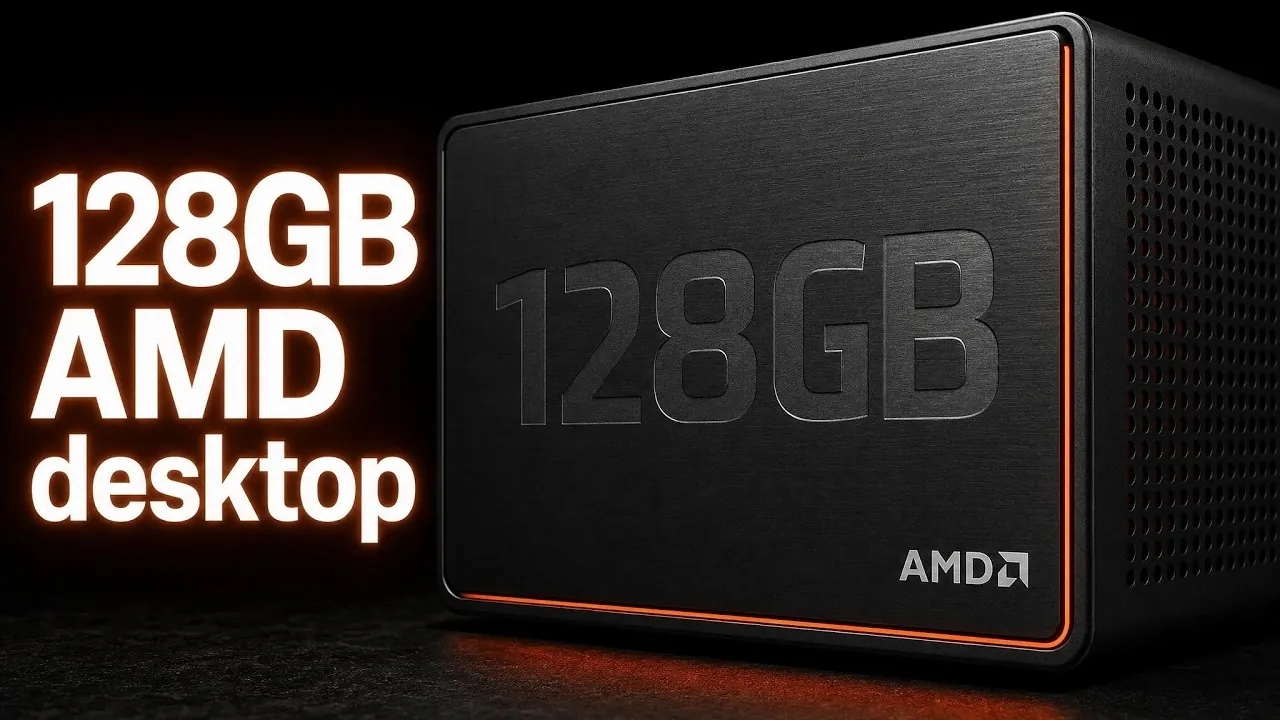
The AMD Ryzen AI Halo developer box emphasizes memory capacity as a key feature for local AI processing, offering 128GB of unified LPDDR5X memory. This design allows up to 96GB to be allocated as VRAM, making it well-suited for tasks such as fine-tuning large language models and running conversational AI inference. Weighing just 1.2kg and powered by a single USB-C cable, the system is portable and functional for developers who need to work on the go. According to The Stack, the device can handle AI models with up to 200 billion parameters locally, though its integrated compute architecture limits its efficiency in high-throughput scenarios.
Discover how this system handles tasks like conversational inference and fine-tuning and explore its reliance on community-driven software solutions. Learn about the trade-offs involved in managing driver regressions and how the Ryzen AI Halo compares to other hardware options, such as Nvidia’s DGX Spark. This analysis provides a detailed look at the practical applications and constraints of this memory-focused approach to AI development.
Ryzen Local AI
TL;DR Key Takeaways :
- The AMD Ryzen AI Halo developer box is a $4,000 compact mini PC designed for local AI processing, featuring 128GB of unified LPDDR5X memory with up to 96GB dynamically allocated as VRAM for memory-intensive AI tasks.
- Weighing just 1.2kg and powered by a single USB-C cable, it is lightweight, portable and eliminates the need for a discrete GPU, focusing on memory capacity over raw computational power.
- Optimized for handling AI models with up to 200 billion parameters, it excels in tasks like conversational AI inference, fine-tuning large language models and processing memory-heavy datasets.
- Challenges include limited official software support, frequent driver regressions and inconsistent performance benchmarks, making it more suitable for experienced developers comfortable with custom configurations.
- Best suited for memory-intensive workloads, the Ryzen AI Halo offers portability and flexibility but lacks the compute power and compatibility for high-throughput or CUDA-based tasks, positioning it as a niche solution for specific AI development needs.
Weighing just 1.2kg, the Ryzen AI Halo is both lightweight and portable, making it an ideal choice for developers on the move. It is powered by a single USB-C cable, offering convenience and reducing the need for bulky power supplies. Unlike traditional AI workstations, this system eliminates the need for a discrete GPU, instead relying on integrated compute and shared memory to deliver its performance.
The 128GB LPDDR5X memory, operating at an impressive 8,000 MT/s, is the standout feature of this device. With up to 96GB dynamically allocated as VRAM, the system is optimized for memory-heavy AI tasks. These include:
- Fine-tuning large language models
- Running conversational AI inference
- Processing memory-intensive datasets
This emphasis on memory capacity over raw compute power makes the Ryzen AI Halo a specialized tool for specific AI workloads, particularly those that require extensive memory resources.
Performance: Strengths and Limitations
The Ryzen AI Halo excels in handling AI models with up to 200 billion parameters locally, a capability that sets it apart from many other systems in its price range. Its extensive memory capacity is particularly advantageous for tasks like conversational inference, where it delivers competitive token generation speeds. Additionally, it performs well in fine-tuning large language models, a process often hindered by memory constraints in traditional setups.
However, the system’s lack of a discrete GPU limits its ability to handle compute-intensive tasks such as image or video generation. The integrated GPU achieves only 60% of its theoretical peak performance, which reduces its effectiveness in high-throughput workloads. As a result, the Ryzen AI Halo is not suited for users requiring sustained computational power or those working on tasks that demand high-speed processing.

Become an expert in local AI with the help of our in-depth articles and helpful guides.
- Ollama Runs 32B Local AI Models on a $599 Mac via Quantization for Free
- How DeepSeek Fits a 284B Parameter AI Model on a Single Laptop
- Awesome DIY Raspberry Pi 5 Offline AI Companion Inspired by BMO from Adventure Time
- New AMD’s $1,500 Strix Halo PC Runs 120B AI Models Locally
- 128GB Ryzen AI Halo Replaces Cloud Servers for Local AI
- Revive Your Old Tech: Running a Local LLM on a 12-Year-Old Raspberry Pi
- Why NVIDIA’s New 748GB Desktop is Replacing Enterprise Cloud AI Subscriptions
- Meet oMLX : Apple Silicon’s Fastest Local AI Model Runner
- Rumored Apple M7 Chip Targets 2027 with 1.5 TB of Memory
- Build A Local Private AI Rig on a Budget : Learn Which GPUs Run AI Most Effectively
Challenges in the Software Ecosystem
While the hardware capabilities of the Ryzen AI Halo are impressive, its software ecosystem is still evolving, presenting several challenges for users. Key issues include:
- Limited official support for fine-tuning workloads, which can hinder productivity
- Frequent driver regressions that disrupt workflows and require troubleshooting
- Inconsistent performance benchmarks due to variability in the software stack
To fully use the system’s potential, many users rely on community-developed tools and custom configurations. While these solutions can be effective, they add complexity and may not appeal to those seeking a seamless, out-of-the-box experience. This makes the Ryzen AI Halo more suitable for experienced developers who are comfortable navigating software challenges.
Who Benefits Most from the Ryzen AI Halo?
The Ryzen AI Halo is best suited for researchers and developers who prioritize memory capacity over raw computational power. It is particularly effective for tasks involving large AI models, such as:
- Conversational AI inference
- Fine-tuning and training large language models
- Memory-intensive data analysis
However, it is less ideal for users who require high sustained throughput or rely on CUDA-based workflows, as the system lacks the performance and compatibility needed for such applications. For these users, alternatives with discrete GPUs may be more appropriate.
How It Stacks Up Against Alternatives
When compared to alternatives like Nvidia’s DGX Spark, the Ryzen AI Halo offers distinct advantages in terms of portability and flexibility. Its native support for both Windows and Linux provides developers with the freedom to use standard tools and file systems, making it a versatile option for a range of applications. However, the absence of a discrete GPU and its limited compute power make it less competitive for high-performance tasks.
This positions the Ryzen AI Halo as a niche solution, tailored for memory-intensive workloads rather than general-purpose AI development. For developers focused on conversational AI, fine-tuning, or other memory-heavy tasks, it offers a compelling alternative to traditional setups.
Practical Implications for AI Development
The AMD Ryzen AI Halo developer box is a specialized tool designed to address the growing demand for local AI processing. Its unified memory architecture and compact design make it a valuable asset for researchers and developers working with large AI models. While it is not without its limitations, particularly in terms of raw computational power and software maturity, it provides a unique solution for those willing to navigate its trade-offs.
For professionals focused on advancing AI research in areas like conversational inference or fine-tuning, the Ryzen AI Halo offers a portable and efficient platform. However, users requiring high-throughput performance or seamless software integration may find other options more suitable. As the software ecosystem continues to mature, the Ryzen AI Halo has the potential to become an even more versatile tool in the field of AI development.
Media Credit: The Stack
Disclosure: Some of our articles include affiliate links. If you buy something through one of these links, Geeky Gadgets may earn an affiliate commission. Learn about our Disclosure Policy.
