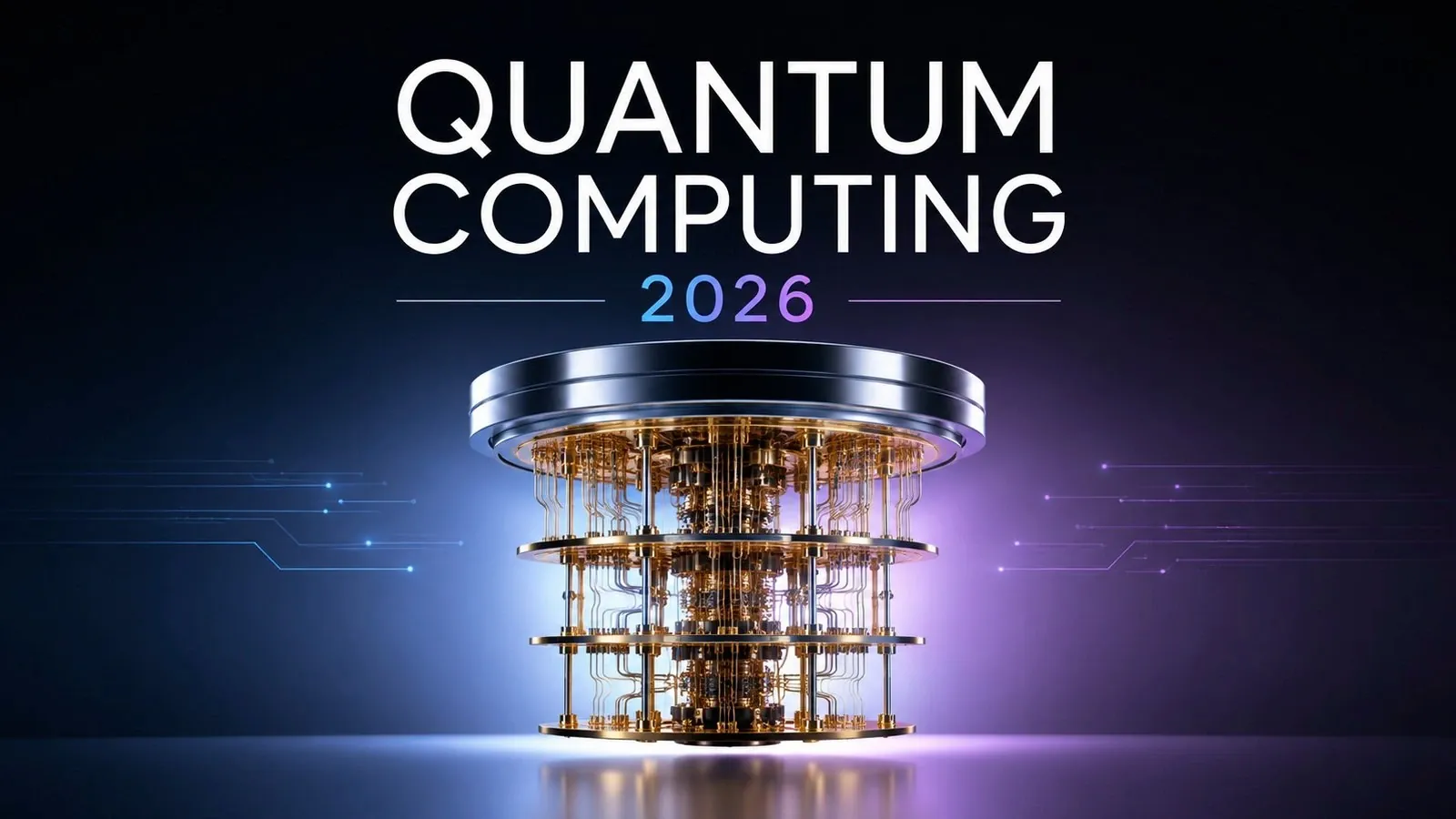
Quantum computing in 2026 stands at a fantastic crossroads, with fault-tolerant quantum computing (FTQC) emerging as a critical focus. This year has seen a shift from simply increasing physical qubits to developing error-corrected logical qubits, a necessary step for reliable and scalable quantum systems. Explaining Computers highlights how companies like IBM and Google are advancing superconducting qubit technologies, while alternative approaches such as photonic, silicon spin and neutral atom qubits are gaining traction. These developments underscore the diverse strategies being pursued to overcome challenges like error correction and scalability, bringing practical quantum applications closer to reality.
Explore how these advancements are shaping the quantum landscape, from the rise of Quantum as a Service (QaaS) platforms to breakthroughs in optimization and molecular modeling. Gain insight into how industries like healthcare, logistics and cybersecurity are beginning to use quantum systems for tasks previously deemed computationally impossible. This analysis also previews the economic implications of quantum computing’s growth, with projections of multibillion-dollar revenues and significant contributions to global innovation.
Quantum Computing 2026 Update
TL;DR Key Takeaways :
- Quantum computing in 2026 has transitioned from theoretical concepts to practical, scalable applications, with advancements in fault-tolerant quantum computing and diverse qubit technologies.
- Significant investments, including IBM’s $10 billion commitment by 2031, are driving rapid industry growth, with projected revenues exceeding $3 billion by 2028 and potential economic contributions of up to $2.7 trillion by 2035.
- Fault-tolerant quantum computing is advancing through error-corrected logical qubits, with various technologies like silicon spin, photonic, neutral atom, trapped ion and topological qubits being explored by leading companies.
- Quantum as a Service (QaaS) is providing widespread access to access to quantum computing via cloud-based platforms and open source tools, fostering innovation and collaboration across industries.
- Quantum computing is addressing complex challenges in molecular modeling, optimization and cryptography, with fantastic applications in healthcare, logistics, finance and beyond, despite ongoing challenges in scalability and validation.
Industry Expansion and Investment Momentum
The quantum computing industry is experiencing rapid expansion, driven by significant investments and increasing demand across sectors. Major corporations, including IBM, have pledged over $10 billion toward quantum development by 2031, underscoring their confidence in the technology’s fantastic potential. In 2025, the industry generated $1.4 billion in revenue and projections suggest this figure will exceed $3 billion by 2028. According to McKinsey, quantum computing could contribute between $1.3 and $2.7 trillion in economic value by 2035.
This surge in investment reflects the growing belief in quantum technologies’ ability to transform industries such as healthcare, logistics and finance. Companies are increasingly recognizing quantum computing as a strategic asset, capable of solving problems that classical systems cannot address efficiently.
Advances in Fault-Tolerant Quantum Computing
Fault-tolerant quantum computing (FTQC) has emerged as a cornerstone of quantum research in 2026. Unlike earlier efforts that focused on increasing the number of physical qubits, the emphasis has shifted to developing error-corrected logical qubits. These qubits are essential for building reliable quantum systems capable of addressing complex, real-world challenges.
Leading organizations such as IBM and Google are making strides in superconducting qubit technologies, with IBM aiming to achieve a 200-logical-qubit processor by 2029. Beyond superconducting qubits, several alternative modalities are gaining traction:
- Silicon Spin Qubits: Intel is using silicon’s compatibility with existing semiconductor manufacturing processes to advance this technology.
- Photonic Qubits: Companies like PsiQuantum and Xanadu are exploring light-based qubits, which offer scalability and unique advantages for quantum systems.
- Neutral Atom Qubits: Atom Computing and QuEra are developing systems that manipulate individual atoms to perform quantum operations.
- Trapped Ion Qubits: IonQ and Quantinuum are refining this mature technology, known for its high-fidelity quantum gates and precision.
- Topological Qubits: Microsoft is pursuing this approach, which promises inherent error resistance, though it remains in its early stages of development.
These advancements highlight the diversity of approaches being explored to overcome the challenges of scalability and error correction, bringing the vision of fault-tolerant quantum computing closer to reality.

Expand your understanding of Quantum Computer with additional resources from our extensive library of articles.
- OpenAI’s Stealth Tests Reveal ChatGPT 5.6 Pro’s True Power
- Why AI’s Quantum Computing Leap Has Cybersecurity Experts Alarmed
- How Microsoft Achieved a 1,000X Breakthrough in Quantum Computing
- Intel Quantum Computing SDK version 1.0 released
- What can a DIY homemade quantum computer do?
- How Quantum Computers Are Solving the World’s Biggest Problems
- Quantum Computers Could Break Encryption : Are We Ready for the Digital Apocalypse?
Quantum as a Service (QaaS): Expanding Accessibility
Quantum as a Service (QaaS) is transforming access to quantum computing by offering cloud-based platforms that enable users to interact with quantum hardware and software. Providers such as IBM, Amazon, Microsoft and Xanadu are at the forefront of this movement, offering tools that provide widespread access to quantum technologies.
These platforms are supported by open source frameworks like IBM Qiskit, Microsoft Quantum Development Kit, and Google Cirq. These tools empower developers, researchers and organizations to experiment with quantum algorithms, build applications and gain hands-on experience with quantum systems. By lowering the barriers to entry, QaaS is fostering a new wave of innovation and collaboration in the quantum ecosystem.
Real-World Applications and Industry Impact
Quantum computing is poised to address some of the most complex challenges across a variety of industries. Its potential applications are vast and fantastic, with several key areas standing out:
- Molecular Modeling and Simulation: Quantum computers excel at simulating molecular interactions, allowing breakthroughs in material science, drug discovery and engineering. Companies like IBM and Microsoft are integrating quantum and classical systems to accelerate advancements in quantum chemistry.
- Optimization Algorithms: Quantum systems are being applied to optimize energy grids, financial portfolios, supply chains and transportation networks. These tasks, often computationally prohibitive for classical systems, are well-suited to quantum optimization techniques.
- Cryptography and Security: The advent of quantum computing poses a significant challenge to current encryption methods. For example, Google predicts that quantum systems could break 256-bit elliptic curve encryption by 2029, prompting the development of post-quantum cryptography to secure digital communications.
These applications demonstrate quantum computing’s potential to solve problems that were previously considered intractable, offering new opportunities for innovation and efficiency.
Challenges and Future Directions
Despite its progress, quantum computing still faces significant hurdles. Achieving scalable, fault-tolerant systems remains a long-term objective, requiring sustained research and innovation. Additionally, some technologies, such as Microsoft’s topological qubits and D-Wave’s quantum annealing approach, have sparked debates over their practical utility and scientific validity. These discussions highlight the complexity of the field and the need for rigorous validation of emerging technologies.
Looking ahead, the future of quantum computing is filled with promise. Fault-tolerant systems are expected to unlock new applications by the 2030s, driving innovation across industries. As investments continue to grow and technological breakthroughs accelerate, quantum computing is set to become a cornerstone of the global technological landscape. The advancements made in 2026 mark a pivotal step toward realizing the full potential of this new technology.
Media Credit: ExplainingComputers
Disclosure: Some of our articles include affiliate links. If you buy something through one of these links, Geeky Gadgets may earn an affiliate commission. Learn about our Disclosure Policy.
