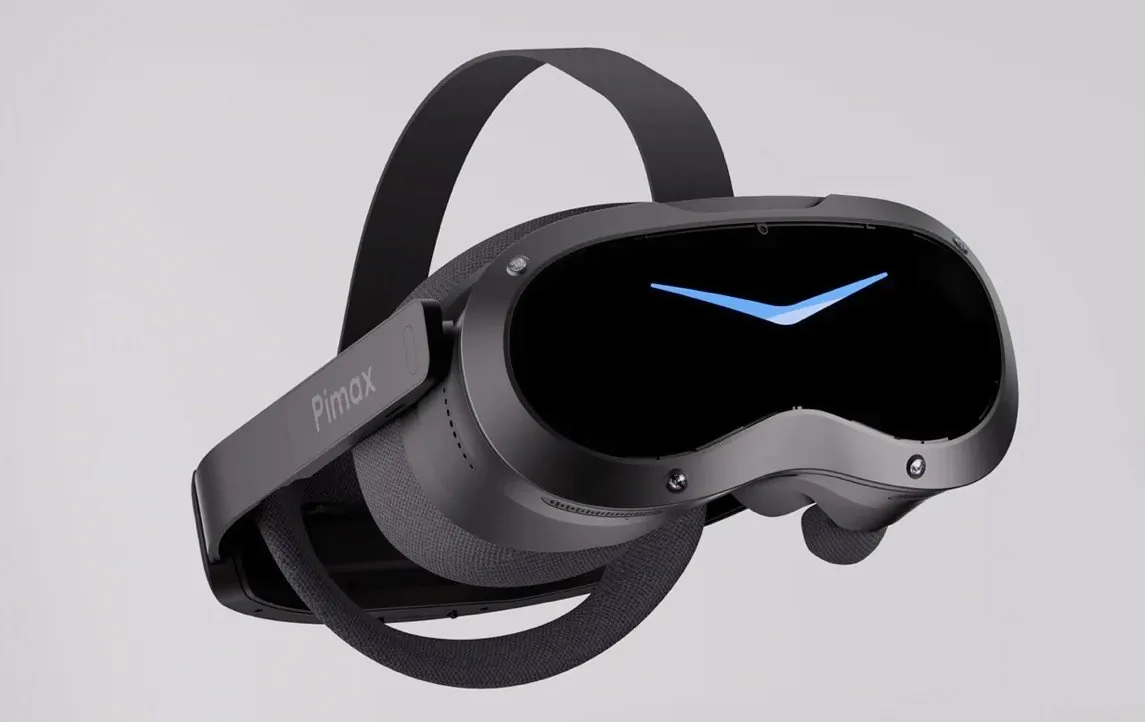
The Pimax Crystal Pro has now been officially announced, moving the headset beyond its earlier concept stage and providing firmer details about how Pimax plans to bring its next wireless PC VR headset to market. The Crystal Pro will support Wi-Fi streaming as standard, wired PC VR at up to 120 Hz over DisplayPort, optional Lighthouse tracking through a swappable faceplate and an external battery designed to be carried in the user’s pocket.
Pimax has also opened reservations ahead of the headset’s planned 2027 shipping window. Customers can reserve a Crystal Pro for $1, with Pimax offering a $20 launch discount on the headset or a $50 discount on a bundle featuring the third-generation 60G AirLink. Hands-on demonstrations are scheduled to begin in Q4 2026.
With these new details, the Crystal Pro is no longer simply a speculative future product. However, several important questions remain, including final pricing, the availability of optional accessories and exactly when during 2027 customers will begin receiving headsets.
Pimax Confirms its Wireless PC VR Plans
TL;DR Key Takeaways :
- The Pimax Crystal Pro has now been officially announced as a wireless PC VR headset, rather than simply being presented as a future concept.
- Wi-Fi streaming will be supported as standard, while wired PC VR users will be able to connect through DisplayPort and run the headset at up to 120 Hz.
- Lighthouse tracking will be available through a swappable faceplate, giving users the option of integrating the Crystal Pro into an existing Lighthouse tracking setup.
- The headset uses an external battery designed to be carried in a pocket, reducing the amount of battery hardware that needs to be mounted directly on the headset.
- Reservations are available for $1, with a $20 launch discount for the Crystal Pro or $50 off a bundle featuring the third-generation 60G AirLink. Hands-on demos begin in Q4 2026, with shipping scheduled to start in 2027.
The Crystal Pro is designed primarily as a high-end PC VR headset, with Pimax offering users several different ways to connect and configure the device. The newly confirmed features include:
- Wireless PC VR Streaming: Wi-Fi streaming is included as a standard feature, allowing users to play PC VR titles wirelessly without requiring the optional 60G AirLink system.
- 120 Hz DisplayPort Mode: For users who prefer a wired connection, the Crystal Pro supports DisplayPort operation at up to 120 Hz. The required DisplayPort cable is optional and is not included with the headset.
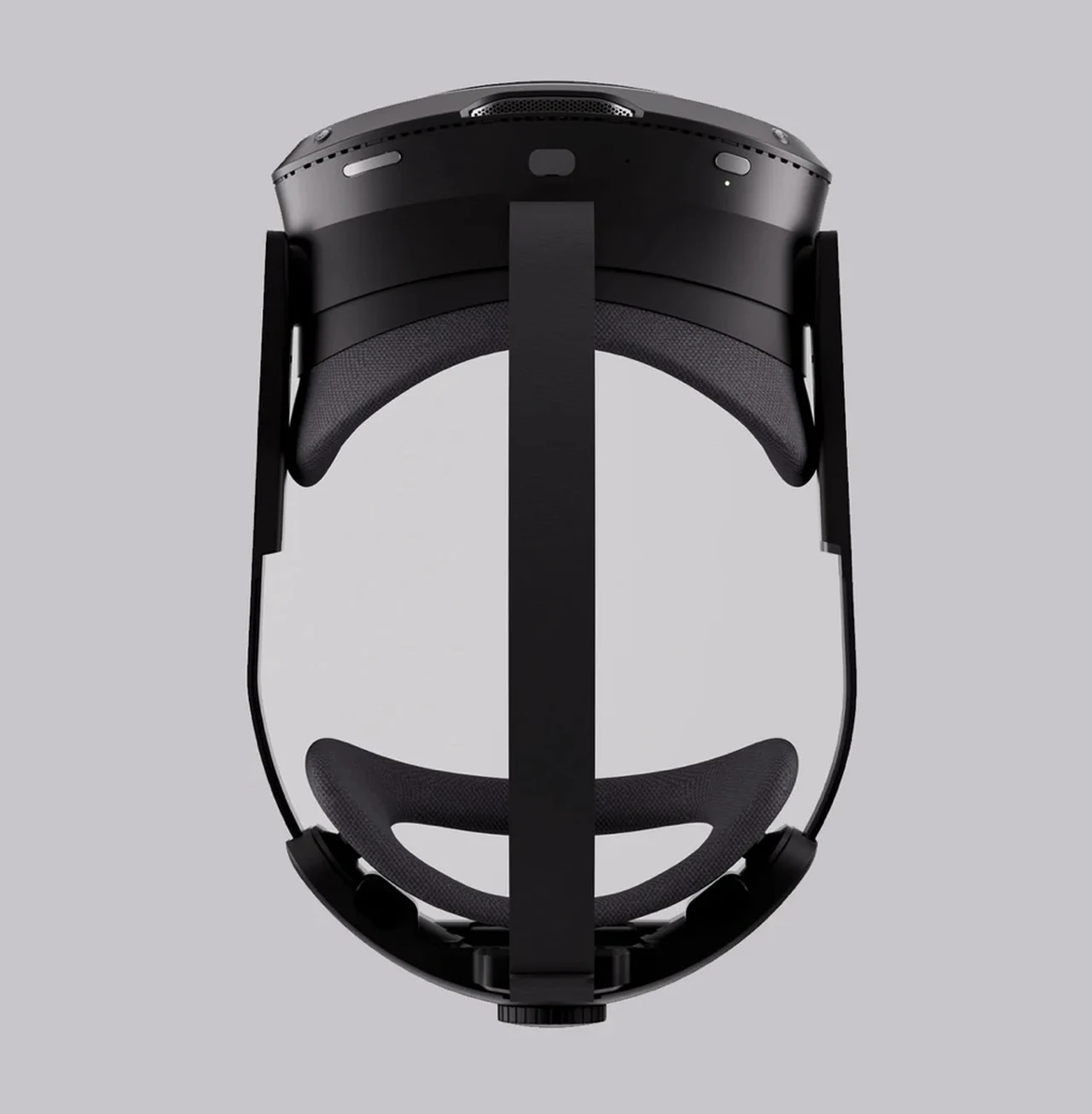
- Swappable Lighthouse Faceplate: Lighthouse tracking support will be available through a replaceable faceplate, allowing users to configure the headset for Lighthouse-based tracking when required.
- External Battery: Rather than incorporating the entire battery system into the headset itself, the Crystal Pro uses an external battery designed to be carried in the user’s pocket.
- Ringed SLAM Controllers: The headset package includes Pimax Ringed VR controllers for its standard tracking system.
The combination gives the Crystal Pro considerably more flexibility than a headset designed around a single connection or tracking standard. Users can choose standard Wi-Fi streaming, a wired DisplayPort connection or the optional third-generation 60G AirLink system, while Lighthouse users have an upgrade path through the interchangeable faceplate.
Reservations and Release: Shipping Starts in 2027
Pimax has now provided a clearer release roadmap for the Crystal Pro. Hands-on demonstrations are scheduled to begin during Q4 2026, giving potential customers an opportunity to experience the headset before general shipments commence.
Shipping is scheduled to start in 2027. Pimax has not specified a more precise shipping date in the information announced so far, meaning the exact timing and availability may vary as the product moves closer to launch.
Customers can currently reserve the Crystal Pro for $1. The reservation is non-refundable and provides a $20 discount on the Crystal Pro at launch. Customers planning to purchase the Crystal Pro together with the third-generation 60G AirLink can instead receive a $50 discount on that bundle.
Importantly, the reservation should not be confused with a full headset preorder. The $1 payment secures the stated launch discount rather than representing payment for the Crystal Pro itself.
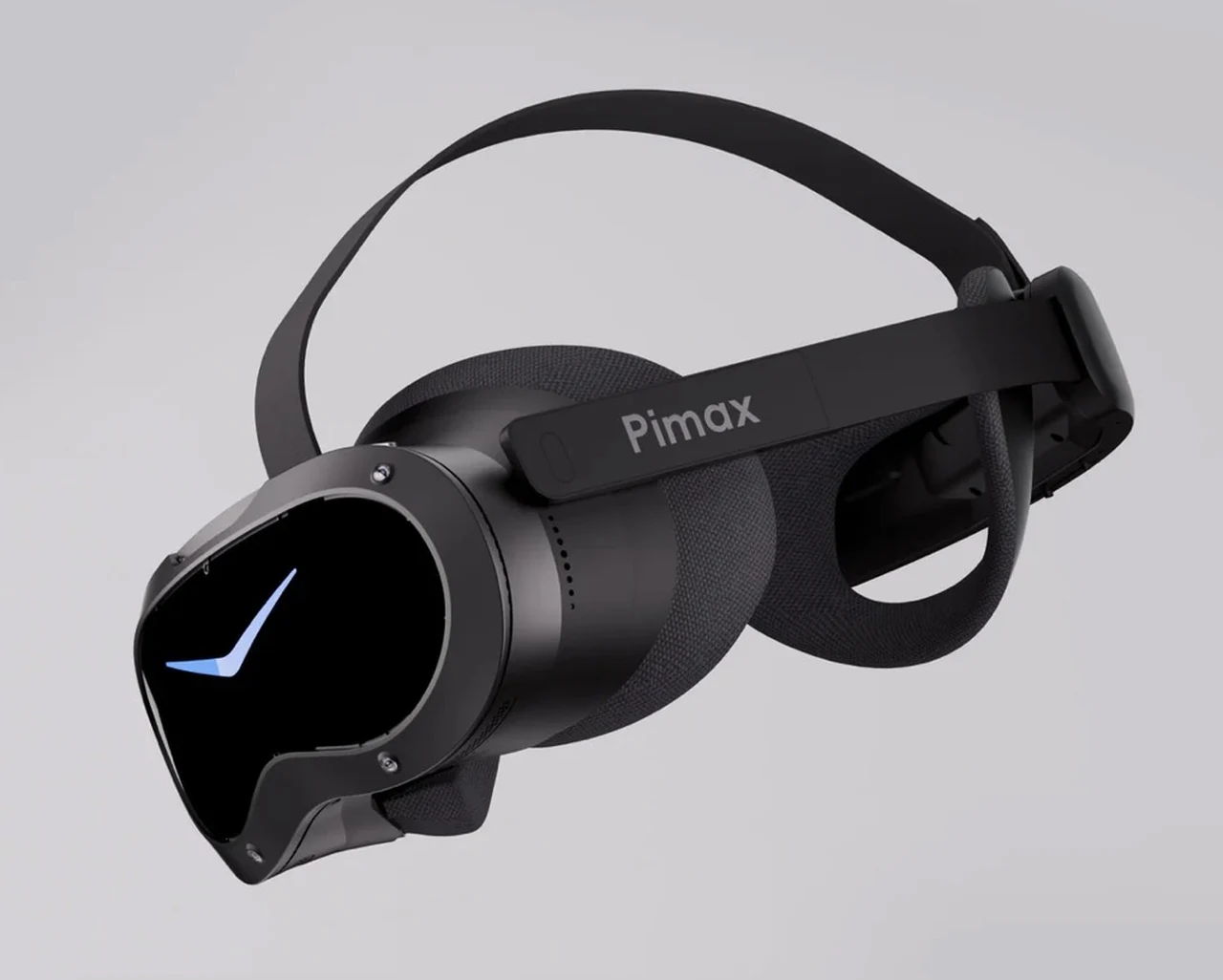
What’s in the Box?
Pimax has detailed two configurations for the Crystal Pro, with the standard headset package and a version bundled with the third-generation 60G AirLink.
Crystal Pro Headset Only
- Pimax Crystal Pro headset
- Pimax Ringed SLAM controllers
- External battery
- Wi-Fi dongle
The optional DisplayPort cable is not included.
Crystal Pro + 60G AirLink Third-gen
- Pimax Crystal Pro headset
- Pimax Ringed VR controllers
- External battery
- Wi-Fi dongle
- Third-generation 60G AirLink
- 2x headset antennas
- 2x room antennas (transmitter/receiver)
- 2x USB-C cables
The optional DisplayPort cable is also not included with this configuration.
The third-generation 60G AirLink hardware therefore expands on the Crystal Pro’s standard Wi-Fi streaming capabilities rather than being required for wireless PC VR operation.
Third-Generation 60G AirLink
One of the more notable options for the Crystal Pro is Pimax’s third-generation 60G AirLink. While the Crystal Pro already supports wireless PC VR through Wi-Fi, the 60G system provides an alternative dedicated wireless connection for users seeking a higher-end wireless PC VR setup.
The third-generation package uses antennas mounted on both the headset and within the room. Pimax lists two headset antennas and two room antennas, operating as transmitter and receiver hardware, together with two USB-C cables.
This makes the 60G AirLink an optional upgrade rather than a requirement for using the Crystal Pro wirelessly. Buyers who do not require the additional system can use the Wi-Fi streaming hardware included with the standard headset package.

Expand your understanding of Steam Frame with additional resources from our extensive library of articles.
- 10 Reasons You Should Buy the Valve Steam Frame VR Headset at Launch
- Valve Confirms Steam Deck 2 with Unreal Engine 5 Support
- Steam Frame VR Unboxing Reveals PC Wireless Streaming Adapter
- Steam Frame Drops Frames Running Half-Life Alyx Without a PC
- Steam Frame VR Headset Costs $1,059 with 6GHz PC Streaming
- Valve Steam Frame $1,060 VR Headset Hampered by 72 Games
- Valve Hits 760,000 Yearly Steam Machine Sales Amid RAM Shortage
- Valve Revamps the Steam Machine UI with New Verification Metrics
- Steam Machine Performance Tested: FSR 3 Upscaling Smooths Demanding Gameplay
- SteamOS Beta Update Fixes CPU Degradation and Wi-Fi Bugs
Modular Tracking and Connectivity
Modularity remains an important part of the Crystal Pro’s design. In particular, the swappable faceplate gives users the option of adding Lighthouse tracking rather than requiring them to commit permanently to one tracking ecosystem.
For many PC VR enthusiasts, this could be particularly useful. Users with existing Lighthouse base stations and compatible accessories can configure the Crystal Pro around that setup, while other buyers can use the headset’s standard SLAM tracking and included Pimax Ringed controllers.
Connectivity follows a similarly flexible approach. Standard Wi-Fi streaming provides a straightforward wireless option, DisplayPort offers wired operation at up to 120 Hz, and the third-generation 60G AirLink provides another wireless configuration for users willing to invest in additional hardware.
External Battery Design
The Crystal Pro also takes a different approach to battery placement. Pimax is supplying an external battery intended to be worn in the user’s pocket rather than placing the complete battery system directly on the headset.
This approach can potentially reduce the amount of weight carried on the user’s head, although the practical effect on comfort, balance and battery life will become clearer once production hardware is available for extended testing.
The external battery is included with both the standard Crystal Pro and the 60G AirLink bundle, so buyers will not need to purchase it separately.
From Concept to Announced Product
The latest announcement significantly changes how the Crystal Pro should be viewed. Earlier information surrounding the headset left considerable uncertainty about whether various proposed features would reach a commercial product and when the headset might actually become available.
Pimax has now confirmed a reservation program, package contents, wireless and wired connectivity options, tracking hardware and a broader launch schedule. That moves the Crystal Pro beyond the purely conceptual stage.
There are nevertheless still unanswered questions. Shipping is currently described only as starting in 2027, while hands-on demonstrations are scheduled for Q4 2026. Final real-world performance, latency, battery endurance, comfort and the performance of both Wi-Fi and 60G wireless streaming will therefore need to be evaluated on production hardware.
A Flexible High-End PC VR Headset
The Pimax Crystal Pro is shaping up to be a particularly flexible PC VR platform. Instead of forcing users into one connectivity or tracking configuration, Pimax is combining standard Wi-Fi streaming, optional 60G wireless hardware, 120 Hz DisplayPort operation and optional Lighthouse tracking through a swappable faceplate.
The inclusion of Ringed SLAM controllers, an external battery and Wi-Fi dongle with the standard headset also provides a clearer picture of what buyers will receive without purchasing additional accessories. The DisplayPort cable remains optional, while the third-generation 60G AirLink is available as part of a separate bundle.
The next important milestone will arrive in Q4 2026 when Pimax plans to begin hands-on demonstrations. Those sessions should provide a much better indication of how the Crystal Pro performs outside controlled specifications and announcements.
For now, the biggest change is straightforward: the Crystal Pro is no longer merely an ambitious concept with a distant speculative release date. Pimax has formally announced the headset, opened $1 reservations and committed to beginning shipments in 2027. The remaining question is how closely the finished hardware will match the capabilities now being promised.
Media Credit: MRTV – MIXED REALITY TV
Disclosure: Some of our articles include affiliate links. If you buy something through one of these links, Geeky Gadgets may earn an affiliate commission. Learn about our Disclosure Policy.
